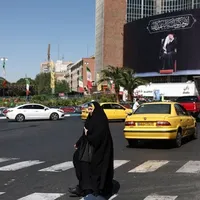
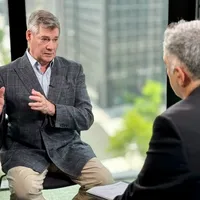
A young Tehran professional using the pseudonym “Ali” told The Free Press he joined the January 8 anti-government protests after witnessing widespread anger over economic collapse and repression.
Ali and his wife “Roya” fled to a neighboring country last week amid internet blackouts and fear of arrest.
In a conversation with The Free Press, Ali described security forces firing live rounds directly at crowds, including women and children, with the clear intent of “maximum killing” as retribution.
They said government action was aimed to destroy any hope of change among protesters.
Despite the extreme violence, Ali views the protests as a potential turning point and plans to return when safe.
Diana Bahador, a 19-year-old from Gonbad-e Kavus in northern Iran, was shot dead by security forces in Gorgan on January 8 during crackdown on anti-government protests.
Known online as Baby Rider, the young Turkmen woman built over 100,000 Instagram followers with fearless rides on powerful motorbikes—without a headscarf—in a country that bans women from getting motorcycle licenses and forbids removing the hijab.
Friends say she was more than an influencer: her speed, style, and visibility were quiet acts of resistance against strict rules.
“Bereaved families—who are themselves victims of economic hardship—are forced to borrow money just to retrieve and bury their loved ones' bodies,” the US State Department's official X account in Farsi posted on Wednesday.
“The Islamic Republic regime's exploitation of Iranians' grief is detestable and inhumane," the post added. "The Islamic Republic regime treats Iranian citizens with the utmost brutality, forcing families to endure impossible demands in order to reclaim their loved ones' bodies. This savagery knows no bounds.”
European Parliament President Roberta Metsola urged the European Union to designate Iran’s Islamic Revolutionary Guard Corps as a terrorist organisation during its Thursday meeting, saying Europe has a responsibility to act against repression in Iran.
“This week, Europe has a historic opportunity, and duty, to finally designate the Iranian regime’s Islamic Revolutionary Guard Corps as a terrorist organisation,” Metsola said in a post on X.
"Europe has a responsibility to act. The millions of Iranians living under oppression look to us for moral clarity and leadership. The thousands of people murdered on the streets deserve a semblance of justice," she added.
Iranian foreign minister Abbas Araghchi had to seek permission from superiors to speak to US special envoy to the Middle East Steve Witkoff, the New York Times reported on Wednesday citing an official deeply involved in the process.
The source was cited as saying the authority of Tehran's top diplomat appeared to be heavily constrained.
Araghchi ultimately conveyed Tehran's commitment that it was not planning imminent execution to the Untied States via a third party, the newspaper reported without elaborating.
Veteran theocrat Ali Khamenei is the country's supreme leader and ultimate decider of domestic and international policy.

As the threat of attack by the United States looms, Iranian commentators are sounding the alarm on the existential danger they see to Tehran, with one former envoy even saying US President Donald Trump should be hosted for talks.
Iran’s US- based former ambassador to Germany Hossein Mousavian said that the Iranian President Masoud Pezeshkian should invite Trump to Tehran as a step toward de-escalating tensions which could crescendo into an attack that threatens the Islamic Republic’s rule.
“Trump genuinely wants direct talks with Iran,” he told outlet Ensaf News in an interview.
“Pick up the phone and speak to him. Do not waste time as the situation is critically dangerous … I repeat: if you do not act immediately, Iran may face military confrontation with the United States, Israel, and NATO.”
In a more sober assessment, Iranian political commentator Reza Nasri warned “unlike his predecessors, Trump can wage a swift and clean war against Iran without imposing additional costs on US taxpayers or repeating past mistakes.”
Nasri warned against complacency about some Trump’s more conciliatory messaging, saying “any premature optimism about de-escalation can lead to dangerous miscalculations by lowering the state of alert and imposing heavy costs on Iran’s security.”
The US threat comes after Trump vowed to come to the defense of protestors before authorities unleashed one of the deadliest crackdowns on unrest in modern history, killing thousands.
Nasri, cleaving to the theocracy’s official discourse, described the demonstrations as “one of the most difficult and complex threats in Iran’s recent history and a project aimed at disintegrating the country and collapsing its political system.”
“This project has failed for now,” he added. “But a combination of domestic crisis, foreign threats and economic and psychological warfare still looms.”
Meanwhile, hardline Tehran commentator and social media personality Ali-Akbar Raefipour raised the alarm to an even louder pitch, saying without providing evidence that foreign preparations for a complex armed attack were already underway.
“Mutiny and targeted assassination cells may be activated if Iran is attacked. Their goals include killing prominent individuals and seizing sensitive centers,” he wrote on X.
“In recent days, we have seen equipment flowing into Iran for these groups.”