Iran’s government said decisions on cutting internet access lie with security authorities, as a nationwide blackout has entered its third week.
Government spokesperson Fatemeh Mohajerani told a news conference that after events on Jan. 8 and 9, security policymakers decided the national internet network “had to be cut,” adding that the government could not override such decisions.
“Our approach is to support free internet,” she said. “But on security issues, we are all subject to these decisions.”
The internet blackout has continued into its 19th day. Internet monitor NetBlocks said on Monday that authorities were tightening filtering gaps to limit circumvention while allowing approved accounts to promote the Islamic Republic’s narrative.

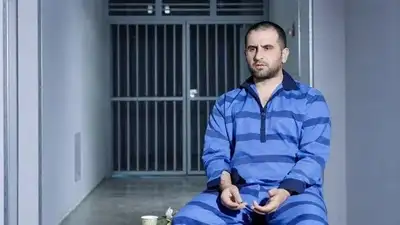
Members of Kataib Hezbollah appeared to sign up for suicide operations after the Iran-aligned Iraqi armed group said it was preparing for a wider conflict in support of the Islamic Republic, according to images shared on social media.
The images showed men wearing white burial shrouds as they signed volunteer forms for what were described as suicide operations.
The move followed a statement issued earlier this week in which Kataib Hezbollah urged its fighters and supporters to prepare for what it described as a comprehensive war in response to threats against Iran.
Kataib Hezbollah, designated by the US as a terrorist organization, is part of Iraq’s Popular Mobilization Forces and has carried out attacks on US and allied targets in the region.

A single number – 3,117 – has appeared repeatedly in Iranian official statistics, from protest deaths to public health data, raising doubts about the credibility and methodology behind state-reported statistics.
In a joint statement, Iran’s Martyrs Foundation and the Legal Medicine Organization said 3,117 people were killed during the nationwide protests in January.
The number itself, however, is strikingly familiar.
The same figure – 3,117 – has appeared in multiple, otherwise unrelated official datasets over recent years, including public health statistics, economic reports, and earlier protest-related announcements.
Variants of the number, particularly 1,039 and its multiples, have also been cited repeatedly in COVID-19 infection and hospitalization figures released by state bodies.
Analysts say that while identical numbers can recur by chance, the repeated use of a non-rounded figure across different sectors and time periods is statistically unlikely.
The pattern has prompted questions about whether such figures reflect genuine record-keeping, administrative shortcuts, or the use of standardized numbers in situations where full data are unavailable or politically sensitive.
Independent human rights organizations and international media have consistently challenged official casualty figures following protest crackdowns.
Their estimates – based on eyewitness testimony, hospital documentation, verified video evidence, and reports of serious injuries and enforced disappearances—point to significantly higher death tolls than those acknowledged by authorities.
According to documents reviewed by Iran International, more than 36,500 Iranians were killed by security forces during the January 8-9 crackdown on nationwide protests, making it the deadliest two-day protest massacre in history.
Official statements, by contrast, have offered little supporting detail. Names, locations, dates, and provincial breakdowns have not been released, limiting independent verification and intensifying criticism that casualty figures may be framed to downplay the scale of violence, particularly as international attention grows, including at the UN Human Rights Council.
The reappearance of 3,117 has reinforced long-standing skepticism over the reliability of official statistics in moments of crisis—when numbers carry political weight well beyond their face value.

Iran’s rial fell to a fresh record low on the unofficial market on Tuesday, with the US dollar quoted above 1.48 million rials, traders said.
The latest slide follows sharp swings since late December, when the currency’s fall helped trigger protests in Tehran and other cities.
Iran’s economy has been battered by years of sanctions and chronic inflation, prompting many Iranians to turn to hard currency and gold during periods of political and economic uncertainty.

Germany’s federal interior ministry warned that members of the Iranian diaspora in Germany face a risk of intimidation and harassment by Iranian state actors, including possible cyber attacks, in a response to a written question from Green lawmaker Marcel Emmerich.
The ministry said it receives regular reports of what it called transnational repression, meaning efforts by a state to monitor, threaten or pressure opponents abroad.
German authorities take any activity by foreign state bodies or their proxies in Germany very seriously and do not tolerate it, the ministry said, adding this was especially true when refugees could be at risk.
The warning follows protests in Iran that began in late December and quickly grew into nationwide unrest against the Islamic Republic. Iranian authorities moved to crush the protests.
Berlin cites transnational repression
The interior ministry said it works with federal security agencies to counter transnational repression in Germany and coordinates foreign policy steps with the foreign ministry. People who suspect threats from state bodies or intelligence services can contact the domestic intelligence agency confidentially, it said.
Germany’s domestic intelligence service has also alerted people who could be targets of Iranian cyber attacks, the ministry said. Those who feel in immediate danger should contact police, while state police forces are responsible for individual risk assessments and protection.
Emmerich said the measures did not go far enough and called for specialized contact points for those affected, as well as a firmer political stance against repression in Germany.
The government said it continues to push within the European Union to add Iran’s Revolutionary Guards to the EU terrorism list. Approval talks are still under way.
The European Parliament has urged the EU to designate the Revolutionary Guards as a terrorist organization and condemned Iran’s use of force against protesters.
Iran’s approach towards the United States is to keep full military readiness while pursuing a diplomatic path, said the government’s spokesperson on Tuesday.
“The issue of war has cast a heavy shadow over the country and naturally made conditions difficult and complex,” Fatemeh Mohajerani told a news conference.
Mohajerani said Tehran viewed the situation as part of what she called a long-running “hybrid war,” while stressing that the government was pursuing diplomacy.
She added that Iran was also prepared for other scenarios. “This does not mean other options are off the table. We are in full readiness,” Mohajerani said, without specifying what those options might entail.