• العربية
  • فارسی
Brand
  • Iran Insight
  • Politics
  • Economy
  • Analysis
  • Special Report
  • Opinion
  • Podcast
  • Iran Insight
  • Politics
  • Economy
  • Analysis
  • Special Report
  • Opinion
  • Podcast
  • Theme
  • Language
    • العربية
    • فارسی
  • Iran Insight
  • Politics
  • Economy
  • Analysis
  • Special Report
  • Opinion
  • Podcast
All rights reserved for Volant Media UK Limited
volant media logo

No Muslim can tolerate threats against our leader, senior Iranian cleric says
Jan 21, 2026, 13:49 GMT+0

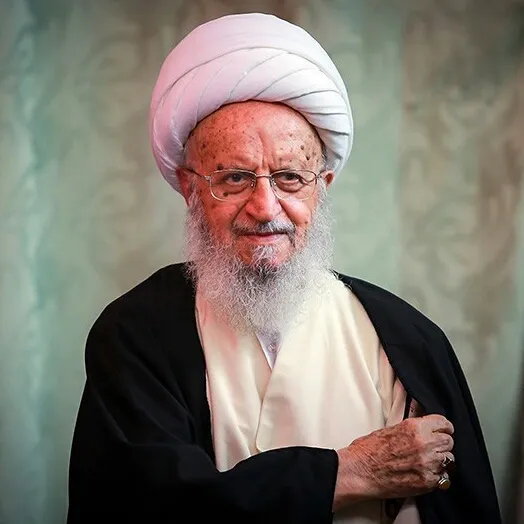
Nasser Makarem Shirazi, a hardline cleric who holds one of the highest ranks in Iran’s Shiite religious hierarchy, said no Muslim would accept threats against the country’s supreme leader, according to state media.

“The miserable leaders of America, in a state of extreme weakness and foolishness, have spoken in the language of threats against the revered leader of the Islamic Revolution,” Makarem Shirazi said.

He said the position of the supreme leader was a sensitive and central part of Shiite belief.

“The existence of the leader as the protector of Shiism and the Islamic community is a sensitive point in our faith,” he said. “No righteous and free Muslim will tolerate such a threat.”

Makarem Shirazi called on Muslims and what he described as free people around the world to voice their support and condemn what he said were insults against the Iranian leader.

“It is necessary for Muslims and free people across the world to stress their support for him and condemn any form of disrespect,” he said, adding that this would show that “the nations of the world stand against them.”


Most Viewed

Disputes within Iran leadership blocked negotiators’ trip to Islamabad
1
EXCLUSIVE

Disputes within Iran leadership blocked negotiators’ trip to Islamabad

2
ANALYSIS

Rapid deterioration of Iran-UAE ties threatens a critical trade lifeline

3
INSIGHT

As Tehran digs in, ordinary Iranians pay the price

4
INSIGHT

Who backs war now? Tehran flips the script

5
VOICES FROM IRAN

Inflation spikes, basic goods slip out of reach for Iranians, citizens say

Banner
Banner

Spotlight

  • Behind Tehran’s unity show: The secret letter to the shadow king
    INSIGHT

    Behind Tehran’s unity show: The secret letter to the shadow king

  • Rapid deterioration of Iran-UAE ties threatens a critical trade lifeline
    ANALYSIS

    Rapid deterioration of Iran-UAE ties threatens a critical trade lifeline

  • Tehran stocks head for reopening, but it risks triggering a new crisis
    ANALYSIS

    Tehran stocks head for reopening, but it risks triggering a new crisis

  • Power vacuum in Tehran emboldens hardliners
    INSIGHT

    Power vacuum in Tehran emboldens hardliners

  • Inflation spikes, basic goods slip out of reach for Iranians, citizens say
    VOICES FROM IRAN

    Inflation spikes, basic goods slip out of reach for Iranians, citizens say

  • Iran turns to citizenship and assets as tools of pressure beyond its borders

    Iran turns to citizenship and assets as tools of pressure beyond its borders

•
•
•

More Stories

Iranian reports Arabic-speaking men arriving in Tehran

Jan 21, 2026, 13:04 GMT+0

An Iranian who called Iran International's phone-in program said he saw young men speaking Arabic arriving in Tehran neighborhoods during protest nights, some appearing unfamiliar with the city.

Parsa said he noticed them carrying suitcases and asking for directions before being picked up by taxis.

“They did not know where they were going,” he said.

He said the significance of what he saw only became clearer later, referring to the presence of Iran-aligned militia forces in the crackdown.

“Now we are starting to understand what that may have meant,” Parsa said.

Iran’s president says state must admit mistakes after protests

Jan 21, 2026, 12:52 GMT+0

Iran’s President Masoud Pezeshkian said authorities must accept they have made mistakes in governing the country, warning that ignoring public grievances would only push society toward anger, violence and alienation.

“We must accept that we have made mistakes in the way we run affairs,” Pezeshkian said, according to state media. “If we do not become aware of our own errors and do not try to fix them, and only blame others, we will get nowhere.”

He said public frustration would grow if state bodies remained indifferent to the demands and problems of poorer groups.

“When all institutions and governing bodies ignore the demands and problems of vulnerable groups, we cannot expect society not to move toward violence, apathy and distancing from the country and the system,” he said.

Pezeshkian also called for the public release of details from an intelligence ministry report on the causes of recent unrest.

“The details of the intelligence ministry’s report on the causes of the recent events should be made public so people can understand the realities and different dimensions of what happened,” he said.

Iran’s exiled queen says there is ‘no turning back’ after protests

Jan 21, 2026, 12:29 GMT+0

Farah Pahlavi, Iran’s exiled former queen, said recent protests against the country’s clerical leadership marked a point of no return, adding that she believed Iranians would ultimately prevail.

“There is no turning back. This path is one-way – it leads to freedom,” Pahlavi, 87, told Agence France-Presse in written comments from Paris.

Her remarks came after weeks of unrest that were met with a violent security response, which rights groups say has killed thousands.

Addressing young Iranians, she said: “Today you are writing, with immense courage, a new chapter of history… for Iran and for the world.”

She urged them to stay the course. “Maintain hope and determination. You will be the victors,” she said.

Pahlavi said the deaths of protesters meant the movement could not fail. “Such a sacrifice demands victory,” she said, adding that it would not only be Iran’s triumph but one that would bring broader peace and stability.

She also said she wanted to return to her homeland after more than four decades in exile.

“My desire and my need today are to return to Iran,” she said.

Pahlavi and her husband were forced to flee Iran in 1979 after a revolution that led to the creation of the Islamic Republic.

‘We are more determined than afraid,’ protester says

Jan 21, 2026, 12:14 GMT+0

An Iranian man calling from Tehran told Iran International that anger and resolve have replaced fear, as rooftop chants continue despite killings and mass arrests.

Amir said the dominant emotion he sees around him is not despair. “We are more angry than sad, and more determined than afraid,” he said.

He described the process families face when identifying the dead as particularly harrowing.

“They had to examine dozens of bodies before finding their own,” Amir said.

Protester says fear barrier has been broken

Jan 21, 2026, 11:59 GMT+0

An Iranian man calling from Kerman told Iran International that protesters continued to return to the streets despite injuries during protests earlier this month, and described what he said were unusually harsh chemical agents used by security forces.

Kambiz said that during the protests, he met a 16-year-old girl who had been wounded the night before but still returned to the streets.

“She said she had been hit with pellets from the waist down and came back again the next night,” he said.

He also described symptoms he experienced after exposure to tear gas.

“It smelled different, and my skin felt burned,” Kambiz said.