Iran’s Intelligence Ministry and the Revolutionary Guards have warned journalists inside the country against reporting on the national uprising, threatening arrests and heavy sentences, journalists inside Iran told Iran International.
Several reporters said they had been directly warned that any coverage of the uprising would lead to detention and harsh punishment.
Some journalists were told: “Do not do something you will regret; your family will mourn,” Iran International has learned.
The warnings come as authorities have moved to tighten control over information, including through a nationwide internet blackout and increased pressure on domestic media.
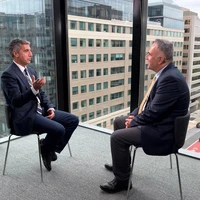
The Islamic Republic's resort to the deadliest crackdown on protestors in its history signals endgame for the theocracy, retired US Army General and ex-CIA director David Petraeus told Iran International Insight, the channel's town hall held in Washington DC.
“This regime is dying. Essentially it’s fighting, it’s killing again, but it is also dying," said Petraeus, a retired four-star Army general who now runs the Middle East business of US private equity firm KKR.
“I think it signals enormous questions about the regime's ability to sustain the situation,” he said, arguing Tehran is under more pressure now than at almost any point since the Iran-Iraq war.
Speaking to host Farzin Nadimi, a senior fellow at the Washington Institute, Petraeus painted a stark picture of the clerical establishment facing simultaneous existential challenges at home and abroad.
“Iran is essentially defenseless at this point,” Petraeus said, referring to the destruction of air and ballistic missile defense systems early in a June conflict with Israel and the United States.
The veteran commander, who led the so-called "surge" of US forces aimed at defeating an insurgency at the height of the US war in Iraq, said the scale of violence used against demonstrators reflects fear rather than control by Iran's leaders.
While he acknowledged the Islamic Republic may be able to suppress unrest in the short term, he warned that flooding cities and towns with security forces may not buy authorities a lasting reprieve from popular anger.
“This regime has lost legitimacy. The problem is it hasn’t lost the capability to kill.”
His assessment comes as Iran grapples with sustained nationwide unrest that began on December 28 among electronics and cellphone merchants at Tehran’s bazaar and quickly escalated into a nationwide uprising against the Islamic Republic.
At least 12,000 people were killed in just two days, according to medics and Iranian officials speaking to Iran International.
With the Iranian currency cratering, inflation climbing and purchasing power collapsing, Petraeus said Iran no longer has the financial tools it once used to calm the streets.
“At this time, there's not much Iran can do about it. They have very little capacity."
Asked about Trump's mooted pledge to intervene militarily to defend protestors, Petraeus stopped short of assessing the efficacy of any US attack but said the move would be well received and not bolster the leadership.
“I think we could take action against the regime and it would be applauded … not be a rallying cry for them.”
A senior Iranian diplomat based at the United Nations’ European headquarters in Geneva has left his post and applied for asylum in Switzerland, diplomatic sources told Iran International, amid mounting political unrest in Iran.
Alireza Jeyrani Hokmabad, a senior official at Iran’s permanent mission to the UN in Geneva, sought asylum together with his family after leaving his workplace, the sources said. He held the rank of counsellor and served as minister plenipotentiary, effectively the deputy head of Iran’s mission to the UN and other international organizations in Geneva.

A senior Iranian diplomat based at the United Nations’ European headquarters in Geneva has left his post and applied for asylum in Switzerland, diplomatic sources told Iran International, amid mounting political unrest in Iran.
Alireza Jeyrani Hokmabad, a senior official at Iran’s permanent mission to the UN in Geneva, sought asylum together with his family after leaving his workplace, the sources said. He held the rank of counsellor and served as minister plenipotentiary, effectively the deputy head of Iran’s mission to the UN and other international organizations in Geneva.
The sources said Jeyrani decided not to return to Iran out of fear of potential repercussions linked to the ongoing political and social upheaval in the country, as well as concerns over the stability of the Islamic Republic’s governing structure.
Swiss authorities have not publicly commented on the asylum request.
Jeyrani joined Iran’s mission in Geneva in 2017 as an adviser and later rose through the ranks, representing Iran in economic bodies affiliated with the United Nations, including forums dealing with trade, development and investment.
Diplomatic sources said that growing international support for Iranian protesters, including statements by European leaders and the European Parliament, has contributed to rising anxiety among Iranian diplomats stationed in Europe.
Several Iranian diplomats have in recent weeks privately contacted authorities in European countries to explore or submit asylum requests, the sources said, speaking on condition of anonymity due to the sensitivity of the matter.
European sources said several governments are reviewing or have decided to more readily accept asylum requests from Iranian diplomats, even in cases where applicants cannot immediately demonstrate a direct threat to their lives.
Defections by Iranian diplomats during periods of domestic unrest are not unprecedented. Following the 2009 protests known as the Green Movement, several Iranian diplomats in Europe resigned and sought asylum, later citing electoral fraud and violent repression by the authorities.
Among those who defected at the time were Iran’s consul in Norway, Mohammad Reza Heydari; its chargé d’affaires in Finland, Hossein Alizadeh; the consul in Milan, Ahmad Maleki; and an embassy official in Brussels, Assadollah Farzad Farhangian.

A European diplomat, citing intelligence shared with Iran International, said their information indicates that at least 1.5 million people took to the streets in Tehran on Thursday, 8 January.
He said the number was lower on Friday, January 9, as security forces were heavily present in the streets and, in many cases, began shooting as people started to assemble, killing people en masse.
However, the European diplomat who spoke to the channel believes as many as half a million people were present in Tehran on Friday despite the mass killing.
The number of people in other cities is unclear due to the lack of foreign diplomatic presence outside Tehran—all embassies are in the capital.
However, their intelligence estimate is that at least 5 million people participated in nationwide protests on Thursday and Friday.
At least 12,000 people were killed in the deadliest crackdown in Iran’s contemporary history, carried out largely over two consecutive nights on January 8 and 9, Iran International’s editorial board concluded, based on a review of sources and medical data.
The Munich Security Conference has withdrawn invitations previously sent to Iranian government representatives, and no official from Iran will attend the upcoming event, a conference spokesperson told Iran International on Friday.
The spokesperson said that although invitations had been issued to some Iranian officials weeks ago, they were no longer valid “in light of recent developments” and would not be renewed.
Asked whether the conference might invite representatives from Iran’s opposition or civil society, the spokesperson said organizers were closely monitoring the situation but would not provide further details at this stage of preparations.