Iran's vice president blames protests on 'enemy'
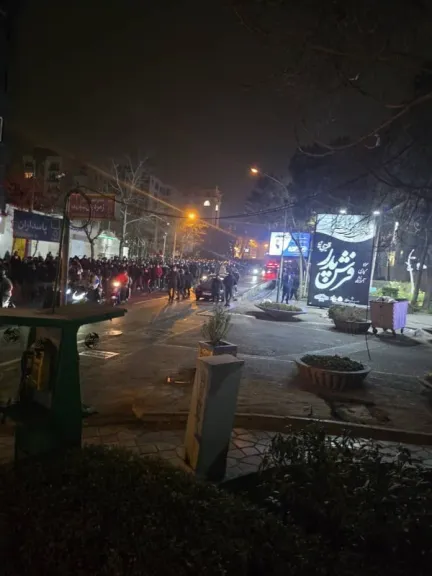

Iran's first vice president echoed the authorities’ narrative by attributing the national uprising to what he described as an external “enemy.”
“A young person who has been misled or driven by emotions damages public property,” Mohammad Reza Aref said on Saturday.
“The people will once again finish the enemies’ work and bring this episode to an end,” he added.


As people across Iran took to the streets during the first round of calls issued by exiled prince Reza Pahlavi, Iranians abroad also held solidarity gatherings.
Demonstrations were held in Berlin and Cologne in Germany, as well as in Stockholm, Sweden on Saturday, in support of the call and protesters inside Iran.

Reports received by Iran International indicate that internet across Iran remains shut.
The disruption comes as exiled prince Reza Pahlavi has called for the start of a nationwide strike and for people to take to the streets at 6 p.m. Tehran time on Saturday and Sunday.

Expectations of change at the top of Iran’s Islamic Republic are rising as nationwide protests over soaring living costs unite an unusually broad cross-section of society, an analysis by the South China Morning Post said on Saturday.
The demonstrations have drawn in groups ranging from traditionally pro-government merchants and conservative rural communities to urban middle-class residents, said the report. The unrest has been fuelled by the sharp fall of the rial following Iran’s 12-day conflict with Israel and the United States in June.

Washington is concerned by reports the Islamic Republic has deployed Hezbollah members and Iraqi militias to suppress peaceful protests, wrote the Persian-language account of the United States Department of State on X.
“The United States is concerned by reports that the Islamic Republic has employed Hezbollah terrorists and Iraqi militias to crack down on peaceful protests,” the Saturday post said.
Iranian authorities, the State Department added, have spent billions of dollars belonging to the Iranian people on what it described as terrorist proxy forces, warning that using those forces against Iran’s own citizens would amount to another profound betrayal of the population.
Two internationally recognized Iranian filmmakers warned about the consequences of cutting Iranians’ communication with the outside world in a joint statement.
"In recent days, after millions of Iranians took to the streets against the Islamic Republic, authorities turned again to their most stark tool of repression by shutting down internet access as well as mobile and landline phone services inside the country, while also blocking contact with the outside world," Jafar Panahi and Mohammad Rasoulof wrote.
Experience, they said, shows such shutdowns are used to conceal violence during the suppression of protests.
The filmmakers said they are deeply concerned for the lives of fellow citizens, families, colleagues and friends left defenseless, and urged the international community, human rights organizations and media to urgently find ways to ensure access to independent information and oversight, warning that silence today would carry lasting consequences.