Iran's Foreign Ministry on Wednesday issued a statement calling US comments on protests in the country as “interventionist” and “aimed at inciting unrest.”
“Such stances are not motivated by sympathy for the Iranian people but are part of the US policy of maximum pressure, threats, and interference in Iran's internal affairs, aimed at inciting violence, terrorism, and creating unrest and insecurity in the country,” the statement said.
“The Islamic Republic of Iran, in accordance with principles stipulated in its constitution, recognizes peaceful protests and makes no effort to stop addressing the legitimate demands of the people within the framework of law,” the statement said.
“While emphasizing the importance of taking necessary measures to reduce economic hardships, it is clarified that a significant portion of these problems stem from the all-out economic and financial war waged by America against the Iranian nation in the form of unlawful and unjust sanctions,” it added.
Congresswoman María Elvira Salazar said Iran's government is responding to anti-regime demonstrations with mass arrests and violence, though she suggested such measures will ultimately fail.
"In 257 locations across 88 cities and 27 provinces, the people of Iran are demanding freedom from the Ayatollah and as usual, the regime silences, tortures and imprisons," the Republican House member from Florida posted on X on Wednesday.
"Like those resisting tyranny in Cuba and Venezuela, they are fighting for the freedom, liberty, and end to oppression they deserve," she added. “People of Iran demanding freedom.”
Screengrab from a video showing large crowds filling the streets of Abdanan in Iran’s western Ilam province during anti-government protests, January 6, 2026
The Western Iranian province of Ilam has emerged as one of the epicenters of nationwide protests, with some of the deadliest confrontations yet between demonstrators and security forces.
Roughly half of all reported fatalities so far—around 20 protesters—have occurred by direct gunfire in western provinces, according to activist and local reports.
Many of the deaths have occurred in Ilam, Lorestan, Chahar-Mahal and Bakhtiari, and Kohgiluyeh and Boyer-Ahmad, areas that have long ranked among Iran’s most economically deprived and are home largely to ethnic Kurdish and Lor populations.
The scale of unrest has been especially striking in Ilam.
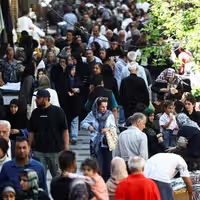
On Tuesday night, videos showing large crowds protesting peacefully in Abdanan, a city of about 25,000, circulated widely on social media, surprising many Iranians.
A day later, similarly large demonstrations took place in Aligudarz, a city of fewer than 100,000 in neighboring Lorestan, where crowds chanted slogans against Supreme Leader Ali Khamenei.
Witness accounts and videos suggest participation levels unusual for cities of that size—an indication, activists say, of how deeply economic grievances and political anger have penetrated Iran’s smaller, poorer communities.
The state-affiliated Tasnim News Agency described demonstrations in Lorestan as failed “riots,” claiming people “did not show up,” while acknowledging that inflation there has exceeded the national average.
Attack on hospital
Anger across Ilam intensified further after events at Imam Khomeini Hospital in the provincial capital on Sunday, following the transfer of wounded protesters from demonstrations in Arkavaz, the center of Malekshahi county.
State outlets accused protesters of attacking the hospital, saying police entered the facility to restore order. Eyewitnesses, however, described a security raid in which tear gas was fired inside the hospital and injured protesters were removed.
A rare on-the-ground report by the moderate daily Ham-Mihan, citing multiple witnesses and medical staff, said protesters arriving at the hospital were unarmed and had been shot after a peaceful march.
Several were already dead on arrival, while others later died from gunshot wounds, including injuries caused by military-grade bullets. Some families, the report said, rushed wounded relatives out of the hospital to prevent their arrest.
The incident drew a rare official response from the government.
The Health Ministry stressed the “sanctity” of medical facilities, saying any entry by security forces into hospitals or harm to patients violated humanitarian principles.
Government spokeswoman Fatemeh Mohajerani said damage to medical centers was unacceptable “under any circumstances” and announced that President Masoud Pezeshkian had ordered an investigation, dispatching a representative to Ilam to prepare a report.
For many residents, however, the episode has come to symbolize a broader breakdown: a protest movement spreading from Iran’s margins, met not only with lethal force in the streets, but—according to witnesses—even inside places meant to offer refuge.
Israel’s Ambassador to the United Nations Danny Danon addressed the Iranian people in a video message, praising them for what he described as their courage during nationwide protests.
“I am seeing your bravery. I am feeling your pain. I am sharing your hope for a better future in Iran without evil and terror,” Danon said. “The entire world is watching what’s happening on the streets in Iran and is praying with you.”
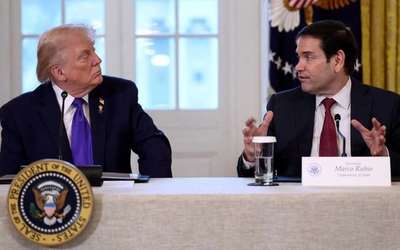
The US House Foreign Affairs Committee warned Iran’s authorities against using force against protesters.
“If Tehran violently kills peaceful protestors, it will be swiftly met with justice,” it said in a post on X, citing an earlier statement by US President Donald Trump.
Protests continued into the evening in Rasht, Gilan province in northern Iran, on Wednesday, according to videos sent to Iran International.
The footage shows protesters chanting slogans including “Until the cleric is shrouded, this homeland will not become a homeland” and “Pahlavi will return.”