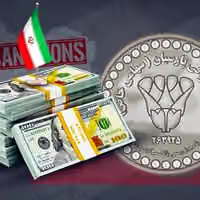
For more than a decade, these ventures—framed as anti-imperialist cooperation between two heavily sanctioned states—served political purposes rather than a commercial ones.
They were designed to circumvent US sanctions, monetize Venezuela’s vast but increasingly stranded crude reserves and provide mutual economic lifelines. Their durability depended on the survival of aligned governments in Tehran and Caracas.
With the interim government in Caracas signaling openness to cooperation with the United States, Iran’s refinery projects risk shifting from sheltered geopolitical instruments into exposed financial and legal liabilities.
The fallout threatens not only Tehran’s assets in Venezuela but also the broader sanctions-evasion model it has refined across multiple theaters.
A partnership shaped by sanctions
Iran’s partnership with Venezuela dates back to the early 2000s, when Presidents Hugo Chavez and Mahmoud Ahmadinejad forged a relationship rooted in shared defiance of Washington.
Cooperation deepened after 2019, as US sanctions tightened around both Iran’s oil exports and Venezuela’s state oil company, PDVSA.
Iran supplied refinery repairs, gasoline and blending components; Venezuela provided heavy crude, gold, and other commodities. Both sides relied on barter, opaque contracts and shadow shipping networks to bypass sanctions.
The model kept fuel flowing during acute shortages and helped stabilize the Maduro government—but it never made commercial sense. Venezuela’s refineries never recovered, while Iran absorbed mounting costs in exchange for political influence.
A refinery bet that never paid
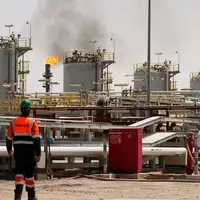
Iran’s most visible engagement centered on El Palito, a 140,000-barrel-per-day refinery in Carabobo state.
In May 2022, Tehran signed a $117 million contract with PDVSA to repair and expand the facility. By mid-2024, Iranian officials said they had managed to restore operations to about 20 percent of capacity amid chronic power outages and feedstock shortages.
Iran’s oil minister hailed El Palito as the country’s first overseas-built refinery—a symbolic milestone with limited operational impact.
Tehran’s ambitions extended to the much larger Paraguana Refining Center, Venezuela’s flagship complex with a nominal capacity of nearly one million barrels per day.
Leaked documents from late 2025 suggest Iran-linked projects in Venezuela totaled roughly $4.7 billion, underscoring the scale of exposure and the opacity surrounding the relationship.
These refinery projects formed part of a broader sanctions-evasion ecosystem.
In 2020 alone, Iran shipped more than 1.5 million barrels of gasoline and blending components to Venezuela. In return, Venezuelan oil revenues were routed through informal channels that helped sustain Tehran’s finances.
Beyond oil
The relationship also spilled into security and finance.
Iran supplied drones and military equipment, while Washington accused Hezbollah-linked networks operating in Venezuela of laundering money tied to senior Maduro-era officials.
Maduro’s removal marks a structural break: Iran’s Venezuelan strategy relied on political shielding rather than enforceable contracts.
President Trump has framed the transition as a US-led stabilization effort, with American energy companies positioning themselves to reenter Venezuela’s oil sector.
Interim authorities face pressure to attract foreign investment, secure sanctions relief, and manage the potential return of millions of displaced Venezuelans—priorities that favor transparency and compliance over legacy deals with sanctioned partners.
A sudden exposure
A US-aligned Venezuelan government is likely to reopen PDVSA contracts signed under Maduro, subjecting them to audits and potential legal challenges.
Iranian-linked assets could face expropriation or forced divestment, while Tehran’s unpaid claims for refinery work—estimated in the hundreds of millions of dollars—remain unsecured.
Operational displacement is likely to follow.
Western firms operating under renewed licensing frameworks are expected to take priority in refinery rehabilitation, sidelining Iranian equipment that engineers have often criticized as less reliable.
Tehran has pursued similar arrangements in Syria and elsewhere, using infrastructure repairs and energy swaps to monetize sanctioned oil and project influence.
A Venezuelan unraveling could embolden US enforcement against these networks, disrupting a system that has sustained an estimated 1.5 to 2 million barrels per day of Iranian oil exports despite sanctions.
Oil markets add another layer of consequence.
Venezuela holds the world’s largest proven reserves but produces less than one million barrels per day. A successful rehabilitation could lift output substantially over the coming years, increasing global supply and weakening Iran’s leverage within OPEC+.
Iran’s refinery investments in Venezuela were ultimately a wager on political alignment over economic fundamentals. With that alignment now broken, assets once protected by geopolitics are newly exposed to scrutiny, displacement, and loss.
For Venezuela, disentangling from Iran offers a path toward recovery under external oversight.
For Iran, it offers a harsher lesson: sanctions-evasion strategies endure only as long as political shields hold. When they collapse, the workaround becomes the liability.