Public frustration over rising living costs has once again spilled into protests across the country, shining a harsh light on how state resources are allocated and managed.
As demonstrations continue, economic indicators are emerging as a central measure of both state capacity and public confidence.
That tension is visible in Iran’s draft budget for the next fiscal year, beginning on March 22. The document offers a snapshot of priorities at a moment marked by military confrontation, diplomatic strain and widening economic pressure.
A budget shaped by security concerns
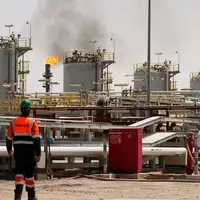
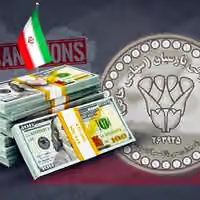
According to the draft, the government has projected just 1,850 trillion rials in oil export revenues for itself—equivalent, at the official exchange rate, to roughly $2 billion.
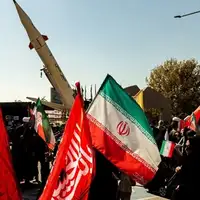
By contrast, allocations tied to military and security institutions account for at least 16 percent of total budgetary resources, while the share of oil export revenues linked to the Islamic Revolutionary Guard Corps is estimated to be several times larger than that of the civilian government.
Funding for religious institutions is projected at close to half of the government’s oil income.
At the same time, projected tax revenues have risen by 63 percent, signaling a heavier burden on households and businesses amid high inflation and weak purchasing power.
Taken together, the figures raise questions about how effectively state revenues are being translated into economic stability or improved living standards. They also complicate expectations that external relief alone—such as sanctions easing—would be sufficient to reverse economic decline.
An economy with untapped potential
Official data underscore the scale of resources involved.
Even under extensive sanctions, Iran’s crude oil export revenues over the past five years have totaled approximately $193.5 billion.
Yet over roughly the same period, Iran’s gross domestic product has contracted sharply, falling from around $600 billion in 2010 to an estimated $356 billion in 2025. The divergence between export earnings and overall economic output has become a central puzzle for analysts.
According to Iran’s Central Bank (CBI), the country earned $65.8 billion from exports of oil, petroleum products and gas in the last fiscal year, while total general government revenues projected in the new budget amount to about $45 billion.
Growth, allocation and the missing link
In purely arithmetic terms, current energy exports alone exceed projected state revenues, even before accounting for taxation, domestic fuel sales or other income sources.
The structure of Iran’s economy further complicates comparisons with other sanction-hit or conflict-affected states. Services account for more than half of GDP, and non-oil exports remain substantial, according to the CBI—a markedly different profile from countries such as Iraq, where non-oil exports account for less than 10 percent.
These figures suggest that Iran’s economic capacity, diversification potential and revenue base remain significant, even under constraint.
The unresolved question is not one of resources alone, but of how those resources are absorbed, allocated and converted into sustainable growth.
As protests continue and political outcomes remain uncertain, the condition of the economy—more than any single diplomatic or security development—is likely to shape Iran’s trajectory in the years ahead.