Death toll in Iran protest crackdown rises to 29 - rights group

At least 29 protesters have been killed and more than 1,200 people arrested during nine days of nationwide protests in Iran, US-based human rights group HRANA reported on Monday.

At least 29 protesters have been killed and more than 1,200 people arrested during nine days of nationwide protests in Iran, US-based human rights group HRANA reported on Monday.
The Human Rights Activists News Agency said it had confirmed the deaths of seven protesters over the past 24 hours, including people killed in Azna, Marvdasht and Qorveh.
Of the 29 confirmed fatalities, two were members of Iran’s security forces. At least 64 protesters were also reported wounded, mainly by pellet and plastic bullets.
Iran International has independently identified 21 victims so far through interviews with relatives and friends.
Protests and strikes continued nationwide for a ninth day despite an intensified security presence and the use of live ammunition in some areas.
Verified data show that demonstrations, street rallies or labor strikes took place in at least 257 locations across 88 cities in 27 provinces. Protests were also reported at 17 universities, HRANA said
The report added that at least 1,203 protesters have been arrested so far, though the actual number is believed to be higher.
Mass arrests were reported in cities including Bojnord, Qazvin, Isfahan, Tehran, and Babol, with students among those detained.
HRANA said internet disruptions, security restrictions, and limited access to independent sources continue to hinder full verification of casualties and arrests.
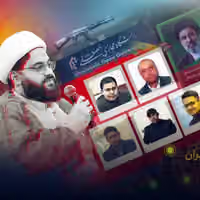
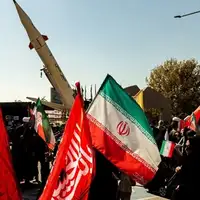
As protests continued across Iran for a ninth day, the foreign ministry on Monday accused the United States and Israel of interfering in Iran’s internal affairs and encouraging violence through their public statements.
Spokesperson Esmail Baghaei said statements by some American and Israeli officials amounted to interference in Iran’s internal affairs and incitement to violence under international norms and rejected what he described as foreign efforts to present themselves as supportive of the Iranian public.
“Actions or statements by figures such as the Israeli prime minister or certain radical and hardline US officials regarding Iran’s internal affairs amount, under international norms, to nothing more than incitement to violence, terrorism, and killing.”
Protests have been reported in 222 locations nationwide, including rallies in 78 cities across 26 provinces, according to the US-based Human Rights Activists News Agency (HRANA).
US President Donald Trump said on Sunday night aboard Air Force One that the United States is following developments in Iran very closely, warning: “If they start killing people like they have in the past, I think they are going to get hit very hard by the United States.”
Baghaei said Iranians remained deeply distrustful of Washington and Israel, citing past actions by the two countries and arguing that the public would not be swayed by what he called “deceptive rhetoric.”
He also said Iran would not base its security posture on remarks from Israeli officials, accusing Israel of misleading statements and signaling continued military vigilance.
“We are not going to trust or rely on the statements of officials from the Zionist regime,” he said. “The regime’s pattern of deception is clear to us.”
According to HRANA, at least 19 demonstrators and one member of security forces have been killed so far as the unrest continues.

Protests were held across Iran for the eighth consecutive day, with demonstrations, strikes, and student unrest reported at 222 locations across 78 cities in 26 provinces, a US-based human rights group reported, as the overall death toll rose to 20.
Despite intensified security measures, increased deployment of police and security forces, and continued confrontations in several areas, the geographic spread of protests has remained intact, the Human Rights Activists News Agency (HRANA) said.
Over the past eight days, at least 19 civilians and one member of security forces have been killed, based on the data verified by HRANA. At least 51 people were also injured, most caused by pellet and rubber bullets.
Protests initially began with labor strikes and professional gatherings and have continued with broader street demonstrations, limited trade stoppages, and student protests openly calling for regime change.
HRANA said 17 universities have seen student activism during the unrest.
In the past 24 hours alone, unrest was reported in more than 20 cities, including Tehran, Mashhad, Shiraz, Karaj, Qazvin, Yazd, Bandar Abbas, Tabriz, Kermanshah, Khorramabad, Shahrud, Dorud, Gachsaran, Yasuj, Bushehr, Lahijan, Nishapur, Mahallat, Rudbar, Borujerd, and Marvdasht, alongside heightened security deployments in several areas.
The protests have not been confined to major urban centers, with smaller cities and regional towns also affected—an indication of the horizontal spread of unrest across different social and geographic layers.
Reports and verified videos from multiple cities showed continued use of force by security services, including tear gas, live fire, pellet guns, and mass arrests.
The deadliest crackdown took place in the city of Malekshahi in Ilam province, western Iran, on Saturday where security forces opened fire on protesters, killing at least five and injuring 30 others, according to information obtained by Iran International.

Protests continued across Tehran and other parts of the country on Sunday, with security forces deployed in large numbers around the capital’s main bazaar and major shopping centers as demonstrations entered their eighth day.
Many shops in the bazaar in Tehran remained closed, while plainclothes security agents were reported in nearby streets, according to videos and information received by Iran International.
Videos showed crowds chanting slogans at security forces as tear gas was fired and motorcycle-mounted units were deployed along Jomhouri Street in Tehran.
Overnight protests were reported in dozens of cities, with demonstrations continuing in Tehran neighborhoods including Narmak, Naziabad, and Hafez Street, as well as in provincial cities such as Sangsar in Semnan province, Nurabad-e Mamasani in Fars province, Sari in Mazandaran province, and Malekshahi in Ilam province.
Labor, retiree, civil, and teachers’ organizations inside Iran also issued statements backing the protests, citing inflation, unemployment, and economic pressure.
Internet disruptions across parts of Iran
Internet access was reduced or effectively cut off in several parts of the country on Sunday, particularly in areas where protests were more intense.
Residents in cities including Asadabad in western Iran, Kermanshah, Dezful, Malekshahi, Malard, Marvdasht, Kuhdasht, Borazjan, Mashhad, Shiraz, and parts of Tehran reported severe disruptions, with some saying it took hours to send a single text message.
Opposition figures pay tribute to slain protestors
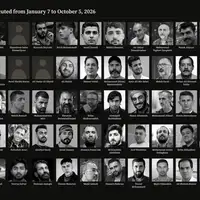
Iran International has verified the identities 16 protestors who have been killed during the protests.
Some sources have reported a higher number of fatalities. US-based human rights group, Human Rights Activists News Agency (HRANA), reported the deaths of at least 19 protestors on Sunday.
Iran International's investigations to verify reports regarding the identities and final number of those killed in cities including Azna, Marvdasht, Malekshahi, Hefshjan, and Farsan are still ongoing.
Iran’s exiled prince Reza Pahlavi paid tribute to the slain protesters, saying in a post on X that he honored their memory and vowed to hold those responsible to account.
“I honor and keep alive the memory and names of our compatriots who were killed in Iran’s national uprising,” Pahlavi said in a post on X.
Addressing the families of slain protestors, Pahlavi said: “On this irreversible path, I stand shoulder to shoulder with you.”
“I assure you that those who ordered and carried out these crimes will be identified and, without doubt, punished,” he added.
Addressing Iran’s Supreme Leader Ali Khamenei, he said: “By spilling the blood of the purest children of this land, you and your network have brought your own downfall closer. We will not back down and will continue until the complete destruction of your anti-Iranian regime.”
Komala Party Leader Abdullah Mohtadi on Sunday offered condolences to the families of slain protesters, and condemned what he described as a “major crime” by the Iran's Revolutionary Guards in Malekshahi, Ilam province.
"The great force of the popular movement will ultimately sweep away the apparatus of oppression and crime," he added in a post on X.

A social media post by a prominent Silicon Valley investor has ignited an unusual discussion among global entrepreneurs: what it would take to invest in a future Iran after the fall of the Islamic Republic.
Josh Wolfe, co-founder of Lux Capital, a New York-based venture capital firm known for backing deep-tech companies in fields such as artificial intelligence, semiconductors, aerospace, and biotechnology, asked fellow investors on X whether they were prepared to deploy capital in a “free Iran” once political conditions change.
Addressing American investors, family offices, and asset managers, Wolfe urged them to begin thinking about how to support Iranian technologists and entrepreneurs when Iran is free and... opportunity is unleashed.”
The post quickly drew attention from senior figures across the technology and investment world, reflecting growing interest in frontier markets shaped by geopolitical transformation.
Among the most prominent responses came from Jeff Huber, a veteran Silicon Valley executive who previously led Google Maps and Google Ads before co-founding Triatomic Capital, an investment firm focused on infrastructure, energy transition, and advanced technologies.
Huber replied in Persian, writing simply, “Count on me,” a gesture that was widely shared among Iranian users as a sign of solidarity and intent.
Another notable response came from Michael Granoff, founder and managing partner of Maniv Mobility, an Israeli venture capital firm specializing in transportation and energy technologies.
Granoff pointed to his firm’s experience investing in the United Arab Emirates following the Abraham Accords, which normalized relations between Israel and several Arab states.
“We’d love to be the first to invest in a free Iranian startup,” Granoff wrote, explicitly linking potential investment in Iran to precedents set by rapid capital flows following political normalization elsewhere in the region.
The exchange also attracted responses from Iranian entrepreneurs in the diaspora, including business founders and professionals based in Canada, Australia, and Europe, many of whom offered to contribute expertise in healthcare, technology, and management during a future reconstruction phase.
While some users criticized the discussion as premature amid ongoing repression and protests inside Iran, the reaction from high-profile investors indicated a broader shift: the idea that Iran’s post-Islamic Republic future is no longer viewed solely through a political or security lens, but increasingly as a potential economic and technological opening.

Protests continued across Iran for a seventh day and night on Saturday, with demonstrations reported in scores of cities and a sharp rise in fatalities marking one of the most violent phases of the unrest so far.
Videos and eyewitness accounts received by Iran International showed security forces opening fire on protesters in several locations, most notably in Malekshahi, a city in Ilam province, where state-linked media confirmed multiple deaths following clashes.
Based on information shared with Iran International, during protests in Malekshahi at least five protesters were killed by direct fire from security forces, and around 30 others were wounded.
Footage from the city showed wounded protesters and scenes of chaos after live ammunition was used.
Overall, at least 15 protesters and one member of the security forces have been reported killed during seven days of demonstrations, according to rights group HRANA.
Iran International was able to confirm that dozens more were wounded by live fire or pellet guns, while arrests were reported across several provinces.
The unrest, initially driven by economic grievances, has increasingly taken on a political character, with protesters chanting slogans against clerical rule and the Supreme Leader, as well as calling for a return of monarchy.


Demonstrations were reported in major cities as well as smaller provincial centers, despite heavy security deployments and warnings from authorities.
In his first public remarks since the protests began, Supreme Leader Ali Khamenei described participants as “rioters” and called for their suppression, signaling a hardening official stance as the unrest entered its second week.