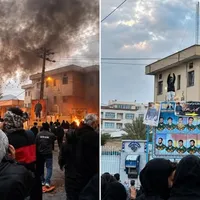
Shopkeepers went on strike in the Ironmongers’ Bazaar area in Tehran on Monday, according to a video sent by a resident to Iran International.

Iranian lawmaker Manouchehr Mottaki reacted to warnings by US President Donald Trump over Iran’s handling of protests by urging Americans to act against their own president.
“Americans should stop their president with a mass uprising,” Mottaki said, after Trump said the United States was watching events in Iran closely and warned of a strong response if protesters were killed.
Mottaki, a member of parliament from Tehran, said Iranian authorities should “endure the protests of dissatisfied people,” but added there should be “not even the slightest leniency” toward what he described as “rioters and agitators” linked to the United States, Britain and Israel, saying they “must sit in their place, as the leader said.”
German parliament vice president Omid Nouripour called on the German government to respond more clearly to state violence against protesters in Iran, saying people there needed international support.
“The people in Iran need support,” Nouripour, who was born in Iran and is a senior member of the Greens, told German news agency DPA. He said protesters were driven by a dire economic situation and what he described as the regime’s tyranny, and questioned why Berlin had held back so far.
Nouripour urged Germany to push for Iran’s Revolutionary Guards to be listed as a terrorist organization by the European Union and said Germany’s foreign minister should consult regional partners. He also said Berlin should engage with Iranian civil society.

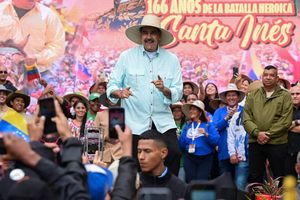
Money held by Iran in Venezuela has already been withdrawn, the head of the Iran-China Joint Chamber of Commerce said on Monday, as questions grow over Iran’s investments following the arrest and transfer of Venezuelan President Nicolas Maduro by the United States.
“Anyone who had money in Venezuela has already taken it out,” Majidreza Hariri said, responding to concerns about Iranian assets worth an estimated two billion dollars.
He added that instability in Venezuela had been evident for at least five to six months, leaving ample time for Iranian funds to be withdrawn, and warned against attempts to use the crisis as a pretext to write off debts.
He said Iran-Venezuela Bank has not functioned as an effective commercial bank in recent years as financial transactions between the two countries were not conducted through this bank.
According to Iran’s foreign ministry on Monday, economic and diplomatic relations with Venezuela remain intact in the wake of Maduro’s arrest, and political developments do not automatically alter bilateral ties.
“Relations between states are based on mutual respect and interests,” said spokesperson Esmail Baghaei earlier in the day.
He said Iranian diplomats and citizens in Venezuela are safe and that Tehran continues to monitor the situation closely.
Protesters gathered in the Baghe Sepahsalar area of Tehran on Monday and chanted “Death to Ali Khamenei,” according to a video received by Iran International.
Iran’s ICT Minister Sattar Hashemi said on Monday any decision to limit or cut internet access would depend on conditions, responding to questions about disruptions during unrest.
“Estimates show that more than 10 million citizens, directly or indirectly, have their lives and livelihoods affected by the country’s communications infrastructure,” Hashemi said. “People have demands and protests, but at the same time there is serious concern about damage to businesses if the internet is disrupted or cut, and this concern is completely understandable.”
He said cutting or restricting internet access was “not an absolute or permanent measure” and that decisions were made by taking into account what he described as “security, livelihood and the protection of citizens’ lives.”