Speaking during the session, Morgan Ortagus, counselor of the US Mission to the United Nations, said Washington remained open to formal negotiations but only if Iran agreed to direct talks and abandoned uranium enrichment.
“We’d like to make it clear to the entire world that the United States remains available for formal talks with Iran, but only if Tehran is prepared for direct and meaningful dialogue. Direct and meaningful.”
“Foremost, there can be no enrichment inside of Iran, and that remains our principle,” she added.
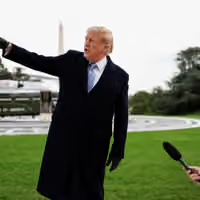
Ortagus said President Donald Trump had repeatedly pursued diplomacy with Tehran.
“In both administrations, President Trump extended the hand of diplomacy to Iran,” she said. “But instead of taking that hand of diplomacy, you continue to put your hand in the fire. Step away from the fire, sir, and take President Trump’s hand of diplomacy.”
Iran rejected that framing.
“We appreciate any fair and meaningful negotiation, but insisting on zero enrichment policy is contrary to our rights as a member of the NPT," Tehran's UN envoy Amir Saeed Iravani said.
"Iran will not bow down to any pressure and intimidation.”
Iravani argued that the crisis stemmed from Washington’s unilateral withdrawal from the 2015 nuclear agreement and subsequent actions by the United States and its allies.
"The root causes of the current situation are clear and did not emerge overnight or in isolation. They lie in the unilateral withdrawal of the United States from the JCPOA in 2018, the sustained and deliberate non-compliance of the three European countries with their commitments and the subsequent military aggression by the United States and the Israeli regime against Iran's peaceful safeguard nuclear facilities.
The remarks referred to the 12-day war in June, when Israel launched a surprise attack on Iran in the middle of nuclear negotiations, drawing in the United States and derailing a planned new round of talks.
Tuesday's Council session revealed deep divisions over whether UN sanctions on Iran have been reinstated under the snapback mechanism of Resolution 2231.
Britain, France and Germany argue that Iran’s nuclear noncompliance has restored sanctions automatically, while China and Russia — backed by Tehran — reject that claim and question the Council’s authority to continue addressing the issue.