Iran, UK foreign ministers discuss nuclear issue in phone call

Iranian Foreign Minister Abbas Araghchi spoke by phone with UK Foreign Secretary Yvette Cooper on Friday, saying Tehran is open to diplomacy based on respect.

Iranian Foreign Minister Abbas Araghchi spoke by phone with UK Foreign Secretary Yvette Cooper on Friday, saying Tehran is open to diplomacy based on respect.
"Iran has never rejected negotiations and dialogue based on respect for the Iranian nation’s legal rights and legitimate interests, but considers talks based on one-sided imposition unacceptable," official media cited Araghchi as saying.
Araghchi criticized the "irresponsible" stance of the three European powers on Iran's nuclear program, saying that Tehran is open to talks respecting its legal rights and legitimate interests but rejects unilateral imposition.
Cooper underlined Britain's commitment to diplomacy on the nuclear dossier. No UK readout of the call has been issued.
The three European countries—France, Germany, and the United Kingdom—triggered the Iran nuclear deal snapback mechanism in August, leading to the reimposition of UN sanctions in September.
Iran and the International Atomic Energy Agency (IAEA) reached a technical understanding in Cairo in September, mediated by Egypt, aimed at gradually restoring inspectors’ access to nuclear sites.
Following the return of UN sanctions on Iran, Foreign Minister Abbas Araghchi said that the United States and three European powers had “killed” the Cairo nuclear agreement through what he called a sequence of hostile actions.
Araghchi said last month that Washington’s approach amounted to “dictation, not negotiation,” accusing the US of trying to achieve through diplomacy what it failed to gain by force.
“They want us to accept zero enrichment and limits on our defense capabilities,” he said. “This is not negotiation.”
Trump said Iran could avoid past and by reaching a nuclear deal, adding that any attempt to revive its program without an agreement would prompt further US action. He has repeatedly said Iran missed an earlier chance to avert the strikes by accepting a deal.

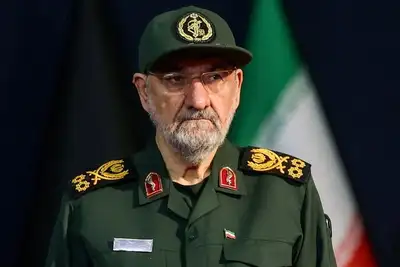
Russia's foreign minister on Friday urged UN nuclear watchdog chief to keep what he called a neutral, non-politicized approach to Iran’s nuclear file, adding any renewed cooperation must be on terms Tehran considers fair.
“We call on IAEA Director General Grossi, who is pushing to restore contacts with Tehran, to strictly adhere to the founding mission of the IAEA Secretariat,” Russia’s state news agency TASS cited Sergei Lavrov as saying in Cairo.
“This includes the neutral, unbiased, and professional nature of assessments and the broader activities of this organization,” Lavrov added.
Iran and the International Atomic Energy Agency (IAEA) reached a technical understanding in Cairo in September, when Egypt mediated a deal aimed at gradually restoring inspectors’ access to nuclear sites.
Following the return of UN sanctions on Iran, Foreign Minister Abbas Araghchi said that the United States and three European powers had “killed” the Cairo nuclear agreement through what he called a sequence of hostile actions.
Lavrov said that Iran could not be expected to resume full cooperation with the agency while feeling exposed to attacks and political pressure.
“Moscow backs efforts to resume talks between Iran and the IAEA, but only on a fair basis that Tehran views as balanced and consistent with the agency’s mandate,” he added.
The IAEA Board of Governors adopted a Western-backed resolution last month, urging Iran to provide full access and information about its nuclear program. Diplomats said the measure passed with 19 votes in favor, 3 against, and 12 abstentions, with Russia, China, and Niger voting against it.
The resolution called on Iran to allow verification of its enriched uranium stockpile and inspections at sites damaged by US and Israeli airstrikes in June.
Araghchi said last month that Washington’s approach amounted to “dictation, not negotiation,” accusing the US of trying to achieve through diplomacy what it failed to gain by force.
“They want us to accept zero enrichment and limits on our defense capabilities,” he said. “This is not negotiation.”
Trump said Iran could avoid past and by reaching a nuclear deal, adding that any attempt to revive its program without an agreement would prompt further US action. He has repeatedly said Iran missed an earlier chance to avert the strikes by accepting a deal.

Iran denies seeking nuclear weapons and says its nuclear program is for peaceful purposes. Supreme Leader Ali Khamenei has said dealing with Donald Trump is beneath the dignity of the Islamic Republic, while Iranian officials have rejected US demands to end uranium enrichment and curb missile capabilities.

Recent rains delivered Iran from a dangerous dry spell straight into to destructive floods because the land has been denuded by years of poor management, environmental expert Roozbeh Eskandari told Eye for Iran.
As heavy rainfall hits parts of the country, flooding has replaced drought as the most visible sign of Iran’s environmental crisis.
But instead of easing water shortages, the rain is accelerating destruction, washing through cities, villages and farmlands without replenishing groundwater or restoring depleted aquifers.
Decades of destructive urban expansion, dam building, interbasin water transfers and unchecked groundwater extraction have compacted the land, Eskandari said, chalking it up to "bad governance"
Trained in hydraulic structures and environmental research, Eskandari studies how dams, urban expansion, soil degradation and groundwater extraction affect flood behavior and water scarcity, placing him at the intersection of engineering, environment and policy.
Land that once drank in the rainfall no longer can: "The soil has lost the ability to absorb the water," Eskandari said.
A familiar pattern has emerged across Iran: rain arrives after prolonged drought, but instead of recharging groundwater, it turns into runoff. Water remains on the surface, rushing downhill, collecting mud and debris and producing floods.
Climate change has altered rainfall patterns, Eskandari adds, increasing intensity and shortening precipitation periods, which he calls "not a root cause, but can be considered as an intensifier."
Flooding offers little relief because Iran lacks the systems needed to manage water when it arrives. Watershed management, land-use planning and early warning mechanisms that could turn floods into a resource are largely absent.
"These floods could be used to feed the aquifers," Eskandari said. Instead, without preparation, they are simply not used."
Environmental injustice
Damage consistently concentrates in areas with weak infrastructure and limited political influence. These include villages, informal settlements and poorer urban districts.
Wealthier neighborhoods are better protected by drainage networks, reinforced construction and faster access to emergency services, turning flooding into an issue of environmental injustice.
The flooding now unfolding is also taking place against a deeper structural crisis.
When Dr. Kaveh Madani spoke to Eye for Iran earlier this year, he warned that Iran is no longer facing a typical drought but what he calls water bankruptcy, a condition in which consumption exceeds supply and reserves built over generations have already been exhausted.
“We have never seen such a thing,” Madani said. “The people of Tehran, the city that is the richest, most populous and strongest politically, is running out of water, is facing day zero.”
Madani’s warning reinforces Eskandari’s assessment that short bursts of rain or even seasonal floods will not reverse the crisis without systemic reform.
For Eskandari, the shift from drought to flooding is not an anomaly but a warning.
“We are one step closer to territorial collapse,” he said. “These policies have taken Iran into, as I call it, a point of no return,” Eskandari said, “for the land and for the people, both at the same time.”
You can watch the full episode of Eye for Iran on YouTube or listen on any podcast platform of your choosing.

US Secretary of State Marco Rubio said on Friday that the main US quarrel with Tehran is how it treats its people, on top of its opposition to Tehran's nuclear programs and regional ambitions.
"In the case of some of these executions," Rubio told reporters at a State Department press conference when asked about reports by human rights organizations that Iran has had the highest number of executions in 2025.
"Some of them, by the way, were in the aftermath of the war with Israel, where they went through and have jailed people and accused people of being informants and spies."
"Our problem with the Iranian regime isn't simply – I mean, obviously, it's predominantly their desire to acquire nuclear weapons, their sponsorship of terrorism – but it's ultimately the treatment of their own people," Rubio said.
Iran denies seeking a nuclear weapon and a standoff between Tehran and Washington over the future of its uranium enrichment has precluded any renewed talks since a 12-day war launched by Israel and the United States in June.
Tehran rejects US demands to stop enrichment, curb its missile arsenal and end support armed allies in the Middle East like Hezbollah and Hamas.
Under Rubio, the state department has ramped up its criticism of Iran's human rights records in frequent social media posts, most recently branding as suspicious the sudden death of a human rights lawyer whom Tehran said died of a heart attack.
Earlier this month, Nobel Peace Prize laureate Narges Mohammedi was arrested at a memorial service for the man, Khosrow Alikordi, along with dozens of other activists in one of the more prominent anti-government protests against authorities since a June war.
Economic and ecological problems have also beset the country as US and international sanctions ramped up after the war.
"You've got a clerical, radical regime that has driven and taken the wealth of that country and used it not to enrich their – secure their people and their future, not to make sure they have enough water and electricity," Rubio added.
"They've used their money to sponsor terrorist organizations all over the world."
Tehran says it oversees a regional axis of Resistance opposed to Israel and the United States, but its sway is diminished after two years of regional combat in which Iran itself and its allies took heavy blows.

As the Middle East enters the final weeks of 2025, the aftershocks of two years of regional war since October 7, 2023 are yielding to a quieter, consequential realignment of regional power.
The Hamas attack, the 12-day Iran-Israel war in June and Israel’s relentless strikes on Iranian-aligned actors did not end the region’s conflicts, but they changed how states now manage them.
In place of grand diplomacy or formal pacts, a loose alignment has begun to form from overlapping security, political and economic imperatives.
Stretching informally from Baghdad to Damascus, this nascent arc of stability is emerging less as a peace project than as a constraint on Iran’s regional reach—interlocking with the logic of the Abraham Accords and pressing against the network of proxies through which Tehran has long projected power.
This shift has unfolded alongside a parallel Iranian track: diplomatic outreach, particularly towards Saudi Arabia and other Arab neighbors, aimed at preserving room for manoeuvre even as Tehran’s proxy network comes under strain.
That dual approach matters, shaping regional calculations as Iran seeks both to absorb pressure and to prevent the emergence of a more openly consolidated front against it.
Iraq: on the mend but shaky
In Iraq, the aftermath of the recent elections and the government’s brief attempt to designate Lebanese Hezbollah and the Houthis as terrorist organisations—followed by a rapid reversal—highlight a deeper struggle over sovereignty.
An emergent bloc of political, clerical and institutional actors is pushing for greater state consolidation, while Iran-backed networks seek to preserve the hybrid armed–political order entrenched since the fight against Islamic State in 2014.
Senior clerics linked to the orbit of Grand Ayatollah Ali al-Sistani have repeatedly warned that the continued power of militias is eroding national unity and hollowing out state authority.
At the same time, developments inside Iraq are complicating Tehran’s position. Efforts to expand domestic gas production, reduce reliance on Iranian imports and attract Western investment after the withdrawal of sanctioned Russian firms are slowly reshaping the economic outlook.
Improved, if fragile, coordination between Baghdad and the Kurdistan Regional Government on revenue sharing and border controls has also narrowed institutional fissures Iran has long exploited.
These shifts are incremental and uneven, and their durability remains uncertain. Yet together they form the first pillar of a broader regional realignment rooted less in ideology than in state capacity and economic necessity.
Iraq may also prove the weakest link: its politics remain volatile, and Iran-aligned actors retain deep organizational and financial networks. Still, even limited consolidation across security, energy and governance would tilt the strategic balance of the Levant in ways long thought unattainable.
Syria: stabilizing but weak
The fall of Bashar al-Assad a year ago, and the rise of a Salafi-leaning transitional authority have opened a period of uncertainty, marked by serious risks but also new constraints on external actors.
Syria is unlikely to join the Abraham Accords or pursue formal normalisation with Israel soon. Nevertheless, quiet contacts involving Damascus, Israel and Qatar—aimed at limiting spillover, restraining militias and establishing narrow de facto understandings—point to the emergence of a pragmatic, if tentative, security framework.
Events beyond Syria’s borders have sharpened regional sensitivities.
Israel’s attempted attack against Hamas leaders in Qatar which failed to kill their intended targets unsettled several US Arab partners and may have influenced strategic thinking even where public positions remained measured.
More significant is the regional effect of a Syria no longer fully aligned with Iran’s strategic priorities. A stabilizing Syrian state, broadly aligned with Iraq and Jordan, would sharply restrict the land and air corridors Iran has long used to supply Hezbollah in Lebanon.
Recent interceptions of Iranian weapons shipments across Syrian and Jordanian territory by Israel and Jordan underscore that Iran may still see Syria as a transit point for its weapons.
A pattern emerging
This informal Baghdad–Damascus alignment intersects with the logic of the Abraham Accords, which the Trump administration’s November 2025 National Security Strategy identifies as the US priority to build up security in the region.
The document frames Arab and Muslin normalization with Israel not as a legacy achievement but as a functional framework for missile defence, maritime security as well as intelligence and regional burden-sharing.
While Saudi Arabia, Qatar, Oman and Kuwait remain outside the Accords formally, growing patterns of de facto cooperation—through air-defence coordination, early-warning integration, maritime security arrangements and intelligence exchanges—suggest the Accords already function as an organising principle for states reluctant to make public commitments.
The spine is formal, but the supporting structures are increasingly informal, sustaining the framework without requiring every participant to commit publicly.
The restrained language of the 2025 strategy reflects a broader shift in Washington’s approach. Rather than relying primarily on American primacy, the United States now appears focused on containing Iran by reinforcing regional structures anchored in the Accords and complemented by emerging alignments in Iraq and Syria.
Across the region, a discernible pattern is taking shape.
Iraq’s uneven institutional recovery, Syria’s cautious stabilisation, Jordan’s intensified border security, the Persian Gulf states’ expanding coordination and Israel’s sustained security posture together form the outlines of the most coherent countervailing structure the region has seen in more than a decade.
The contest, however, remains unresolved. Iran retains significant capacity, adaptive networks and a proven ability to rebuild and readjust.
The Baghdad–Damascus arc nonetheless represents a challenge to Tehran’s regional strategy rooted not in declarations or grand bargains, but in overlapping state interests and practical constraints—an alignment shaped by necessity rather than design.

Former Iranian foreign minister Ali Akbar Salehi suggested Iran and the United States could resume talks by changing the framing of negotiations to a shared goal that Tehran should not have nuclear weapons.
“The title of the negotiation should be ‘Iran should not have nuclear weapons,’” Salehi said in an interview carried by Iranian media. “With this change, both sides can return to the negotiating table while saving face.”
Salehi, who previously headed Iran’s nuclear agency, said the change would be one of wording rather than substance and argued that workable technical solutions acceptable to both sides could be discussed once talks resumed.
“The issue is not technical,” he said. “Solutions that both sides can accept do exist.”
His comments come as diplomacy between Tehran and Washington remains stalled after a brief war between Iran and Israel in June that included US air strikes. US President Donald Trump said last week that Iran’s nuclear program was effectively destroyed by US and Israeli strikes and warned Tehran against restarting it.
Trump said Iran could avoid past and by reaching a nuclear deal, adding that any attempt to revive its program without an agreement would prompt further US action. He has repeatedly said Iran missed an earlier chance to avert the strikes by accepting a deal.
Iran denies seeking nuclear weapons and says its nuclear program is for peaceful purposes. Supreme Leader Ali Khamenei has said dealing with Trump is beneath the dignity of the Islamic Republic, while Iranian officials have rejected US demands to end uranium enrichment and curb missile capabilities.



