• العربية
  • فارسی
Brand
  • Iran Insight
  • Politics
  • Economy
  • Analysis
  • Special Report
  • Opinion
  • Podcast
  • Live TV
  • Iran Insight
  • Politics
  • Economy
  • Analysis
  • Special Report
  • Opinion
  • Podcast
  • Live TV
  • Theme
  • Language
    • العربية
    • فارسی
  • Iran Insight
  • Politics
  • Economy
  • Analysis
  • Special Report
  • Opinion
  • Podcast
  • Live TV
All rights reserved for Volant Media UK Limited
volant media logo

Iran’s drug squeeze hits transplant care as key anti-rejection pill runs out

Dec 1, 2025, 11:34 GMT+0
A patient lies on a bed at Masih Daneshvari Hospital in Tehran on December 1, 2025, as unhealthy air pollution strains vulnerable groups

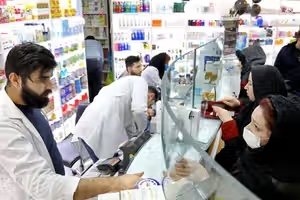
Iran is facing a fresh shortage of the brand-name anti-rejection drug Myfortic with pharmacies halting distribution in several cities and clinicians warning that forced switches to substitutes could endanger a minority of kidney-transplant patients.

Patients in Mashhad said rations shrank from two months to one week before stocks of the drug (mycophenolic acid 360 mg) “fell to zero,” with pharmacists advising a move to domestically made equivalents, the ILNA news agency reported.

Fatemeh Pour-Rezagholi, secretary of Iran’s Kidney Transplant Scientific Association, said originator-brand supplies have not been distributed recently, citing foreign-exchange constraints, sanctions-related frictions and customs delays.

She added that Iranian versions are available and effective for most patients, but unplanned brand changes can be stressful or risky for those early post-transplant or with prior rejection. Importers have indicated the original brand may return later in winter, according to ILNA.

Doctors and pharmacists told ILNA that 70-80% of recipients tolerate domestic formulations, but roughly 10-20% may require a specific brand or closer therapeutic-drug monitoring.

Patient groups and clinicians are urging clearer import timetables, steadier FX allocation for critical transplant drugs and contingency guidance to minimize unplanned switches.

Clinicians say the fiscal and human costs are far higher if grafts fail and patients return to dialysis, and have asked regulators to protect a baseline of imports for high-risk cases while stabilizing domestic supply for the majority.

US sanctions policy formally exempts most medicines and many medical devices, with humanitarian channels – such as Switzerland’s state-backed payment mechanism – designed to process vetted transactions.

In practice, suppliers and aid groups say persistent “over-compliance” by global banks, shippers and insurers fearful of sanctions risk, which can delay or block payments, shipments and insurance even for lawful medical goods.

Economists also point to the rial’s volatility and domestic pricing and procurement rules as recurring hurdles that raise import costs and complicate supply planning.

According to Mehr News on Monday, Iran has raised medicine prices several times in recent months under a “realistic pricing” policy meant to support the domestic pharmaceutical industry, but insurance coverage has not kept pace – leaving patients to shoulder a growing share of drug costs as reimbursements lag behind the hikes.


Banner

Most Viewed

US pilot rescue inside Iran draws mockery of Guards
1

US pilot rescue inside Iran draws mockery of Guards

2

US, Iran hint at talks even as sanctions tighten and Hormuz tensions stay high

3
ANALYSIS

Iran's Saudi leverage could become its liability

4

IAEA raises alarm over Iran access amid mounting Hormuz tensions

5

Islamic Republic asks public to identify opponents abroad

Banner
Banner

Spotlight

  • ‘This is the cost you must pay’: Iran accused of denying food to death-row twin

    ‘This is the cost you must pay’: Iran accused of denying food to death-row twin

  • January's unfinished love stories: Lives severed by Iran protest killings

    January's unfinished love stories: Lives severed by Iran protest killings

  • After Muscat collapse, Tehran argues over what comes next
    ANALYSIS

    After Muscat collapse, Tehran argues over what comes next

  • Xi’s BRICS peace call sparks debate in Iran over China’s role in war

    Xi’s BRICS peace call sparks debate in Iran over China’s role in war

  • Iran's Saudi leverage could become its liability
    ANALYSIS

    Iran's Saudi leverage could become its liability

  • US pilot rescue inside Iran draws mockery of Guards

    US pilot rescue inside Iran draws mockery of Guards

Banner
  • Iran faces looming medicine shortages as UN sanctions strain drug supply chains

    Iran faces looming medicine shortages as UN sanctions strain drug supply chains

  • Iran drug and medical costs surge 70% after subsidy removal

    Iran drug and medical costs surge 70% after subsidy removal