Visiting bombed nuclear sites is dangerous, Iran FM says
A satellite image shows the damaged Arak heavy water reactor facilities, following Israelli airstrikes, in Iran, June 19, 2025. Maxar Technologies/Handout via REUTERS
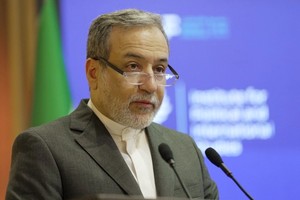
Iran Foreign Minister Abbas Araghchi warned on Wednesday that approaching nuclear sites hit in recent strikes is unsafe and said inspections there can only resume under new security arrangements.
“It is now dangerous to approach nuclear installations because of security issues,” Araghchi told France 24 in Paris. “There are unexploded munitions, and there are also concerns regarding radioactivity and chemical contamination.”
He said inspections by the International Atomic Energy Agency continue at facilities that were not attacked, but access to damaged sites requires “a new framework and proper modalities.”
Araghchi called last week’s resolution by the IAEA’s 35-nation Board of Governors “a political and unilateral decision,” saying it ignored the reality that Iranian nuclear sites had been bombed. “If you do not include the realities on the ground, then you are committing an error,” he said.
The minister said the Cairo agreement reached earlier this year with IAEA Director General Rafael Grossi had acknowledged that conditions had changed after the attacks and that a new inspection protocol would be needed.
Further attacks possible
Asked whether more strikes could occur, Araghchi said Israel’s recent record suggested the risk remains. “The Israeli regime over the last two years has attacked seven different countries,” he said. “So it’s clear that another attack is possible.”
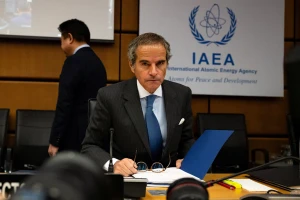
His comments came a day after IAEA Director General Rafael Grossi said in Manila that the agency wants to “fully reengage with Iran” to restore inspection access and verify enrichment activities. The IAEA’s 35-member Board of Governors last week passed a resolution calling on Tehran to inform it “without delay” about the status of its enriched uranium stock and sites hit in June’s strikes.
Iran condemned the vote as “illegal and unjustified,” saying it undermined the Cairo inspection accord that Grossi reached with Tehran in September through Egyptian mediation. Araghchi accused Western powers of “killing” that agreement, saying it had provided a framework for cooperation before Israel and the United States bombed enrichment facilities during the 12-day conflict in June.
No enrichment after attacks
Earlier this month, Araghchi said Iran was no longer enriching uranium at any site in the country, citing the destruction caused by the attacks. “There is no enrichment right now because our facilities — our enrichment facilities — have been attacked,” he said in response to a question from an Associated Press journalist at a conference in Tehran. “There is no undeclared nuclear enrichment in Iran. All of our facilities are under the safeguards and monitoring” of the IAEA.
Iran had previously enriched uranium up to 60% purity — just short of weapons-grade levels — after the United States withdrew from the 2015 nuclear deal in 2018. Tehran says its atomic program is entirely peaceful.
Lebanon’s political leaders reacted on Wednesday against Tehran’s perceived meddling in the country’s internal debates over Hezbollah’s disarmament, following comments from a top Iranian official.
The dispute erupted with an interview by Ali Akbar Velayati, senior foreign policy adviser to Iran’s Supreme Leader Ayatollah Ali Khamenei, who said that the existence of Hezbollah is more important than food for Lebanon.
“Given Israel’s desire to kill and plunder other lands today, Hezbollah’s existence is more essential than bread and water for Lebanon,” Tasnim News cited Velayati.
Lebanon Foreign Minister Youssef Raggi responded to such statement, addressing Iranian Foreign Minister Abbas Araghchi.
“I truly wished to believe that Iran does not interfere in Lebanon’s internal affairs, until I saw Mr. Velayati’s statement,” Raggi posted on X.
“What is more important than water and bread for us is our sovereignty, freedom, and independent decision-making, far from ideological slogans and cross-border agendas that have destroyed our country and continue to push us toward ruin,” he added.
‘Focus on people in Iran’
Lebanese Forces party leader Samir Geagea joined the fray, addressing Ali Khamenei and Velayati, calling on them to move their attention to the needs of people in Iran.
“If you cared about the sorrows of the Iranian people, that would be better for all of us. Lebanon is an independent state with its constitution and democratically elected authorities; you have no right to interfere in its affairs.” Geagea posted on X.
“If only the Iranian people enjoyed what the Lebanese do when you don’t meddle in their affairs,” he added.
Lebanon's government, backed by UN Resolution 1701, pushes for Hezbollah to surrender weapons nationwide for state control.
Hezbollah insists it will only relinquish arms south of the Litani River once Israel fully withdraws and stops violations.
Tehran views surrender of Hezbollah’s weapons as capitulation to the US and Israel, and continues to fund and rearm the group.
Iran’s Foreign Minister Abbas Araghchi on Wednesday said no direct nuclear negotiations are taking place with the United States, but channels remain open if Washington decided to change stance.
“We are ready to negotiate and we have always been ready, the same as in 2015. In 2025 we were negotiating when America and Israel attacked us. We are still ready, but real negotiation needs to be serious,” France 24 cited Araghchi during an interview in Paris.
Asked about the mediation of Saudi Arabia between Iran and the United States, Araghchi said the problem at the moment is not intermediary and they are plenty, but the problem is Washington.
“When the American government ceases dictating and indicates they are ready for a proper agreement, then we can achieve a win-win relationship,” he added. “We are not in rush, and waiting for real negotiations, not just exaggerated requests.”
Reuters reported last week, citing two sources familiar with the exchange, that President Pezeshkian had urged the crown prince to help persuade US President Donald Trump to revive nuclear talks.
Trump said the United States was talking to Tehran, which he said "very badly” wanted a deal with Washington.
‘IAEA ignores war realities’
Araghchi criticized the International Atomic Energy Agency (IAEA) Board of Governors’ recent resolution as a ‘unilateral political decision’ that overlooks attacks on Iran’s nuclear facilities.
“The board is a political body and the IAEA a technical one. The resolution ignores the realities on the ground, as if there was no war and our civilian facilities were not attacked,” Araghchi said. “New modalities are needed for attacked sites and must be negotiated with the agency.”
‘Prisoner exchange’
Araghchi said a prisoner swap with France is imminent but currently pending some judicial processes that need to be completed.
“An exchange was negotiated between us and France involving detained French nationals Cécile Kohler and Jacques Paris, expected over the next one or two months,” he said.
Iran has released French prisoners Cecile Kohler and Jacques Paris who had been detained since 2022 and the couple are currently residing in France embassy in Tehran.
Iran seeks the release of Mahdieh Esfandiari in France who was due to face trial in January on charges of ‘promoting acts of terrorism.’
Talks with France
While in Paris, Araghchi also met French foreign minister Jean-Noël Barrot for discussions on Iran’s nuclear program, detained French nationals, and regional issues, according to the French foreign ministry.
Barrot voiced “serious concern” over Iran’s nuclear activities and urged Tehran to “return without delay” to full cooperation with the International Atomic Energy Agency. He also raised the cases of Cécile Kohler and Jacques Paris, two French citizens currently staying at the French embassy in Tehran, and called for their rapid return to France.
The French statement said the ministers also discussed regional stability, including support for Lebanon’s sovereignty, efforts to maintain the Gaza ceasefire, and reviving prospects for a two-state solution between Israelis and Palestinians.
‘Never interfered in Lebanon’
Asked if Iran wants Hezbollah to attack Israel since the group is weak which resulted in weakness of Tehran too, Araghchi said Iran is not weak and does not interfere.
“We have never interfered in their affairs. It is the Lebanese army and Hezbollah who make their own decisions.” Araghchi said. “This erroneous interpretation of Iranian decline that you mention, is what encouraged Israel to attack us.”
Iran condemned Israel's recent airstrike on a densely populated area in Beirut's Dahiyeh suburb on November 23, 2025, which killed senior Hezbollah commander Haytham Ali Tabatabai.
‘real danger’
Araghchi called for a unified Syria under central authority to prevent regional chaos, accusing Israel of exploiting Bashar al-Assad’s fall to seize more territory.
“Israel attacked and occupied parts of Gaza, Palestine, and now Syria. The real danger is Israel,” he said.
Asked about Syria’s new leader Ahmad al-Sharaa’s hostility toward Tehran and openness to the US and Israel, Araghchi said: “Yes, like many other people, he is mistaken.”
Sonic booms heard over Tehran on Tuesday were from Iranian MiG-29 on a routine training flight, the Air Force said, denying any Israeli incursion into the country's air space.
“This flight, along with other flights by Islamic Republic of Iran Army fighters, is a routine and long-standing measure to ensure sustainable security in Iran’s skies and will continue in the future,” it said in a statement on Wednesday.
An uneasy truce prevails between Mideast arch-enemies Iran and Israel after they traded blows in a 12-day war in June. Their rivalry persists and officials from both countries have vowed to soundly punish the other if fighting resumes.
The denial follows a report by the Israeli outlet JFeed saying Israel Air Force fighter jets briefly entered eastern Iraqi airspace near the Iranian border for reconnaissance.
Iraq’s Ministry of Defense also rejected any foreign intrusion, saying the aircraft sounds heard in several provinces were from routine Iraqi Air Force training missions.
'Psy-op'
JFeed reported that residents in Iraq’s Maysan province near Amarah heard sonic booms consistent with jets flying at high speed.
Prior to the denial from Iraq’s Ministry of Defense, Iranian news outlets offered their own analyses of the incident. Mehr News called it a baseless psychological operation, while Tabnak presented a narrative as if the incursion had actually occurred.
“What happened in Iraqi airspace was not a field operation but a psychological-media scenario aimed at casting the shadow of war, creating a sense of insecurity, and provoking Iranian public opinion,” Mehr News wrote on Wednesday.
“The goal of the operation is seen as a display of Israeli power: a response to attacks by Iran-backed militias in Iraq or a simulation of a possible attack on Iran via Iraqi airspace,” wrote Tabnak, closely affiliated with former Islamic Revolutionary Guard Corps (IRGC) commander Mohsen Rezaei.
Iran’s air defenses were severely degraded during the Israeli military campaign in June, enabling Israeli and US warplanes to bomb the country more easily.
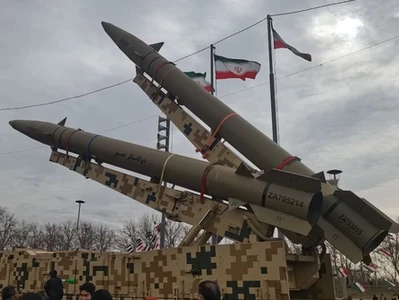
Since the ceasefire, Iran says it has rebuilt its air defense and missile capabilities.
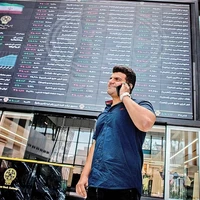
Parliament Speaker Mohammad Bagher Ghalibaf is trying to turn Iran’s mounting economic turmoil into political capital, casting himself as a problem-solver while President Massoud Pezeshkian takes political blows for perceived inaction.
As newspapers warned of collapsing pension funds, chaotic currency markets and rising poverty, Ghalibaf this week moved to appropriate part of the government’s plan to shield low-income families from soaring prices.
It was not the first time he claimed credit for a program launched nearly a decade ago under Hassan Rouhani, but the timing underscored his intent: advance precisely as Pezeshkian is too embattled to push back.
Speaking in the Majles on Wednesday, Ghalibaf proposed replacing the 1980s coupon system with smart-card rationing and portrayed himself as the champion of cost-of-living issues.
He said the scheme would stabilize prices year-round, an ambitious promise in a market where staples such as rice and meat have quadrupled in price since 2020.
For Ghalibaf, however, the political optics appear to outweigh economic feasibility.
At Pezeshkian’s expense
Pezeshkian, who defeated Ghalibaf in last year’s presidential race, now faces intense criticism for promises he is struggling to deliver. Some of the failure is his administration’s own missteps; much of it is structural.
Iran’s economic landscape is dominated by quasi-state foundations, conglomerates linked to the Revolutionary Guards, and networks whose interests often run counter to national policy.
Sanctions remain a permanent drag, yet the president has no authority over nuclear or foreign policy to address them. Key domestic and foreign policy decision-making rests with Iran's Supreme Leader Ali Khamenei.
Tehran’s media and political insiders rarely point to these upper floors of power, leaving the elected administration to absorb the blame.
‘Catastrophe looming’
Iran’s oldest—and relatively neutral— daily Ettela’at captured the depth of the crisis with an unusually stark editorial on Wednesday.
“Pension funds are on the verge of bankruptcy and instability in the foreign exchange market has driven up prices, directly affecting the livelihood of the lower strata of society,” it wrote, chastising the government for placing “massive monetary and forex resources at the disposal of unknown individuals.”
The collapse of pension funds, the daily warned, will be “an irreversible social catastrophe for the country and the nation.”
Ettela’at also weighed in on the sensitive issue of fuel prices, which Pezeshkian has promised to address but finds all but impossible to touch. “You must be too brave to start a losing game of doing away with fuel subsidies,” the editorial warned.
Tehran’s prominent economic daily Jahan Sanat ran three analyses attacking the administration’s “uncalculated” economic decisions. It accused Pezeshkian of “giving a green light to price rises” by scrapping the preferential exchange rate for essential imports, creating uncertainty around the supply of basic staples.
In this climate of economic deterioration, institutional constraints and relentless public pressure, Ghalibaf appears to have sensed opportunity.
By inserting himself into economic policymaking and presenting himself as the official focused on the people’s livelihood, he is positioning for political advantage—likely with an eye on the next presidential race.
Iranian foreign minister Abbas Araghchi on Wednesday accused the United States of bullying and aggression in its treatment of Tehran's Latin America ally Venezuela, as US military forces have gathered in the region.
In a phone call with his Venezuelan counterpart, Araghchi condemned what he called "the United States' bullying approach toward Venezuela and other independent developing countries in the Western Hemisphere," according to state media.
Washington’s "threat to use force against Venezuela is a clear example of a gross violation of the fundamental principles of the UN Charter and the peremptory norms of international law," he added.
The administration of US President Donald Trump has been amassing forces in the Caribbean in the biggest military buildup in the region for decades.
Washington accuses Venezuelan President Nicolas Maduro of narco-terrorism and has offered a $50 million dollar reward for information leading to his arrest. The US strategy remains unclear but appears aimed at unseating the leftist populist.
Ties between Iran and Venezuela flourished under Maduro's predecessor Hugo Chavez and the countries continue to find common ground over objections to US policy.
Araghchi on Wednesday urged UN member states to rally against "America’s aggressive unilateralism" and accused its Mideast foe Israel of being a menace to Latin America, calling it "a major threat to the region’s peace, stability and security."
US news outlets citing US and Israeli officials reported this month that Iran's Islamic Revolutionary Guard Corps sought to kill the Israeli ambassador to Mexico but the plot was thwarted over the summer by Mexican security forces. Iran denied the allegations.