Ex-security chief says Rouhani knew of Ukrainian jet downing
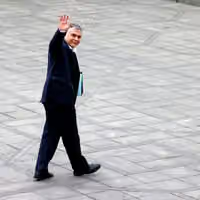
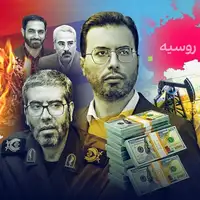
Ali Shamkhani (right) and Hassan Rouhani
Iran’s former top security official Ali Shamkhani has said then-president Hassan Rouhani was promptly informed after the Revolutionary Guards downed a Ukrainian passenger jet in 2020, contradicting public denials by Rouhani’s aides.
In a 90-minute video interview published Sunday on YouTube by filmmaker Javad Mogouei, Shamkhani, former secretary of the Supreme National Security Council, addressed sensitive military and intelligence matters, including the former President Ebrahim Raisi helicopter crash and Iran’s nuclear policy. The video was briefly removed from the channel before being restored.
Shamkhani said then-armed forces chief Mohammad Bagheri called him after the downing of the jet and said “the guys mistakenly shot down the Ukrainian plane.” Shamkhani said he immediately relayed the message to Rouhani.
Ukraine International Airlines flight PS752 was struck by two IRGC missiles on January 8, 2020, shortly after takeoff from Tehran, killing 176 people. In May 2025, Mahmoud Vaezi, Rouhani’s former chief of staff, said Rouhani only found out two days later during a national security meeting.
Shamkhani said there was pressure within the Supreme National Security Council to blame the crash on US electronic warfare. “There was no reason for secrecy,” he said. “It would have come out, and no one would benefit from hiding it.”
Helicopter crash “may exceed technical diagnosis”
The former security chief also addressed speculation around the May 2024 helicopter crash that killed president Ebrahim Raisi and foreign minister Hossein Amir-Abdollahian.
Although military investigators concluded “nothing happened” during the flight, Shamkhani said suspicions of an assassination attempt increased after the 12-day war with Israel.
“Technically it was reviewed, and no foreign involvement was found,” he said. “But it’s possible the cause lies beyond our technical ability to detect.”
Elsewhere in the interview, Shamkhani said he regretted Iran had not pursued a nuclear bomb under president Mohammad Khatami. “If I went back to that period, I would definitely seek an atomic bomb,” he said.
On threats to close the Strait of Hormuz, he said such action would require extreme escalation. “We haven’t reached that point yet.”
Martin Scorsese and Jafar Panahi shared the stage at the New York Film Festival, where Scorsese appealed to streaming platforms to promote Iranian cinema and Panahi reflected on exile, censorship, and the resilience of Iranian artists.
The event, postponed for a week because of visa delays, coincided with the US premiere of Panahi’s It Was Just An Accident, his Cannes Palme d’Or-winning feature, which was filmed secretly and inspired by his imprisonment, according to the Deadline website.
After winning the prestigious Palme d'Or, Panahi returned to Iran where he is banned from filmmaking. However, the ban has not kept him from doing his job.
The discussion between the two prominent filmmakers quickly turned to the condition of Iranian cinema and the challenges facing its filmmakers.
Scorsese asked about the exodus of major Iranian directors in recent years. Panahi said the loss had been devastating for the nation’s film culture.
“It was really difficult to bear … All the backbones of Iranian filmmaking are out. I really miss all those films that they could have made in Iran and they never did,” he said through a translator.
“I don’t have the courage and I don’t have the ability to leave Iran and stay out of Iran. I have stayed there and I’m going to work there.”
Scorsese urged distributors, festivals, and streamers to step in. “These films would have to be supported,” he said. “Streaming platforms have a lot of room. And they throw things … There’s no reason why, you know, a Criterion, Mubi, and Amazon, all of that, couldn’t show these films.”
Platforms should “curate them a bit” so audiences can find and understand them, he added.
Change and defiance
Panahi recalled being banned from filmmaking for 20 years following his arrest. “When they told me that I could not make films for 20 years, or write, or give interviews, or leave Iran for 20 years, I was in shock,” he said.
“50% of your energy and your strength goes into finding the way to … make a film. And you only have 50% left for creativity and for the work itself.”
“In my opinion, the history of these Islamic Republic is divided into before and after … This had affected everything. Of course it would affect cinema too.”
At this year's Academy Awards, four Iranian directors are competing in the Best International Feature Film category, each representing a different country, with a shortlist of finalists due to be announced on March 2.
Iran submitted Cause of Death: Unknown by Ali Zarnegar after a selection process that excluded films by independent and dissident filmmakers.
Among those left out was the critics’ favorite It Was Just an Accident, secretly filmed by internationally acclaimed director Jafar Panahi, who is banned from filmmaking.
Panahi's drama was in turn submitted to the Oscars by France while fellow dissident filmmaker Alireza Khatami’s The Things You Kill will represent Canada.
Shahram Mokri’s Black Rabbit, White Rabbit has also been selected by Tajikistan.
Lebanon refused a $60 million aid offer from Iran, citing concerns over international sanctions, the Islamic Republic’s ambassador to Beirut Mojtaba Amani said on Saturday, amid tension over Hezbollah’s arms and Tehran's role in Beirut's politics.
"The Iranian nation sent aid to the Lebanese people, including $60 million and oil supplies, but the Lebanese government refused to accept it because Iran is under sanctions," Amani said in an interview with Lebanon's LBCI TV.
He said the aid could have helped address part of the Lebanese people’s problems at a time when the country is struggling with economic and social crises.
"The Americans have been promising assistance to Lebanon for three years but have failed to deliver on their promise," the envoy said.
Given the tightening of US and UN sanctions against Iran, any financial dealings or aid from Tehran face international restrictions and sensitivities.
Earlier, Ali Larijani, the secretary of Iran’s Supreme National Security Council, said during a visit to Lebanon that Iran was ready to cooperate in the country’s reconstruction following Israeli attacks.
Hezbollah disarmament
Iran has no information regarding weapons held by Hezbollah, the Iranian ambassador in Beirut said, amid mounting calls by the US and the international community for the Tehran-backed group's disarmament.
Amani said he did not have precise information on whether Hezbollah would again use its weapons against Israel, but said that Sheikh Naim Qassem, the secretary-general of Hezbollah, has said the group is ready to confront any war or attack.
Amani said resistance "is not limited to weapons but stems from willpower — a will that can expel the occupier."
Lebanon’s president Joseph Aoun told Larijani in August that no group may bear arms or depend on foreign support, stressing that cooperation must remain within “national sovereignty and mutual respect.”
The issue has gained urgency as the United States pushes a new plan for Hezbollah’s disarmament, delivered by President Donald Trump’s regional envoy Tom Barrack. The proposal lays out Washington’s most detailed steps yet to remove the group’s weapons after its war with Israel last year.
Founded in 1982 by Iran’s Revolutionary Guards, Hezbollah has grown into Lebanon’s most powerful military and political organization, with capabilities surpassing the national army. The group has fought multiple wars with Israel and repeatedly rejected demands to dismantle its military wing.
In August, the Lebanese cabinet ordered the army to draw up plans to disarm Hezbollah as part of a broader effort to consolidate state control over weapons under a US-backed truce with Israel. Tehran condemned the move, accusing Western powers of seeking to weaken Lebanon’s defenses.
Hezbollah leader Naim Qassem warned in August that any attempt to seize the group’s arsenal “would plunge Lebanon into war,” vowing the Iran-backed movement would not give up its arms.
Iranian foreign minister on Saturday rejected US President Donald Trump’s remarks that Iran might join the Abraham Accords, saying normalization of ties with Israel runs counter to Tehran’s core principles.
In late September, Trump said: "Who knows, maybe even Iran can get in there," referring to the Abraham Accords — a peace deal signed during Trump's first term under which Israel normalized diplomatic relations with four Muslim-majority nations.
“Trump says what he wishes to achieve in different forms,” Foreign Minister Abbas Araghchi said in a televised interview. “The foundation of the Abraham plan is treacherous. It has no alignment with our ideals and will never happen.”
Araghchi warned regional governments that Tehran views normalization with Israel as a betrayal of Palestinian rights and said Iran’s position on the matter will not change.
Addressing Trump’s remarks that Iran’s support for his Gaza peace plan shows it wants peace, Araghchi said, “Trump’s interpretation of the foreign ministry’s statement is his own concern. We're not afraid of saying it, we supported parts of this plan, that’s all.”
“We have always supported any plan or initiative that leads to the halt of crimes and genocide against the people of Gaza,” he said.
Iran had made clear its views on the ceasefire proposal but did not trust Israel’s intentions, the minister added.
“There is no trust in the Zionist regime,” Araghchi said. “We have always supported the resistance and the people of Gaza and Palestine. Any decision that ensures the rights of the Palestinian people and facilitates aid to Gaza gives us no reason to oppose it.”
The ceasefire decision, Araghchi said, ultimately belonged to the Palestinian factions themselves. “The resistance has decided, and this decision belongs to the Palestinian people. No one can decide on their behalf."
Trump on Thursday said Iranian authorities had been in contact to express their desire to pursue peace and to strongly back a deal he reached aimed at winding down the war in Gaza.
"So Iran is different, but Iran wants to work on peace now they've informed us, and they acknowledge that they are totally in favor of this deal. They think it's a great thing. So we appreciate that, and we'll work with Iran," Trump added.
Iran's embassy in Caracas on Saturday condemned the Norwegian Nobel Committee for awarding the Nobel Peace Prize to Venezuelan opposition leader Maria Corina Machado, citing her support for Israel's war on Gaza and for US strikes in the Caribbean.
"Awarding the Nobel Peace Prize to someone who justifies the genocide in Gaza and advocates for military aggression against 🇻🇪 is yet another example of the West’s divisive and interventionist mentality toward the developing world," the embassy said in a post on X.
"This choice is nothing but a mockery of the true meaning of 'peace.'"
The Nobel Committee on Friday awarded the Peace Prize to Machado, recognizing her role in "promoting democratic rights for the people of Venezuela and for her struggle to achieve a just and peaceful transition from dictatorship to democracy.”
The 58-year-old opposition leader, who remains in hiding, has been barred by Venezuelan authorities from running for office against President Nicolás Maduro.
In a message on X, Machado said her movement was “on the threshold of victory” and counted on “President Trump, the people of the United States, the peoples of Latin America, and the democratic nations of the world” as allies in the fight for “freedom and democracy.”
"I dedicate this prize to the suffering people of Venezuela and to President Trump for his decisive support of our cause!"
'Mountain gave birth to mouse'
Iran's culture minister also slammed the Norwegian Nobel Committee's decision to award the prestigious prize to Machado.
“Prominent figures such as Albert Schweitzer, Martin Luther King, Mother Teresa, Mandela, and others have previously received the Nobel Peace Prize, but for years now, such names have been absent," Abbas Salehi said in a post on X.
"And this time again, the mountain labored and gave birth to a mouse — a winner who dedicated her prize to Trump!!”
However, Iranian dissident Nobel laureates Shirin Ebadi and Narges Mohammadi praised the Nobel committee for honoring Machado, saying her courage and leadership serve as an inspiration for Iran’s pro-democracy movement.
The two prominent Iranian rights defenders drew parallels between Venezuela’s democratic movement and their own struggle for change in Iran, emphasizing shared aspirations for freedom and resistance to authoritarian rule.
“She is one of the most deserving recipients,” said Ebadi, who won the Nobel Peace Prize in 2003.
She described Machado as the woman “who succeeded in uniting Venezuela’s opposition,” adding that her political leadership “can offer valuable lessons for Iran’s opposition.”
Ebadi said Machado’s model of unity and courage “should be a role model for the Iranian opposition.”
Iran's exiled crown prince Reza Pahlavi also commended Machado as "a tireless champion of democracy and dignity in Venezuela, and a beacon of hope to freedom-loving people around the world."
"Iranians stand with the people of Venezuela in their struggle. Soon, both our nations will be free," Pahlavi said on X.
Iran is working to keep the threat of war away from its borders through diplomatic engagement, government spokesperson Fatemeh Mohajerani said on Saturday, according to state media.
“Keeping war away from the country is one of the government’s key goals, and we are pursuing it through diplomacy,” she said in her weekly briefing. Mohajerani added that while improving living standards remains a major concern, Iran cannot suspend broader progress under international pressure and years of sanctions.
Her comments come amid shifting regional dynamics following a US-brokered ceasefire between Israel and Hamas that ended two years of conflict in Gaza. The agreement, backed by Egypt, Qatar, and Turkey, includes the release of hostages and prisoners and the withdrawal of Israeli troops from parts of Gaza.
Israeli Prime Minister Benjamin Netanyahu said this week he had resisted pressure to halt the war earlier, arguing Israel’s security depended on “eliminating the nuclear and ballistic threat from Iran” and “breaking the Iranian axis, of which Hamas is a central part.”
US President Donald Trump said Iranian authorities had recently expressed support for the Gaza deal and a willingness to “work on peace,” though Washington has maintained sanctions and tensions remain high following US and Israeli strikes on Iranian nuclear sites in June.
Democratic Senator Cory Booker, a member of the Senate Foreign Relations Committee, told Iran International that Iran and its regional allies remained “the main obstacle to peace,” accusing Tehran of backing groups that threaten the new truce.
Iran, however, has said it supports any agreement that ends what it calls Israel’s “genocidal war” and ensures Palestinian rights, while continuing to urge what it describes as a regional solution based on “mutual respect and diplomacy.”