The UN’s reimposition of snapback sanctions proved the Islamic Republic cannot be reformed and Ali Khamenei is responsible for decades of decline, Iran's exiled prince Reza Pahlavi said Sunday.
“These sanctions and their consequences are the responsibility of Ali Khamenei and his criminal regime who over 46 years have dragged Iran from prosperity to isolation,” Pahlavi wrote on X.
Sanctions alone would not stop the Islamic Republic’s actions but would weaken its resources, Pahlavi said, calling the move a victory for those pushing for maximum pressure.
“This is a victory for all those who have long called for maximum pressure on this regime as a means of tipping the scales in favor of the Iranian people and their movement for freedom,” Pahlavi said.
Governments must go further by designating the Revolutionary Guards as a terrorist group, isolating the Islamic Republic diplomatically and economically, and backing Iranians seeking democracy, Pahlavi said.
“The Iranian people deserve no less,” he added.

Europe had no choice but to trigger the UN snapback mechanism against the Islamic Republic, though the door remains open for talks on a new agreement, Germany’s foreign ministry said late Sunday.
“The Islamic Republic must never acquire nuclear weapons,” the ministry said in a post on X, adding that Iran’s repeated violations of its commitments under the nuclear deal forced Britain, France, and Germany to act.
The three European countries said they would welcome renewed negotiations, but emphasized that sanctions were reinstated in response to Tehran’s failure to comply with its obligations.
Iran must comply with the NPT, cooperate with the IAEA and return to direct talks with the United States to ensure it never obtains a nuclear weapon, Canadian Foreign Ministry said on Sunday.
“Iran must comply with the NPT, cooperate with the IAEA and return to direct talks with the US on an agreement ensuring it never obtains a nuclear weapon,” the ministry’s X account said.
“Canada stands with the E3 and the US in reimplementing UN sanctions on Iran, and calls on all UN members to comply with this obligation.”

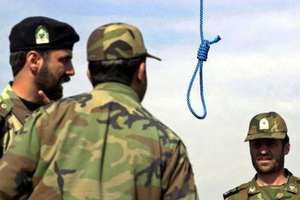
Iran executed a man identified as Bahman Choubi-asl on Monday after convicting him of spying for Israel’s Mossad intelligence service, the judiciary’s news outlet Mizan reported, describing him as "one of the most important spies for Israel in Iran".
Choubi-asl, described as a database specialist with access to sensitive national projects, was accused of providing information to Israeli intelligence during meetings in several countries, including India, Armenia and Ireland.
Mizan said Mossad officers trained him, provided secure communications tools and paid him for his cooperation.
“The main goal of Mossad in attracting the defendant’s cooperation was to obtain the database of governmental institutions and create a breach in Iranian data centers,” Mizan reported.

It added that Israeli officers also sought information on electronic equipment imports and engaged him in intelligence-gathering missions.
The judiciary said Choubi-asl met Mossad agents in nine foreign trips, held dozens of meetings, and received financial rewards and training.


“The defendant’s deliberate and conscious cooperation with the enemy’s intelligence service was proven,” Mizan quoted court documents as saying.
The court convicted him of “corruption on earth” through collaboration with a foreign intelligence service.
The Supreme Court rejected his appeal and upheld the death sentence, which was carried out on Monday morning, Mizan said.
Iran and Israel have been locked in a long-running shadow war that has escalated this year into direct confrontations, including Israeli airstrikes on Iranian targets in June.
Executions of those accused of spying for Israel have risen in recent months, with at least 10 people put to death on such charges, according to Iranian authorities.
“Pursuant to the process set forth in paragraphs 11 and 12 of Security Council resolution 2231 (2015), effective on 27 September at 8 p.m. Eastern Daylight Time, all provisions of resolutions 1696 (2006), 1737 (2006), 1747 (2007), 1803 (2008), 1835 (2008) and 1929 (2010) have been re-applied in the same manner as they applied before the adoption of resolution 2231 (2015) on 20 July 2015," the Office of the Spokesperson for the UN Secretary-General said in a note.
The note obtained by Iran International said that accordingly, the sanctions list maintained by the Security Council Committee established pursuant to Resolution 1737 has been re-established and includes 43 individuals and 78 entities that were listed before the adoption of resolution 2231.
The note listed the individuals and entities that have been added back to the United Nations Security Council Consolidated Sanctions List.

Iran will enter a war with the United States if Israel launches a new attack on the Islamic Republic, a senior Iranian official and former chief commander of the Revolutionary Guard said on Sunday.
"The Zionists (Israel) are seeking to try their luck against Iran once again," Major General Mohsen Rezaei told the state TV.
“However, events will soon happen inside Israel that will make this impossible,” he said. “It is not expedient to talk about them now.”
His remarks came hours after Ynet reported Israel is on heightened alert after the United Nations sanctions were reinstated on Iran under the so-called snapback mechanism, amid fears in the Jewish State that Tehran could accelerate its nuclear activities.
The sanctions were imposed despite several rounds of talks between Tehran and world powers aimed at clinching an agreement on Tehran’s disputed nuclear program.
Rezaei said Tehran will not accept further negotiations with Western powers that give Israel time to prepare or strengthen its position.
“Negotiations aimed at giving Israel time or strengthen it are unacceptable,” the veteran general-turned-politician told the state TV as he was once again seen wearing his military uniform.
“If that happens, the moment Israel starts a war, we will also enter a war with the United States,” said Rezaei who is a member of Iran’s Expediency Council.
“Negotiations must not be accepted in any form, at any price, or without conditions,” he said. “If we enter negotiations, military force must in no way be used against Iran. Otherwise, we will retaliate; not only against Israel, but also against American targets in the region.”
The warning followed fresh statements from Iran’s military leadership emphasizing the country’s readiness to respond to any attack.
Earlier on Sunday, Iran’s armed forces chief of staff Abdolrahim Mousavi said the military is fully prepared to respond to any threat or assault.
“Unity between the army and the Revolutionary Guards is the guarantor of preserving Iran’s territorial integrity,” Mousavi said during a meeting with the Guards’ commander.
“The armed forces are fully ready to confront any threat or possible aggression with strength,” he added.