• العربية
  • فارسی
Brand
  • Iran Insight
  • Politics
  • Economy
  • Analysis
  • Special Report
  • Opinion
  • Podcast
  • Iran Insight
  • Politics
  • Economy
  • Analysis
  • Special Report
  • Opinion
  • Podcast
  • Theme
  • Language
    • العربية
    • فارسی
  • Iran Insight
  • Politics
  • Economy
  • Analysis
  • Special Report
  • Opinion
  • Podcast
All rights reserved for Volant Media UK Limited
volant media logo

Drones could soon strike a European city, Iranian official warns

Jul 13, 2025, 09:18 GMT+1Updated: 07:51 GMT+0
A drone is launched during a military exercise in an undisclosed location in Iran, in this handout image obtained on August 25, 2022.

Five drones could strike a European city in the near future, a former senior Iranian official warned on Saturday, saying Western countries should no longer feel secure following Iran’s recent conflict with Israel.
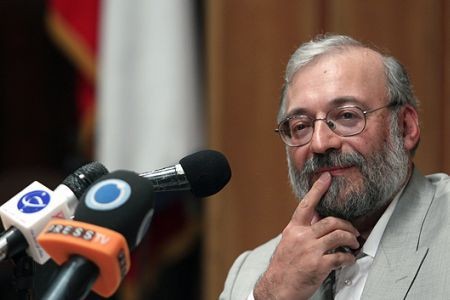

“Europeans can no longer move about comfortably in their own countries,” Mohammad Javad Larijani, a former senior judiciary official who also served as a top adviser to the Supreme Leader, warned in comments broadcast on state television.

“It’s entirely possible that in the near future, five drones could strike a European city.”

The statement comes as the Islamic Republic faces renewed international pressure over its nuclear program. Britain, France and Germany, three signatories to the 2015 nuclear agreement, are considering the option of triggering a snapback of United Nations sanctions if Iran is deemed non-compliant.

Mohammad Javad Larijani,
100%
Mohammad Javad Larijani,

This month, Iran expelled the International Atomic Energy Agency's inspectors, accusing them of being a political tool and having given intelligence to aid the attacks made by Israel and the US on Iran's nuclear facilities last month.

Last week, the UK Parliament’s Intelligence and Security Committee (ISC) released a report warning that Iran poses one of the most severe state-based threats to British national security, on par with adversaries like Russia and China.

And last year, the European Parliament also issued warnings about the threat posed by Iran. A statement said: "The Iranian regime’s use of criminal networks as terrorist proxies in Europe poses a grave threat to our internal security."

Larijani's warning to Europe comes just days after he suggested US President Donald Trump could be assassinated by a drone strike while vacationing in Florida.

“Trump has done something [in supporting Israel's war on Iran] so that he can no longer sunbathe in Mar-a-Lago,” he said. “As he lies there with his stomach to the sun, a small drone might hit him in the navel. It’s very simple.”

'Israel, US may attack Iran again'

Larijani said that it is possible that Israel and the United States will seek to launch another attack on Iran.

“The United States and Israel know that if they strike again, our response will be heavier and more unexpected. America is calculating carefully."

Speaking of last month's war with Israel, sparked by surprise attacks on Iran on June 13, Larijani said: “The war began with us being surprised. We did not expect such technologies to be used in the attack. They had inserted and stationed many operatives inside Iran," over 700 Iranians arrested in the wake of the war accused of supporting Israel.

“The enemy can no longer rely on its old methods. This time, we will not be surprised," he added.

Most Viewed

Ideology may be fading in Iran, but not in Kashmir's ‘Mini Iran'
1
INSIGHT

Ideology may be fading in Iran, but not in Kashmir's ‘Mini Iran'

2
INSIGHT

Hardliners push Hormuz ‘red line’ as US blockade tests Iran’s leverage

3
VOICES FROM IRAN

Hope and anger in Iran as fragile ceasefire persists

4

US sanctions oil network tied to Iranian tycoon Shamkhani

5

Iran International says it won’t be silenced after London arson attack

Banner
Banner

Spotlight

  • Hardliners push Hormuz ‘red line’ as US blockade tests Iran’s leverage
    INSIGHT

    Hardliners push Hormuz ‘red line’ as US blockade tests Iran’s leverage

  • Ideology may be fading in Iran, but not in Kashmir's ‘Mini Iran'
    INSIGHT

    Ideology may be fading in Iran, but not in Kashmir's ‘Mini Iran'

  • War damage amounts to $3,000 per Iranian, with blockade set to add to losses
    INSIGHT

    War damage amounts to $3,000 per Iranian, with blockade set to add to losses

  • Why the $100 billion Hormuz toll revenue is a myth
    ANALYSIS

    Why the $100 billion Hormuz toll revenue is a myth

  • US blockade targets Iran oil boom amid regional disruption
    ANALYSIS

    US blockade targets Iran oil boom amid regional disruption

  • Iran's digital economy battered by prolonged blackout
    INSIGHT

    Iran's digital economy battered by prolonged blackout

•
•
•

More Stories

Iranian official posts image that appears to depict a nuclear strike on Israel

Jul 12, 2025, 20:55 GMT+1

An advisor to Iran's parliament speaker has shared an image that seems to show a nuclear attack on Israel.

Mehdi Mohammadi, a strategic adviser to Mohammad-Bagher Ghalibaf, posted the image in an Instagram story on Saturday.

The image showed a map of Israel with two mushroom clouds positioned over its territory—an iconography widely recognized as symbolizing atomic blasts.

100%

A few hours later, Mohammadi posted a second Instagram story seeking to clarify his position.

“Hello friends,” he wrote. “That story was posted by the admin of my page and was deleted a few minutes later. I personally do not believe that developing nuclear weapons would enhance Iran’s deterrence. At the very least, it’s an extremely complex issue."

"Just as possessing nuclear weapons hasn’t prevented Israel from receiving heavy blows, or enabled Ukraine to strike Russia decisively, the military utility of nuclear arms is far more limited than most people imagine,” he added.

Iran continues to deny any ambition to acquire nuclear weapons, dismissing international concerns as politically driven.

Last month, American airstrikes targeted major Iranian nuclear facilities at Fordow, Natanz, and Isfahan. The attacks came after days of Israeli campaign against Iran where the Jewish State used cruise missiles and deep-penetration bombs to damage infrastructure and affiliated military units.

In October, a group of lawmakers called on Iran's Supreme National Security Council to review the country's defense doctrine and consider adopting nuclear weapons.

UN nuclear inspectors hid microchips in their shoes, Iranian MP alleges

Jul 12, 2025, 20:37 GMT+1

A senior Iranian lawmaker on Saturday accused International Atomic Energy Agency (IAEA) inspectors of hiding surveillance microchips in their shoes during visits to Iran’s nuclear sites.

"Why is it that every time these inspectors enter our nuclear facilities, and we conduct body checks, we find microchips in their shoes?" the deputy chairman of the parliament’s National Security and Foreign Policy Committee said.

"It is a fact, not a slogan, that these inspectors are spies," Mahmoud Nabavian said in remarks published by Fars News Agency.

He accused the UN nuclear watchdog of repeatedly passing classified information to foreign governments. "How did Iran’s nuclear installations, such as those in Natanz, become known to the outside world?"

“They know because they are told—by their satellites, their spies, and the agency itself,” he added.

Nabavian said IAEA Director General Rafael Grossi had directly shared Iranian data with Western states. "Even now, they themselves admit all our main statistics and information are given to them by Mr. Grossi.”

Iran’s parliament in late June approved a bill to suspend the country’s cooperation with the IAEA, less than a day into a ceasefire with Israel following 12 days of deadly war.

Parliament members also criticized the IAEA and Grossi, accusing the agency of providing “false reports, politically biased behavior, and facilitating espionage against Iran’s nuclear infrastructure.”

The hardliners and Kayhan newspaper, overseen by Iran's Supreme Leader Ali Khamenei, recently called for the arrest and execution of Grossi if he visited Tehran.

Rights groups warn of imminent execution of three Iranian Arab men

Jul 12, 2025, 18:25 GMT+1

Fifteen human rights organizations issued a joint statement Saturday calling for international action to halt the looming executions of three Arab political prisoners from Ahvaz who were transferred to solitary confinement earlier this month.

Ali Majdam, Moein Khanfari, and Mohammadreza Moghadam were sentenced to death on charges of “armed rebellion,” and, according to reports from Ahvaz, were moved to solitary cells on June 26.

The signatories warned the men now face an imminent risk of execution.

“These individuals are at grave risk, despite credible reports of coerced confessions, prolonged solitary confinement, and grossly unfair trials,” the statement read.

Rights advocates said the renewed isolation, set against the backdrop of heightened internal repression following the 12-day war between Iran and Israel, signals a retaliatory acceleration in executions.

The statement condemned the sharp rise in executions in recent months, calling it a “tool of repression” in the hands of Iran’s security apparatus.

“We warn against retaliatory measures following the recent conflict and demand an immediate halt to these inhumane practices.”

'Not a tool of justice, but control'

The groups reminded Iran's global standing as one of the top executioners, often after trials lacking transparency, access to independent legal counsel, or protection from torture.

“The death penalty in Iran is not a tool of justice, but a mechanism for fear and control,” the statement said.

The coalition demanded that governments and rights institutions act swiftly to pressure the Islamic Republic to suspend the executions and abolish all death sentences against political, civil, and social activists.

Among the 15 signatories to the statement are Iran Human Rights Organization, Kurdistan Human Rights Association-Geneva, the Ahwazi Center for Human Rights, and Haalvsh.

Iran detains 21 Christian converts amid postwar crackdown, rights group says

Jul 12, 2025, 15:45 GMT+1

Iran has arrested at least 21 Christian converts in recent weeks, with some facing charges under a new law targeting alleged collaboration with hostile states, a rights group said.

The arrests, carried out by the Ministry of Intelligence, took place in Tehran, Rasht, Urmia, Kermanshah, Varamin, and Kerman, including one just before the recent war with Israel, according to the advocacy group Article 18.

While full details of the cases remain unclear, some involve the alleged possession of Bibles. Others may fall under a law that allows harsher punishments—including the death penalty—for individuals accused of cooperating with countries such as the United States or Israel.

Some detainees “have been threatened with charges under a newly proposed law seeking to enforce harsher punishments for those alleged to have collaborated with hostile states such as the United States or Israel,” the group said.

The bill, titled the “Intensification of Punishment for Espionage and Cooperation with the Zionist Regime and Hostile States Against National Security and Interests,” was approved by Iran’s parliament late June but faced scrutiny from the Guardian Council, which is tasked with ensuring that legislation complies with Islamic law and the Constitution.

Hadi Tahan-Nazif, spokesman for the Guardian Council, acknowledged on Friday that parts of the bill remain legally problematic.

“Since criminal laws require precision, there were ambiguities and flaws that needed to be resolved,” he said.

Earlier this month, 57 Iranian academics, jurists, and lawyers issued a public letter condemning the legislation.

Pattern of religious persecution

The new wave of arrests comes amid broader crackdowns that have targeted activists, dissidents, and members of religious minorities—including Jews, Baha’is, and Christian converts. Though Christianity is officially recognized under Iran’s constitution, the state continues to treat conversion from Islam as a threat to national security.

The continued targeting of Christian converts stands in direct violation of Article 18 of both the Universal Declaration of Human Rights and the International Covenant on Civil and Political Rights, both of which guarantee freedom of religion, including the right to change one’s belief and to practice it openly or in private.

Putin urges Iran to accept 'zero enrichment' nuclear deal with US - Axios

Jul 12, 2025, 12:18 GMT+1

Russian President Vladimir Putin has urged Iranian officials to accept a nuclear agreement that would ban uranium enrichment, a key US demand in any future talks, Axios reported Saturday citing multiple sources.

Putin conveyed his position to both President Donald Trump and Iranian leaders in recent weeks, encouraging Tehran to move toward a deal that would help restart negotiations with Washington.

“Putin would support zero enrichment,” one European official told Axios. “He encouraged the Iranians to work toward that… The Iranians said they won’t consider it.”

Shortly after publication, Iran’s Tasnim News, affiliated with the Revolutionary Guards, rejected the Axios report, citing an informed source.

Moscow has long defended Iran’s right to enrich uranium in public, but behind closed doors, Russian officials have taken a tougher stance following the 12-day war between Iran and Israel, according to European and Israeli officials familiar with the talks cited by Axios.

Despite Iran’s military support for Russia in Ukraine, including drones and missiles, Tehran was frustrated with Moscow’s limited support during the war with Israel, Axios reported.

Russian officials have since told Iran that they would be willing to remove its stockpile of highly enriched uranium and supply low-level fuel for civilian use if a deal is reached.

Araghchi says Iran open to nuclear talks, but enrichment non-negotiable

Tehran has insisted it will not accept any agreement that eliminates its ability to enrich uranium.

Iran is open to future talks over its nuclear program but will not accept any deal that excludes uranium enrichment, Foreign Minister Abbas Araghchi said Saturday during a meeting with foreign envoys in Tehran.

“We have always been ready to negotiate over our nuclear program and will continue to be,” Araghchi said. “But it is natural that we must ensure any future talks are not turned into war by the US or others.”

“No agreement will be accepted without enrichment,” he added. “If talks happen, the subject will only be the nuclear issue.”

Araghchi ruled out any discussion of Iran’s military capabilities. “Iran’s military and defense power will not be part of any negotiation,” he said.

He said Iran’s nuclear facilities were damaged in recent strikes by the US and Israel, but the bigger blow was to the global non-proliferation regime. “The reality is our facilities were hit, but what was hit harder was the Non-Proliferation Treaty itself.”

He added that cooperation with the IAEA would continue but now be managed through Iran’s Supreme National Security Council and reviewed on a case-by-case basis.

Axios also reported that plans to hold US-Iran nuclear talks in Oslo have been dropped after both sides cooled on the idea. They are now seeking an alternative venue, according to the sources cited by the report.

Enrichment ban remains key dispute

Meanwhile, Israeli officials continue to warn against any Iranian enrichment. Former Israeli Defense Minister Yoav Gallant said this week that Supreme Leader Ali Khamenei must abandon nuclear ambitions or face further military action.

“The strikes in June exposed your system and dismantled your capabilities,” Gallant wrote in a public letter.

Israeli Prime Minister Benjamin Netanyahu also dismissed future diplomacy unless Iran ends all enrichment and missile development.