"The E3, the European three, are on the verge of instituting snapback sanction provisions against (Iran) by October of this year," US Secretary of State Marco Rubio told a Senate committee on Wednesday.
Britain, France and Germany - as signatories to a mostly lapsed 2015 nuclear deal with Iran - have until October to trigger United Nations sanctions on Tehran if they deem it non-compliant.
"If you asked Iran, they say, we're not interested in a nuclear weapon. We're just interested in enrichment," Rubio continued, justifying the US stance in ongoing talks against any Iranian uranium enrichment.
"The problem is that if you can enrich at any level, 3.67 or whatever, you're 80% of the way there. All that's required now is a few months or weeks of time to get to the weapons grade. It makes them a threshold of nuclear power."
Iran has asked Oman to intervene and help persuade the United States to ease its hardline position in the ongoing nuclear negotiations, two diplomatic sources in Tehran told Iran International.
Iran’s foreign ministry recently sent a message to Omani officials, urging them to implore Washington to soften its demands, the sources told Iran International on condition of anonymity.
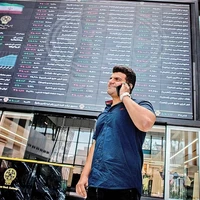
“Given the dependency of Iran’s financial markets—currency, gold, and stocks—on the outcome of the negotiations, the message emphasized that a diplomatic compromise is possible if the United States moderates its position,” one source said.

Oman's foreign minister Badr Al-Busaidi announced on Wednesday that the fifth round of Iran-US negotiations will be held in Rome on Friday, May 23.

Iran has asked Oman to intervene and help persuade the United States to ease its hardline position in the ongoing nuclear negotiations, two diplomatic sources in Tehran told Iran International.
The Trump administration has ruled out any Iranian uranium enrichment, calling it a red line in negotiations with the Islamic Republic — a condition Iran considers unacceptable.
Iran’s foreign ministry recently sent a message to Omani officials, urging them to implore Washington to soften its demands, the sources told Iran International on condition of anonymity.
“Given the dependency of Iran’s financial markets—currency, gold, and stocks—on the outcome of the negotiations, the message emphasized that a diplomatic compromise is possible if the United States moderates its position,” one source said.
Foreign Minister Abbas Araghchi said on Tuesday that Tehran was reviewing the possibility of holding a new round of negotiations with Washington—an indication that Iran was awaiting a response from the US via Oman, the sources told Iran International.
Oman's foreign minister announced on Wednesday that Iran and the United States will hold the fifth round of nuclear talks in Rome on Friday, May 23.
No clear alternative
Iranian officials, the sources added, are concerned about the absence of a clear diplomatic alternative if talks collapse.
There is currently no alternative strategy to manage the crisis and govern the country in the event of the negotiations’ failure, they said, stressing that maintaining the diplomatic track remains a priority for Tehran.
Reuters reported on Wednesday, citing three unnamed Iranian sources, that the Iranian leadership has no clear contingency plan should the nuclear talks fail.
The sources suggested that while Iran might pivot toward China and Russia as an alternative strategy, such a path would be fraught with challenges. China is entangled in a trade war with the US, and Russia remains mired in its military conflict in Ukraine.
The alternative plan is simply to continue the pre-negotiation strategy, Reuters reported citing a senior Iranian official, suggesting that Iran would avoid escalating tensions while reinforcing ties with allies such as Russia and China
The UAE's state-owned The National reported on Monday citing two Iranian officials, that the negotiations between Washington and Tehran have stalled due to disagreements over uranium enrichment levels, and Tehran has not yet accepted Oman's invitation for a fifth round of talks with the US.
On Tuesday Iran’s Supreme Leader Ali Khamenei dismissed US demands to halt uranium enrichment as “nonsense and excessive.” He also warned that the likelihood of successful negotiations remains low, signaling a toughening stance at the highest levels of the Islamic Republic.
Iran's President Masoud Pezeshkian will visit Oman on May 27–28 at the invitation of Sultan Haitham bin Tariq, the president's office announced on Wednesday.
While Oman is mediating nuclear talks between Iran and the United States, the nuclear issue is not currently on the official agenda for Pezeshkian's visit.

A speech by Iran’s supreme leader Ali Khamenei on Tuesday left many in and outside the country wondering whether negotiations with Washington are about to come to a screeching halt—but will they?
In his speech, Khamenei questioned the value of engaging with the United States and dismissed the enrichment red line set by the administration of President Donald Trump.
The Islamic Republic seeks no one’s permission, he said, adding that he doubted the negotiations would yield any results.
Such remarks have cast fresh uncertainty over a process already clouded by confusion over what has been discussed if such basic disagreements linger.
But has Khamenei really pulled the plug on diplomacy, or is he just shifting focus from one track to another?
Could there be multiple negotiation tracks?
Short answer: yes.
Under President Mahmoud Ahmadinejad (2005–2013), Iran pursued diplomacy on multiple fronts. Ahmadinejad and one of his vice presidents held indirect talks via foreign intermediaries, while chief negotiator Saeed Jalili—officially representing Khamenei—led formal talks with European counterparts.
Meanwhile, foreign minister Ali Akbar Salehi, with Khamenei’s blessing, quietly opened a channel with the US in Oman. That secret track ultimately laid the groundwork for the 2015 nuclear deal.
Where is the second track now?
During President Trump’s recent visit to Saudi Arabia, Iran’s former national security chief Ali Shamkhani appeared on NBC, hinting at a proposal for compromise on uranium enrichment.
Trump reposted the message twice, signaling his approval, and remarked that negotiations appeared to be moving in the right direction.
The move appeared to have blindsided foreign minister Araghchi, whose spokesman insisted Shamkhani was not speaking for the official negotiating team.
Both Araghchi and his team criticized US officials—particularly Trump and lead negotiator Steve Witkoff—for spreading misleading information. But Shamkhani stood firm in remarks and editorials carried by Nour News, an outlet closely linked to him.
Shamkhani also holds an institutional advantage: he sits as Khamenei’s representative in the Supreme Council of National Security, to which Araghchi is required to report after every round of talks with the Americans.
How are the two tracks different?
The core difference appears to be over uranium enrichment. Araghchi’s team seeks a deal that guarantees a minimum level of enrichment. Shamkhani’s approach, in contrast, may be less focused on technical thresholds.
But both tracks would ultimately fall under Khamenei’s authority. Internal dissent against his direction remains unthinkable at the highest levels.
Khamenei’s remarks on Tuesday may be the first step in rolling back on the foreign ministry’s effort in favor of seeing what a channel led by Shamkhani might yield behind the scenes.

Why multiple tracks though?
The leadership in Tehran may be testing which channel best serves its strategic objectives. Khamenei has managed multiple negotiation channels before.
If other figures within the system see a diplomatic opening as a path to future influence—especially in a post-deal or post-Khamenei era—he may well authorize additional backchannels.
He may also be seeking to prolong the process, hoping that a future US president will take a more conciliatory approach. Whether Trump would be willing to wait that long remains to be seen.
Iran's President Masoud Pezeshkian will visit Oman on May 27–28 at the invitation of Sultan Haitham bin Tariq, the president's office announced.
Oman is mediating nuclear talks between Iran and the United States; however, the issue is not currently on the official agenda for Pezeshkian's visit.
Pezeshkian's office says he will discuss trade cooperation and investment opportunities in meetings with Omani officials.