Iran’s hardline daily Javan warned on Sunday that any potential nuclear agreement with the United States would be at risk, arguing US President Donald Trump is likely to abandon or redefine any deal to his advantage.
In a sharply worded editorial, Javan accused Trump of using cognitive tactics such as media pressure, humiliation of adversaries, and narrative dominance to pursue his goals.
The paper said experience with the 2015 nuclear accord showed that “the US lacks lasting commitment to international obligations under populist leadership.”
While the editorial cautioned against optimism about a future deal, it also acknowledged that disengagement from diplomacy altogether could leave Iran vulnerable and strategically paralyzed.
A series of recent developments suggests nuclear talks between Iran and the United States have stalled, significantly increasing the risk of military confrontation, according to an analysis by Iran analyst Morad Veisi.
Veisi identifies ten key indicators of escalating tension, including: a sharp uptick in hostile rhetoric between Tehran and Washington, a complete halt in direct and expert-level negotiations, and a lack of new diplomatic initiatives.
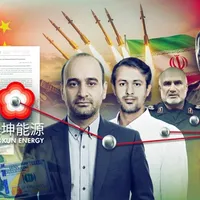
The US has resumed sanctions targeting Iran’s financial networks, while Israel has intensified military drills and regional proxy clashes have surged, the analyst said, adding that Iran is also importing large volumes of rocket fuel chemicals, signaling continued missile program expansion.
Other red flags include the appointment of a hardline US military commander to oversee the Middle East, and a likely censure of Iran by the IAEA Board of Governors, backed by European powers.
He believes that Tehran may be underestimating the potential for direct US or Israeli military action.
A potential visit by Russian President Vladimir Putin to Tehran may offer a final diplomatic window to avert escalation, Veisi concluded.
Iran must shift from technical diplomacy to strategic political risk-taking to break the deadlock in nuclear talks, the conservative Khorasan daily wrote in an editorial addressed to Ali Shamkhani, a senior adviser to the Supreme Leader.
The paper criticized past reliance on technical negotiations, arguing that US flexibility was driven by domestic economic needs, not Iranian concessions. Now, with Washington demanding full elimination of enrichment, Tehran must recalibrate its strategy.
Khorasan urged Iran to increase economic and geopolitical pressure on the US by initiating controlled regional tensions, deepening strategic talks with China and Russia, and reducing dependence on direct negotiations with Washington.
The editorial warned that continued reliance on US talks weakens Iran’s position globally and regionally, and called on Shamkhani to lead a new, comprehensive strategic plan involving regional diplomacy and alliances.
Nearly two years after stepping down as the Secretary of Iran’s Supreme National Security Council (SNSC), Shamkhani appears determined to maintain influence over Tehran’s nuclear diplomacy.
Iran could take far-reaching steps beyond nuclear measures if Western powers trigger the snapback mechanism following an expected resolution by the IAEA Board of Governors, the hardline Farhikhtegan daily warned on Sunday.
Citing unnamed officials, the paper said Tehran's response may include boosting uranium enrichment to near weapons-grade levels, installing advanced centrifuges at the underground Fordow site, and reducing cooperation with the IAEA — including curbing inspections and disabling surveillance cameras.
The paper also said that Iran’s threat to withdraw from the Nuclear Non-Proliferation Treaty (NPT), first issued years ago, remains on the table but is now seen as a minimum response, given Iran's enhanced enrichment capabilities.
“The time for symbolic threats is over,” Farhikhtegan wrote.
US President Donald Trump’s recent remarks and actions suggest a dwindling interest in diplomacy with Iran, despite five rounds of indirect nuclear talks, according to an analysis published by the Tehran Times.
The Tehran Times argued that Trump's “zero-sum demands” and fresh US sanctions show a preference for pressure over compromise.
Speaking to reporters aboard Air Force One on Friday, Trump once again said that Iran cannot enrich uranium inside the country, adding, “There is not going to be enrichment [of uranium in Iran].”
“Donald Trump’s strategy regarding Iran’s nuclear program is characterized not by a sincere intent to achieve a fair and enduring agreement, but by maneuvers focused on enforcing unilateral conditions," read the article.

A senior Iranian lawmaker has said that the United States has no alternative but to accept uranium enrichment on Iranian soil.
“America knows well that it has no option but to accept enrichment in Iran,” said Mohammad Mehdi Shahriari, a member of the Iranian parliament’s National Security and Foreign Policy Committee.
Shahriari also emphasized the importance of continued diplomatic engagement. “We should not leave the negotiating table, because Iran’s presence in talks demonstrates that the Islamic Republic is seeking a solution.”