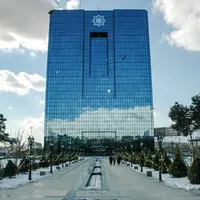
Iran should not delay economic planning while awaiting the outcome of indirect talks with the United States, former Central Bank governor Valiollah Seif said on Saturday, warning that excessive reliance on negotiations could hinder needed reforms.
In remarks to ISNA news agency, Seif called the nuclear talks “potentially decisive” but said the government must act independently. “We must not, under any circumstances, wait for the outcome of negotiations to implement our policies,” he said. “We should always have a plan for the months ahead.”

A senior Iranian parliamentarian said on Saturday that uranium enrichment is a “fixed principle” in the Islamic Republic’s nuclear policy and any future agreement must preserve this capability.
Alaeddin Boroujerdi, a member of the Iranian parliament’s National Security and Foreign Policy Commission, told state media that Iran would only accept a nuclear deal if it includes the full preservation of its indigenous enrichment capacity.
“Any negotiation on lifting sanctions or a nuclear agreement is only possible with the preservation of our enrichment capabilities,” Boroujerdi said. “Without that, there will be no agreement. This is a constant principle in our nuclear policy.”

A senior Iranian lawmaker said on Saturday that uranium enrichment is a core national right and will not be subject to negotiations in ongoing or future nuclear talks.
Ebrahim Azizi, head of the Iranian parliament’s National Security and Foreign Policy Committee, told state media that while Iran remains open to dialogue, the country will never bring its “nuclear industry and the principle of enrichment” to the negotiating table.
“We may discuss enrichment levels, but the essence of the industry is non-negotiable,” Azizi said. “This is a fundamental right of the Iranian people and a strategic pillar of national development.”
Azizi also warned that the United States must abandon what he called “excessive demands” and accept Iran’s position if talks are to continue, adding that US pressure tactics would not succeed in undermining Iran’s nuclear capabilities.

A brief pause in new US sanctions on Iran was quietly ordered and then swiftly reversed by President Donald Trump, according to an editorial published Friday by The Wall Street Journal.
The Journal reported that White House press secretary Karoline Leavitt, working with the new National Security Council, had instructed the Treasury and State Departments to hold off on new sanctions. “The news didn’t go over well with President Trump,” the editorial said, adding that by Tuesday, “the pause had been lifted.”
On Friday, the administration announced a new round of sanctions targeting 10 individuals and 27 entities across Iran, China, Hong Kong, and the UAE for involvement in a shadow banking network said to be laundering billions for the Iranian regime.
“Pressure is back,” the Journal wrote, “but it needs to escalate to push Tehran to agree to a worthwhile nuclear deal.”
A newspaper affiliated with Iran’s Islamic Revolutionary Guard Corps (IRGC) said on Friday that uranium enrichment is a “strategic investment” in the country’s future and not subject to compromise, amid ongoing talks with the United States.
In an editorial titled Sustainable Prosperity through Enrichment, the hardline Javan daily argued that Iran’s uranium enrichment program goes beyond energy security and represents a critical foundation for technological development, economic independence, and national sovereignty.
“Investing in enrichment is investing in a future that is independent, stable, and competitive,” the editorial said. “There is no place for bargaining here.”
The paper warned that relying on global nuclear fuel markets would leave Iran vulnerable to political pressure and economic coercion. It also emphasized the role of enrichment in enabling domestic progress in agriculture, nuclear medicine, and advanced industries.
The commentary echoed remarks made earlier this week by Supreme Leader Ali Khamenei, who called uranium enrichment “the key to Iran’s nuclear industry.”
Iran on Saturday condemned a US decision to bar citizens of 12 countries, including Iran, from entering the United States, calling it a "racist and discriminatory measure" that violates international law.
The response came after US President Donald Trump signed a proclamation on Wednesday banning nationals from a dozen countries, including several Muslim-majority states, citing the need to protect against “foreign terrorists” and security threats.
Alireza Hashemi Raja, director general for Iranian Affairs Abroad at Iran’s Foreign Ministry, said the policy reflects “a supremacist and racist mindset” among American policymakers.
“This decision targets Iranian nationals solely based on their religion and nationality,” he said in a statement. “It constitutes racial discrimination and systemic racism within the American ruling establishment.”
He urged the United Nations and international human rights organizations to oppose what he called a clear violation of human rights norms, and said Iran would take “all necessary measures” to defend its citizens.