Khamenei endorses hostile chants as US demands full nuclear dismantlement
Iran’s Supreme Leader Ali Khamenei
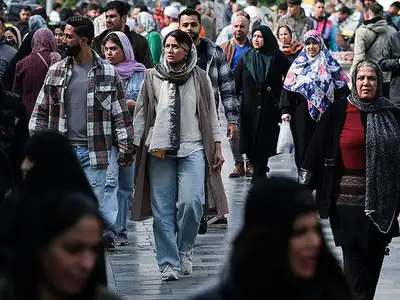
Iran’s Supreme Leader Ali Khamenei on Saturday endorsed chants of “Death to America” during a speech to workers, just a day before Iranian officials are set to resume nuclear negotiations with the United States.
“Your judgment is right,” Khamenei told the crowd after they chanted the slogan during a speech in Tehran.
“Americans fully support Israel — in the true sense of the word,” he added. “In the world of politics, things may be said that suggest otherwise, but that is not the reality.”
The remarks come as Tehran prepares to begin a fourth round of talks with the US on Sunday. Khamenei used the same platform to frame Israel’s campaign in Gaza as part of a broader Western war effort. “The people of Gaza are not facing Israel alone—they are facing America and Britain,” he said.
Hardline rhetoric extended into Iran’s state-aligned press. Kayhan, a daily overseen by Khamenei’s office, published a full-page commentary portraying Donald Trump as emblematic of US power.
“Trump is not a passing phenomenon,” the paper wrote. “He is a framework based on narcissism, superiority delusions, and threat-based tactics.” The editorial warned against mistaking diplomatic outreach for sincerity, calling American gestures “a tool for deception, not an indication of true boundaries.”
In Washington, Trump’s envoy to the talks set out maximalist conditions for a deal. “An enrichment program can never exist in the state of Iran ever again. That’s our red line,” Steve Witkoff told Breitbart News on Friday. “No enrichment. That means dismantlement.”
Witkoff said Iran’s nuclear sites in Natanz, Fordow, and Isfahan must be completely dismantled, and warned that if Sunday’s discussions are “not productive, then they won’t continue and we’ll have to take a different route.” He added, “They cannot have centrifuges, they cannot have anything that allows them to build a weapon.”
Iran's former defense minister and former national security chief Ali Shamkhani
Nearly two years after stepping down as the Secretary of Iran’s Supreme National Security Council (SNSC), Ali Shamkhani appears determined to maintain influence over Tehran’s evolving nuclear diplomacy.
The showy kingpin's sensitive interventions into the negotiations, through social media statements in his own name and high stakes leaks by his multi-lingual media outlet, signal he is determined to remain at the heart of diplomacy.
Though no longer officially at the helm of Iran's top security apparatus, Shamkhani retains considerable sway as a political adviser to Supreme Leader Ayatollah Ali Khamenei and a member of the Expediency Discernment Council.
His tenure as security chief ended in May 2023, but Nour News - the multilingual media outlet he founded in 2020 - ensured his public profile would continue to loom large.
Shamkhani and Tehran-Washington talks
Shamkhani’s comments are frequently picked up by Iranian and foreign media outlets, turning his posts into unofficial barometers of Tehran’s policy direction.
A prolific user of the social media platform X, Shamkhani regularly posts in a range of languages—Persian, English, Hebrew, Russian, and Chinese—indicating his wish to be recognized by international audience as an insider with close knowledge of the talks.
Ahead of the first round of indirect Tehran-Washington negotiations in Muscat last month, Shamkhani made headlines by declaring that Iran’s Foreign Minister Abbas Araghchi would attend the talks “with full authority.”
The phrasing, widely interpreted as confirmation that Araghchi was carrying a full mandate from Supreme Leader Khamenei himself, was seen as a rare public affirmation of Iran’s seriousness about reaching an agreement.
More recently, Shamkhani said that both the US intelligence community and the International Atomic Energy Agency (IAEA) had come to accept that Iran does not possess nuclear weapons.
“Both are determined to continue on the right path of talks,” he wrote in several languages, adding, “Sanction removal and recognition of Iran’s right to industrial enrichment can guarantee a deal.”
The tone of Shamkhani’s post suggested a softening of stance and marked a contrast between his earlier, more hardline tone and this new language suggesting diplomatic flexibility.
Shamkhani was among the officials who strongly supported a law that the Parliament passed in December 2020 against the wishes of then-president Hassan Rouhani--- named the Strategic Action Plan to Lift Sanctions and Protect the Nation's Interests.
The legislation required Iran’s Atomic Energy Organization to enrich uranium to 20 percent purity—well above the 3.67 percent limit set by the 2015 Joint Comprehensive Plan of Action (JCPOA)—and to install advanced centrifuges.
Nour News
Much of Shamkhani’s media influence flows through Nour News, a news outlet linked closely to his political network. Launched in Persian in early 2020 and later expanded into English, Arabic and Hebrew, Nour News plays an outsized role in shaping news on Iran’s nuclear talks.
The site frequently publishes exclusive reports on nuclear talks and other matters, often citing anonymous “informed sources.” These reports are widely shared by both domestic and international media, reinforcing the outlet’s reputation as a semi-official voice.
But the interventions have been less welcome at home.
Nour News cited an anonymous source saying the fourth round of talks would focus on “humanitarian and security concerns," without elaborating, suggesting discussions had expanded beyond the nuclear dossier—a detail never disclosed by negotiators.
“Agencies and esteemed officials who receive classified reports must protect them. Leaking information to favored outlets undermines national interests,” retorted Mohammad Hossein Ranjbaran, an adviser to Iran’s foreign minister Abbas Araghchi.
“There’s a difference between building media credibility and childish competition for scoops."
Skeletons in the closet
Shamkhani’s interventions could be aimed at repairing his stature after espionage and corruption controversies dented his reputation.
His departure from the SNSC in May 2023 came amid the fallout from one of the most sensitive espionage cases in the Islamic Republic’s recent history.
Akbari had long been known as a close associate and adviser to Shamkhani, raising questions about internal security breaches at the highest levels of the Iranian state.
Though authorities never directly linked Shamkhani to Akbari’s alleged espionage, the execution cast a pall over his continued leadership of the SNSC.
Shamkhani has also faced persistent allegations of corruption, particularly concerning his family's business dealings. These ventures have been linked to circumventing US sanctions by facilitating oil exports through so-called ghost fleets.
A former senior Iranian government official appeared before Canada’s Immigration and Refugee Board on Thursday as part of Ottawa’s ongoing efforts to remove top-ranking figures associated with the Islamic Republic, Canadian media reported.
Afshin Pirnoon, a former director general in Iran’s Ministry of Roads and Urban Development, was brought before the board as the Canada Border Services Agency (CBSA) argued he should be deported due to his role in the Iranian government.
Pirnoon, 49, arrived in Canada in 2022 and has since worked as an Uber driver while seeking refugee status.
Photos published on Iranian government websites show Pirnoon attending official events and speaking at public meetings alongside political and religious leaders. He has denied holding decision-making authority and said his work as a road safety expert was aimed at saving lives.
“Whatever I’ve done in my life so far was to safeguard human beings’ lives,” Pirnoon said at the hearing, according to Global News. “Working for a government does not mean supporting it.”
The hearing is one of several under a 2022 Canadian policy aimed at barring or expelling former Iranian officials accused of rights abuses or ties to groups such as Hamas and Hezbollah. While immigration authorities have investigated dozens of individuals, only one deportation has been completed so far, with others leaving voluntarily.
US and Iran chief negotiators Steve Witkoff and Abbas Araghchi
Nuclear talks between Iran and the United States are faltering over whether Iran will be permitted to enrich Uranium and fluctuating US demands, two diplomatic sources in Tehran told Iran International.
Despite Tehran agreeing to expanded inspections by the International Atomic Energy Agency (IAEA), the dispute over enrichment has cast doubt over the timing and direction of the next round of negotiations, originally scheduled to resume this week after being delayed in Oman.
“Iran has accepted strict and intensive inspections by IAEA inspectors, and the two sides have reached an understanding on verification and control mechanisms,” an Iranian diplomatic source familiar with the talks said on condition of anonymity.
“The key disagreement is over Iran’s right to enrich uranium domestically—something the American side opposes,” the source said, adding that the US team's shifting goals were complicating the negotiations.
“In every round, the Americans bring up new topics—missiles, proxies—without a consistent framework.”
A second diplomatic source confirmed that Iran had agreed to restrain its regional allies, including by asking the Houthis to temporarily halt attacks, partly to deny Israel what he called a "pretext" to obstruct diplomacy.
US officials contacted by Iran International declined to comment on the specifics of the talks but acknowledged the urgency and fragility of the moment.
“Time is short and we need to make progress quickly. To make that happen, the Iranians need to negotiate in good faith and sincerely desire to reach a deal,” a State Department spokesperson told Iran International.
Internal Divisions in Tehran
Meanwhile Iran too has fissures of its own on the talks dossier, with hardliners continuing to criticize the talks but negotiators still appearing determined to clinch a fair deal to avoid war.
“There’s a difference between building media credibility and childish competition for scoops,” Mohammad Hossein Ranjbaran, an adviser to Iran’s foreign minister Abbas Araghchi, posted on X on Tuesday.
“Agencies and esteemed officials who receive classified reports must protect them. Leaking information to favored outlets undermines national interests,” he added, in an apparent reference to a report published the day before by Nour News, a site close to Supreme Leader Ali Khamenei’s adviser Ali Shamkhani.
The outlet cited an anonymous source saying the fourth round of talks would focus on “humanitarian and security concerns," without elaborating, suggesting that the negotiations had expanded beyond the nuclear dossier—something never mentioned by officials involved in the talks.
A diplomatic source told Iran International that unauthorized disclosures could undermine the Iranian negotiating team.
Image of an oil refinery published on Xinhai Holdings website
The United States on Tuesday imposed fresh sanctions on another Chinese refinery and multiple logistics firms for facilitating the sale and shipment of Iranian oil, expanding its efforts to squeeze Tehran’s revenues.
The measure targets Hebei Xinhai Chemical Group Co., an independent refinery Washington asserts has received hundreds of millions of dollars’ worth of Iranian crude, some linked to the Islamic Revolutionary Guard Corps (IRGC).
Three Chinese port operators in Shandong province were also sanctioned for managing terminals that received sanctioned shipments from Iran’s shadow fleet, vessels used to hide the origin of shipments.
“The United States remains resolved to intensify pressure on all elements of Iran’s oil supply chain to prevent the regime from generating revenue to further its destabilizing agenda,” treasury secretary Scott Bessent said in a statement released on the website of the treasury's Office of Foreign Assets Control (OFAC).
Seven vessels and the companies that own them were also sanctioned, according to OFAC citing their role in transferring Iranian petroleum to China. Among those were tankers flagged in Panama and Hong Kong.
Two Indian ship captains were also designated for years-long involvement in steering sanctioned tankers carrying Iranian oil, the US treasury said.
The sanctions fall under executive orders by US president Donald Trump as part of his so-called maximum pressure campaign on Iran alongside the ongoing diplomatic push to resolve the standoff with Tehran over its nuclear program.
"We're trying to work on Iran to get that solved without having to get into any bombing," Trump said in his latest statement on Iran on Thursday.
"As we say, big bombing. I don't want to do that. I want them to be very successful," he added.
Iran announced the completion of major maintenance and refueling at its Bushehr nuclear power plant this week, preparing the country’s only operational nuclear facility to meet peak summer electricity demand.
The announcement comes as Tehran accelerates work on two new reactor units at the site and reiterates its long-term commitment to nuclear energy amid stalling US nuclear talks.
The head of the Bushehr nuclear power plant, Reza Banazadeh, said the 1,000-megawatt (MW) facility is now fully prepared to contribute to the national grid during the hottest months of the year.
Daily electricity consumption in Iran can vary, with peaks reaching over 72,000 MW, exceeding the actual power generation capacity of 60,000 MW during the summer.
Since its commissioning, the plant has generated more than 72 billion kilowatt-hours of electricity, equivalent to saving over 110 million barrels of oil, Banazadeh said in an interview with Iranian state media.
"Nuclear energy is one of the safest, cleanest, and most cost-effective sources of power,” Banazadeh said, adding the plant avoids burning fossil fuels and thereby prevents the emission of an estimated 7 million tons of greenhouse gases annually.
Bushehr, Iran’s first commercial nuclear facility, sits on the Persian Gulf and is central to the country’s broader nuclear ambitions.
Mohammad Eslami, head of the Atomic Energy Organization of Iran (AEOI), said earlier this year that 5,000 workers are involved in the construction of Units 2 and 3, which are expected to triple the plant’s output when completed.
“Our aim is to increase nuclear power capacity to 20,000 megawatts by 2041,” Banazadeh said, adding that new projects across the country will help meet rising energy demands and reduce reliance on fossil fuels.
While Iranian officials highlight the civilian and environmental benefits of nuclear energy, the program remains under international scrutiny amid concerns about its potential military dimensions.
Tehran maintains its program is peaceful and conducted under the oversight of the International Atomic Energy Agency (IAEA) despite the restrictions that Tehran has put on the agency’s activities such as expelling inspectors and reducing monitoring equipment.
Iranian President Masoud Pezeshkian during a visit to `Bushehr Nuclear Plant (February 2025)
Tensions around Iran's nuclear facilities resurfaced in recent months, with Israel and the US warning of potential military action. During a February visit to Bushehr, Iranian President Masoud Pezeshkian warned: “If they strike a hundred [nuclear sites], we will build a thousand more ... They can hit the buildings, but they cannot erase the minds of our scientists.”
US President Donald Trump, in a Fox News interview, said he would prefer a diplomatic solution to prevent Iran from acquiring nuclear weapons but acknowledged concerns over possible Israeli military action.
Iran's air force commander Hamid Vahedi said that the country’s defense posture is deterrent but warned of “forceful” retaliation if attacked.
Despite geopolitical strains, Iran’s nuclear chief Eslami highlighted the use of domestically manufactured equipment and engineering milestones in the Bushehr expansion, including 34,000 rod injections to stabilize the reactors’ foundations and a record 22,000 cubic meters of concrete poured in a single day.
The AEOI aims to increase this figure to 65,000 cubic meters daily next year, showing Iran’s intent to push ahead with nuclear infrastructure development.
The IAEA has not yet commented on the latest developments at Bushehr.
Iran's cooperation with the IAEA remains central to international efforts monitoring and constraining its nuclear program under a potential new deal, with the next round of indirect Iran-US negotiations scheduled for this weekend.