US talks dominate Iran parliament-government security meeting
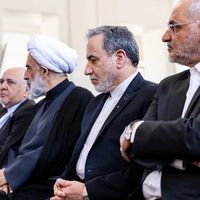
The US negotiations were a key focus for over 100 Iranian lawmakers in a meeting with Intelligence Minister Esmail Khatib, where regional and international security were also discussed.
Fada-Hossein Maleki, a member of parliament representing Zahedan and the chairman of the session, told Tasnim news agency on Thursday that the lawmakers raised various concerns and questions, including the role of security agencies in the US talks.
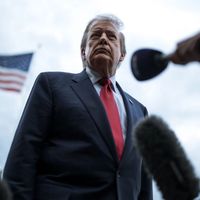
Minister Khatib, according to Maleki, talked about the political developments in the world and region following the renewed presidency of Donald Trump, pointing out an increased military buildup in the region and measures by the US to intensify economic pressure.
Regarding the US talks, the intelligence minister said that Iran has engaged in negotiations numerous times, and this current dialogue is a normal function of the Foreign Ministry, pursued in cooperation with the Supreme National Security Council and in line with national interests through diplomacy.
Khatib urged officials and lawmakers to avoid exaggerating the significance of the negotiations, emphasizing that their statements impact public opinion.
Iranian state television dismissed several senior staff members and triggered a legal crackdown after a segment insulting Sunni Islamic figures was broadcast, drawing public outrage and prompting official apologies to contain the fallout.
The controversial broadcast aired Wednesday on Channel One and featured a guest reciting verses disparaging Abu Bakr, the first caliph in Sunni Islam, during a midday segment.
The footage was quickly deleted from IRIB-affiliated platforms, as the broadcaster scrambled to contain the crisis.
In a joint statement from Sunni majority Sistan and Baluchestan, the province's governor Mansour Bijar and the Supreme Leader’s regional representative Mostafa Mohami condemned the broadcast, describing it as offensive to the sacred beliefs of the Sunni community and a source of distress and anger across the Muslim world.
Sunnis make up at least 10 percent of Iran's 88 million population, and Sistan and Baluchestan is one of the few Sunni-majority regions in a predominantly Shiite country.
While they welcomed the swift dismissals and referral of those responsible to the judiciary, they urged systemic reforms and punitive measures to prevent recurrence and called on the judiciary to ensure “deterrent accountability and public transparency,” IRNA reported.
The state broadcaster has removed the channel’s programming director and head of production. Additionally, eight individuals involved in the show’s creation now face criminal charges, as reported by state media.
A special committee comprising representatives from IRIB’s security, legal, and inspection branches has been tasked with investigating the incident further.
“Sowing discord in the Islamic community has no defenders among true Muslims, whether Shia or Sunni,” IRIB chief Peyman Jebeli said. “The error of extremist ignorants is unforgivable."
IRIB chief Peyman Jebelli
The network also aired a string of unity-themed documentaries on Wednesday featuring Sunni figures, a move seen as an effort to contain the backlash and reaffirm the state’s emphasis on intra-Muslim unity amid sensitive diplomatic engagement with Sunni-led Saudi Arabia as Shia majority Iran tries to cultivate closer ties to its Sunni neighbors.
This is not the first time IRIB has drawn criticism over sectarian or politically provocative content. Last week, Nasim TV apologized for airing a satirical segment mocking Saudi Arabia’s foreign minister just days after a rare visit by the kingdom’s defense chief to Tehran.
A screengrab from a program mocking Saudi Arabia’s foreign minister on Iran's state TV.
In 2019, IRIB announced the dismissal of the director and broadcast manager of Channel Five following the unvetted airing of controversial remarks by a eulogist during a religious program.
The decision came at the directive of then-IRIB chief Abdolali Ali-Asgari, who said that “safeguarding the dignity of the Islamic ummah” remained a core principle of the broadcaster under the leadership of the Supreme Leader.
Among those dismissed was Javad Ramazannejad, who had been appointed to lead Channel Five less than a year prior to the incident.
With a budget now larger than that of ten ministries and a steadily eroding domestic audience—polls show viewership plummeting from 57% to just 11%—Iran’s state broadcaster faces intensifying scrutiny over its legitimacy, oversight, and role in shaping national identity.
Sunnis, though legal in Iran as a branch of Islam, are among the country's religious minorities which rights groups say are routinely oppressed.
Last year, Human Rights Watch reported that Iranian law denies freedom of religion to minorities such as Baha’is and discriminates against them.
"The government also discriminates against other religious minorities, including Sunni Muslims, and restricts cultural and political activities among the country’s Azeri, Kurdish, Arab, and Baluch ethnic minorities," the report added.
US Senator John Fetterman (D-PA) has called for the Trump administration to abandon nuclear negotiations with Iran and instead launch a military strike to destroy the country's nuclear facilities.
In an interview with the Washington Free Beacon published Wednesday, Fetterman advocated for decisive military action, saying, "Waste that s—t."
He argued that negotiations with Iran which he described as destabilizing the region for decades, are futile. "You're never going to be able to negotiate with that kind of regime...and now we have an incredible window, I believe, to do that, to strike and destroy Iran's nuclear facilities.”
Fetterman dismissed concerns from foreign policy experts who warn that a military strike on Iran would trigger a regional war, citing the recent conflicts involving Hezbollah, Hamas, and the Houthis as evidence that expert predictions are often inaccurate. "And remember, all of these so-called experts were all wrong."
Fetterman concluded that Iran, with its nuclear facilities, remains the primary threat. "So what's left? You have Iran, and they have a nuclear facility, and it's clearly only for weapons," he said.
On negotiations with Iran, Fetterman said, "Years ago, I completely understood why Trump withdrew from the Obama deal. Today, I can't understand why Trump would negotiate with this diseased regime. The negotiations should be comprised of 30,000-pound bombs and the Israel Defense Forces.”
A senior Iranian lawmaker said the outcome of the nuclear talks between Iran and the United States depends in part on whether Israel can influence the US position.
“If the malicious Zionist regime, which is actively trying to sabotage the process, fails to influence the American side, a brighter outlook lies ahead,” said Alaeddin Boroujerdi, a member of Iran’s national security and foreign policy commission on Thursday.
He said both Tehran and Washington are determined to reach an agreement, as “there is no alternative.”
Boroujerdi added the negotiations have moved into a more complex phase, and stressed that Iran will not abandon its nuclear rights.
“If the Americans want guarantees and to ease their concerns, they must offer concessions—namely, lifting sanctions,” he said.
"I don't think (the talks) are going to fail, and that is because neither side has a better means of achieving its fundamental objectives," Sir Richard John Dalton, British Ambassador to Iran from 2002 to 2006, told the BBC in an interview on Wednesday.
"For the international community and the United States, that's a high level of assurance that Iran will stick to its commitments and never militarize its nuclear program, and for Iran that it gets some of its internationally linked economy back."
"Another reason for optimism is that President Trump's language has been consistent despite the threats which he should dial down," Dalton continued. "It's been consistent in expressing preference for sorting matters out through dialogue."
Dalton added that a statement by the foreign ministry of Oman, the country mediating the talks, following the latest US-Iran meeting on Saturday pointed to a framework for a successful deal.
"It included 'fair'. That means win-win, something for both sides. 'Enduring': this is vitally important because of the absence of any trust in Tehran that the United States is capable of sticking to agreements that it signs."
"'Binding': again endorsed by the international community, may be something which puts constraints on both sides that go beyond the actual words of the agreement. Then, 'Iran free of nuclear weapons' ... but Iran having its right to 'peaceful nuclear energy' that was in the Omani statement too, together with Iran being free of sanctions."
"Now this is the big win potentially for Iran, because its economy has been in tatters for many years, and the most significant threat to the survival of the regime is instability caused by potential breakdown of the economy," he said.
Israeli Prime Minister Benjamin Netanyahu on Wednesday called the Islamic Republic "a threat to the fate and the existence, not just of our own future, but the fate and the future of all mankind."
"This will be the outcome if it achieves nuclear arms. The battle between us and the empire of terror in Iran will determine the fate of all free societies," he said in a speech at the start of Israel's Holocaust Remembrance Day.
"We will prevent Iran from achieving nuclear weapons. We will fight the zealot regimes threatening the entire world. We shall fight forcefully against those regimes threatening the whole world," the Israeli prime minister said.
Netanyahu said if Israel "loses this war, the Western countries are next in turn. The wave of zealots will wash upon all of them, and it will happen much more quickly than they think."