A US strategy that involves Arab allies in Iran negotiations may lead to a more effective outcome, The Hill suggested in an opinion piece on Wednesday.
“For the first time in over a decade, the US is conducting Iran negotiations with its Arab allies — not just around them,” Faisal Saeed Al Mutar explained in the article, describing the shift as a break from the Obama-era deal, which it said was met with deep skepticism in Arab capitals.
The article noted that current talks are taking place in Oman and that Saudi Arabia is being kept informed at every step. It said this reflects a US recognition that the previous agreement “failed, in part, because it excluded the people most likely to live with its consequences.”
The Hill also wrote that the US is preparing to provide Saudi Arabia with advanced American weapons, creating “not just a military partnership but a credible deterrent against Iran.”
It said the new approach is not based on reshaping Iran through force or idealism, but on building a “strategic box” around it through diplomacy, regional partnerships, and deterrence.
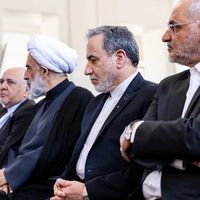
Former Iranian President Hassan Rouhani said that a near-final agreement with the United States was within reach in the spring of 2021, but was ultimately derailed by hardliners’ opposition seeking to undermine his administration.
Rouhani said that his former negotiating team, led by Abbas Araghchi, had secured a favorable agreement that would have lifted not only pre-existing sanctions but also those imposed by the Trump administration.
"At that time, I said in the government that if they allow us, we will finish it today. Only one signature remained for Mr. Araghchi to complete," Rouhani said, accusing domestic opponents of blocking the deal to ensure his administration's failure.
Rouhani also addressed the internal debate surrounding negotiations with the West, criticizing those who advocate for confrontation and disengagement from international organizations.


Former Iranian President Hassan Rouhani said that a near-final agreement with the United States was within reach in the spring of 2021, but was ultimately derailed by hardliners’ opposition seeking to undermine his administration.
During a meeting on Monday, Rouhani urged the current government to make the best use of the present opportunity for negotiations with the US, emphasizing the importance of preventing war.
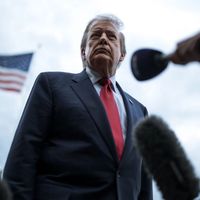
"We must make the most of this window for negotiations. Our fundamental duty is to prevent war, not because we are afraid of it, but because war benefits no one – not the United States, not Iran, and not the region... We must not give Trump any excuse, nor let Netanyahu take advantage of the current regional situation,” he said.
Rouhani said that his former negotiating team, led by Abbas Araghchi -- now foreign minister, had secured a favorable agreement that would have lifted not only pre-existing sanctions but also those imposed by the Trump administration.
He alleged that the US had "almost agreed" to remove the Islamic Revolutionary Guard Corps (IRGC) from its list of terrorist organizations.
"At that time, I said in the government that if they allow us, we will finish it today. Only one signature remained for Mr. Araghchi to complete," Rouhani said, accusing domestic opponents of blocking the deal to ensure his administration's failure.
He said while no agreement has been reached in the ongoing round, the talks have already offered hope to Iran's currency and gold markets, as well as public morale.
Rouhani also addressed the internal debate surrounding negotiations with the West, criticizing those who advocate for confrontation and disengagement from international organizations. He argued that while international bodies are not always fair, dialogue and diplomacy are essential for reducing tensions.

French authorities have arrested a dual Iranian-French national in Paris for expressing support for Palestine, Iranian state media reported on Wednesday.
Mizan News Agency, affiliated with Iran’s judiciary, reported that Shahin Hazamy was detained by French security forces on Tuesday. The outlet described him as an independent journalist and said the arrest stemmed from his support for Palestine, without citing French legal charges.
French magazine Le Point confirmed through Hazamy’s lawyer that the arrest was based on accusations of “apologie du terrorisme,” a criminal charge under French law covering praise of terrorist acts. Hazamy remains in temporary detention while the case is under review by investigating judges.
Posts on Hazamy’s Instagram account show support for Hezbollah and Palestinian factions backed by Tehran, as well as images taken during recent visits to Lebanon. He also voiced solidarity with Mahdieh Esfandiari, a 39-year-old Iranian translator living in Lyon who has been held since early March under similar charges.
According to Le Point, Esfandiari is accused of publishing Telegram posts in support of the October 7 Hamas attack on Israel, which Israeli officials say killed over 1,200 mostly civilians.
Iran’s foreign ministry has criticized both arrests, demanding explanations and consular access. Spokesman Esmail Baghaei said earlier in April that the detentions raised serious concerns over the rights of Iranian nationals in France.
France, meanwhile, says Iran detains French citizens as leverage in diplomatic disputes. Foreign Minister Jean-Noël Barrot urged French nationals not to travel to Iran, citing the risk of arbitrary arrest.
Merav Ceren, an Israeli-American citizen with a background advocating a firm policy stance towards Iran, has been appointed as the head of the Iran desk at the United States National Security Council (NSC).
The appointment was confirmed by NSC Spokesperson Brian Hughes, who described Ceren as an American patriot with years of service in the US administration under President Trump, Senator Ted Cruz, and Congressman James Comer.
Hughes said, "We are pleased that she will be the one to implement the President’s policy on Middle Eastern affairs."
American media outlets highlighted Ceren's prior employment with the Israeli Government’s Coordination and Liaison Directorate in the Palestinian Territories and her fluency in Hebrew.
Following criticism of her past affiliations, Hughes clarified to the news outlet Al Monitor that Ceren "was never employed by the Israeli Defense Ministry, let alone was she an Israeli official."
Javan daily, a newspaper affiliated with Iran's Revolutionary Guards, has asserted that the Islamic Republic's nuclear program is not a matter for journalists to question, following the cancellation of a speech by Foreign Minister Abbas Araghchi at a Carnegie Endowment for International Peace nuclear policy forum in Washington.
The speech was called off because Araghchi declined to participate in a question-and-answer session with reporters after his address, according to Iranian media.
Javan wrote in a commentary published on Wednesday, "Iran's nuclear issue is not something that a group of reporters should ask about whatever they want regarding the country's overt and covert strategies in the name of transparency, and then become demanding if they don't receive answers."
The article further said, "Why should an American reporter or Carnegie's audience of politicians be aware of the details of our work and decisions, and consider themselves entitled and demanding to know the specifics of our work?"