• العربية
  • فارسی
Brand
  • Iran Insight
  • Politics
  • Economy
  • Analysis
  • Special Report
  • Opinion
  • Podcast
  • Iran Insight
  • Politics
  • Economy
  • Analysis
  • Special Report
  • Opinion
  • Podcast
  • Theme
  • Language
    • العربية
    • فارسی
  • Iran Insight
  • Politics
  • Economy
  • Analysis
  • Special Report
  • Opinion
  • Podcast
All rights reserved for Volant Media UK Limited
volant media logo

Ex-Iran envoy says deal with US alone won’t prevent snapback sanctions

Apr 17, 2025, 12:20 GMT+1

Former Iranian ambassador to the United Kingdom Jalal Sadatian warned on Thursday that even if Tehran reaches a nuclear agreement with the United States, United Nations sanctions could still be reinstated if relations with European powers do not improve.

“Even with an agreement with the US, if our relations with Europe don’t improve, they may move toward using the snapback mechanism,” Sadatian said.

Under the 2015 nuclear accord—formally known as the Joint Comprehensive Plan of Action (JCPOA)—any party to the deal can trigger a restoration of UN sanctions if it believes Iran is not complying with the agreement. Once triggered, sanctions that were previously lifted automatically snap back into place after 30 days unless all five permanent members of the UN Security Council vote to extend the suspension.

Such a move could take place before key provisions of the 2015 deal expire in October.

Sadatian urged renewed talks with all original JCPOA participants—the P5+1 group including China, France, Russia, the United Kingdom, the United States, and Germany—warning that limiting engagement to the US alone could fuel European mistrust.

“In matters where there is a common concern—like the nuclear file—we should aim for broader negotiations that include both the US and Europe,” he said. “This would help ease suspicion on both sides and reduce tensions at the IAEA Board of Governors.”


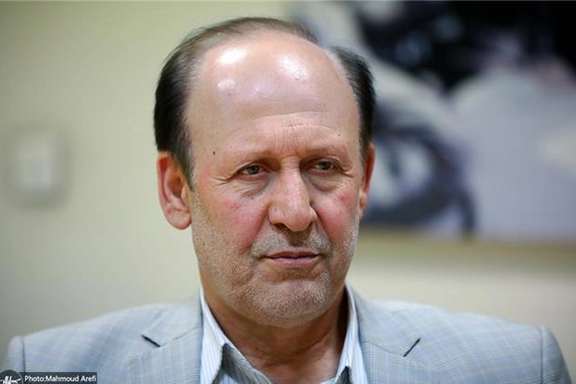
Jalal Sadatian
100%
Jalal Sadatian

Most Viewed

Ideology may be fading in Iran, but not in Kashmir's ‘Mini Iran'
1
INSIGHT

Ideology may be fading in Iran, but not in Kashmir's ‘Mini Iran'

2
INSIGHT

Hardliners push Hormuz ‘red line’ as US blockade tests Iran’s leverage

3
VOICES FROM IRAN

Hope and anger in Iran as fragile ceasefire persists

4

Iran International says it won’t be silenced after London arson attack

5

US sanctions oil network tied to Iranian tycoon Shamkhani

Banner
Banner

Spotlight

  • Hardliners push Hormuz ‘red line’ as US blockade tests Iran’s leverage
    INSIGHT

    Hardliners push Hormuz ‘red line’ as US blockade tests Iran’s leverage

  • Ideology may be fading in Iran, but not in Kashmir's ‘Mini Iran'
    INSIGHT

    Ideology may be fading in Iran, but not in Kashmir's ‘Mini Iran'

  • War damage amounts to $3,000 per Iranian, with blockade set to add to losses
    INSIGHT

    War damage amounts to $3,000 per Iranian, with blockade set to add to losses

  • Why the $100 billion Hormuz toll revenue is a myth
    ANALYSIS

    Why the $100 billion Hormuz toll revenue is a myth

  • US blockade targets Iran oil boom amid regional disruption
    ANALYSIS

    US blockade targets Iran oil boom amid regional disruption

  • Iran's digital economy battered by prolonged blackout
    INSIGHT

    Iran's digital economy battered by prolonged blackout

•
•
•

More Stories

Tehran urges IAEA to avoid language that could be used against the Islamic Republic

Apr 17, 2025, 11:58 GMT+1

Iran's nuclear chief Mohammad Eslami on Thursday called on the International Atomic Energy Agency (IAEA) to maintain neutrality and avoid language that could be exploited by adversaries of the Islamic Republic.

"Iran's longstanding expectation from the Agency is to remain impartial and behave professionally," Eslami said after meeting IAEA Director General Rafael Grossi in Tehran.

He warned that IAEA reports must not be worded in a way that could be used by what he described as "ill-wishers and malicious actors against the Islamic Republic."

Eslami said Grossi agreed with the concerns and affirmed the importance of avoiding politicization.

He added that Iranian and IAEA deputy officials will meet in the coming days to discuss the details of technical cooperation and resolving outstanding issues.

International Atomic Energy Agency (IAEA) Director General Rafael Grossi meets with the head of Iranian Atomic Energy Organisation, Mohammad Eslami, in Tehran, Iran, April 17, 2025.
100%
International Atomic Energy Agency (IAEA) Director General Rafael Grossi meets with the head of Iranian Atomic Energy Organisation, Mohammad Eslami, in Tehran, Iran, April 17, 2025.

Qatari Emir arrives in Russia amid Iranian FM’s high-level visit

Apr 17, 2025, 11:42 GMT+1

Qatar’s Emir Sheikh Tamim bin Hamad Al Thani arrived in Moscow on Thursday for talks with President Vladimir Putin on Ukraine and regional issues, Reuters reported.

His visit coincides with a separate trip by Iran’s Foreign Minister Abbas Araghchi, who landed in Moscow the same day to deliver a message from Supreme Leader Ali Khamenei and hold consultations with senior Russian officials.

The Kremlin described the Qatari leader’s trip as “very important,” with spokesman Dmitry Peskov saying the two sides would hold “serious” discussions and sign agreements.

Emir of Qatar Sheikh Tamim bin Hamad Al Thani
100%
Emir of Qatar Sheikh Tamim bin Hamad Al Thani

IAEA chief says he held ‘intensive’ talks with top Iranian officials in Tehran

Apr 17, 2025, 11:28 GMT+1

International Atomic Energy Agency (IAEA) Director General Rafael Grossi said Thursday he held a full day of high-level discussions in Tehran with senior Iranian officials, including the country’s nuclear chief and deputy foreign minister.

“Intensive day of discussions in Tehran today with Iran’s Vice President and Head of [the Atomic Energy Organization of Iran] Mohammad Eslami, and Deputy Foreign Minister [Kazem] Gharibabadi,” Grossi wrote on X.

Reformist politician says world is watching Khamenei on nuclear talks

Apr 17, 2025, 11:09 GMT+1

Mohammad Ali Abtahi, a senior reformist politician and former presidential chief of staff, said Thursday that Supreme Leader Ali Khamenei’s recent comments on nuclear talks with the United States have sent an important message to both domestic and international audiences.

“The world is watching the Supreme Leader of Iran,” Abtahi wrote in a post on Telegram, emphasizing that Khamenei’s remarks on the Oman talks have encouraged Iranian negotiators and signaled unity within Iran’s political system.

“The most well-known figures previously seen as opponents of negotiations were present at the meeting with the Leader,” Abtahi wrote, calling their presence a sign that “in critical moments, leadership can be a unifying force.”

He warned against both overhyping or dismissing the talks, adding that “excessive enthusiasm can be just as damaging as outright opposition.” Diplomacy, he said, should not be treated as the country’s only path forward, but as one of several tools for solving people’s problems while respecting national dignity.

Mohammad Ali Abtahi
100%
Mohammad Ali Abtahi

IAEA technical report could support US-Iran nuclear talks, former Iranian diplomat says

Apr 17, 2025, 11:03 GMT+1

A former senior Iranian diplomat said Thursday that a technical report from IAEA Director General Rafael Grossi could help advance the ongoing nuclear talks between Tehran and Washington, if it remains free of political influence.

Ali Akbar Farazi, who previously served as Iran’s ambassador to Hungary, Cyprus, and Romania, told ILNA news agency that Grossi’s visit to Tehran came at a sensitive time, between two rounds of indirect talks in Oman. He said the IAEA’s past verification of Iran’s peaceful nuclear program should be emphasized to counter Western media narratives.

“If Grossi’s report is strictly technical, it can definitely facilitate the negotiations,” Farazi said. “The Agency must not be influenced by political agendas.”

He also warned against any proposals to have US inspectors monitor Iran’s nuclear program, saying no country would accept such oversight outside the framework of the IAEA. “We are a signatory to the safeguards agreement and subject to international verification. Monitoring by any specific country is unacceptable,” he said.

Farazi added that the IAEA could help propose solutions on sensitive issues such as uranium enrichment levels and the storage of enriched materials, which are expected to be central to the next round of talks.

Ali Akbar Farazi
100%
Ali Akbar Farazi