• العربية
  • فارسی
Brand
  • Iran Insight
  • Politics
  • Economy
  • Analysis
  • Special Report
  • Opinion
  • Podcast
  • Iran Insight
  • Politics
  • Economy
  • Analysis
  • Special Report
  • Opinion
  • Podcast
  • Theme
  • Language
    • العربية
    • فارسی
  • Iran Insight
  • Politics
  • Economy
  • Analysis
  • Special Report
  • Opinion
  • Podcast
All rights reserved for Volant Media UK Limited
volant media logo

IAEA technical report could support US-Iran nuclear talks, former Iranian diplomat says

Apr 17, 2025, 11:03 GMT+1

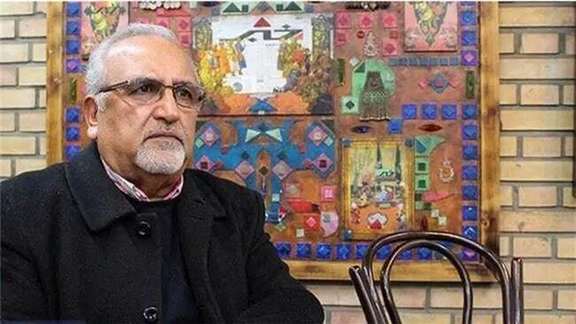
A former senior Iranian diplomat said Thursday that a technical report from IAEA Director General Rafael Grossi could help advance the ongoing nuclear talks between Tehran and Washington, if it remains free of political influence.

Ali Akbar Farazi, who previously served as Iran’s ambassador to Hungary, Cyprus, and Romania, told ILNA news agency that Grossi’s visit to Tehran came at a sensitive time, between two rounds of indirect talks in Oman. He said the IAEA’s past verification of Iran’s peaceful nuclear program should be emphasized to counter Western media narratives.

“If Grossi’s report is strictly technical, it can definitely facilitate the negotiations,” Farazi said. “The Agency must not be influenced by political agendas.”

He also warned against any proposals to have US inspectors monitor Iran’s nuclear program, saying no country would accept such oversight outside the framework of the IAEA. “We are a signatory to the safeguards agreement and subject to international verification. Monitoring by any specific country is unacceptable,” he said.

Farazi added that the IAEA could help propose solutions on sensitive issues such as uranium enrichment levels and the storage of enriched materials, which are expected to be central to the next round of talks.


Ali Akbar Farazi
100%
Ali Akbar Farazi

Most Viewed

Ideology may be fading in Iran, but not in Kashmir's ‘Mini Iran'
1
INSIGHT

Ideology may be fading in Iran, but not in Kashmir's ‘Mini Iran'

2
INSIGHT

Hardliners push Hormuz ‘red line’ as US blockade tests Iran’s leverage

3
VOICES FROM IRAN

Hope and anger in Iran as fragile ceasefire persists

4

Iran International says it won’t be silenced after London arson attack

5

US sanctions oil network tied to Iranian tycoon Shamkhani

Banner
Banner

Spotlight

  • Hardliners push Hormuz ‘red line’ as US blockade tests Iran’s leverage
    INSIGHT

    Hardliners push Hormuz ‘red line’ as US blockade tests Iran’s leverage

  • Ideology may be fading in Iran, but not in Kashmir's ‘Mini Iran'
    INSIGHT

    Ideology may be fading in Iran, but not in Kashmir's ‘Mini Iran'

  • War damage amounts to $3,000 per Iranian, with blockade set to add to losses
    INSIGHT

    War damage amounts to $3,000 per Iranian, with blockade set to add to losses

  • Why the $100 billion Hormuz toll revenue is a myth
    ANALYSIS

    Why the $100 billion Hormuz toll revenue is a myth

  • US blockade targets Iran oil boom amid regional disruption
    ANALYSIS

    US blockade targets Iran oil boom amid regional disruption

  • Iran's digital economy battered by prolonged blackout
    INSIGHT

    Iran's digital economy battered by prolonged blackout

•
•
•

More Stories

Iran's conservative media warn against overreliance on US talks

Apr 17, 2025, 10:56 GMT+1

Tehran media outlets controlled by hardliners warned the government on Thursday not to place hope in the outcome of renewed talks with the United States, set to resume in Rome on Saturday.

The commentaries follow five days of speculation over the venue for the second round of talks, along with a considerable degree of public negotiations in which both sides voiced at times contradictory positions.

Kayhan, a daily overseen by Supreme Leader Ali Khamenei’s office, warned that portraying negotiations as the solution to Iran’s economic problems is both misleading and dangerous. This view aligns with Khamenei’s longstanding position since 2018, when President Donald Trump withdrew from the JCPOA nuclear deal and reimposed sanctions. At the time, Khamenei rejected negotiations with Trump and insisted that Iran could endure the pressure without making concessions.

“A tainted and mission-driven current inside the country promotes the idea that 100 percent of our economic troubles stem from sanctions, and that negotiations are the only way to remove them,” the paper wrote.

“This viewpoint was already tested during the JCPOA and yielded nothing but ‘sheer loss’.”

Kayhan did not reject talks outright but insisted they should remain limited.

“We must not abandon negotiations altogether,” the editorial continued. “But we must not put all our eggs in that basket either. At most, 30 percent of our economic problems are due to sanctions, and negotiations should be treated as just one of several tools—not the only one.”

Calling for a wartime posture across government institutions, Kayhan urged officials to invest in domestic capabilities.

“When the enemy, led by the US, threatened us with gasoline sanctions, we could have negotiated,” the paper wrote. “But what proved durable and reliable was relying on domestic capabilities… In the end, the gasoline sanctions were rendered ineffective through trust in revolutionary youth and round-the-clock efforts.”

Javan, a publication linked to the Revolutionary Guard, echoed the skepticism, warning against polarizing discourse.

“Extreme optimism or pessimism about talks risks fueling a false political dichotomy in foreign policy,” the paper wrote.

“A realistic approach strengthens the negotiating team’s resolve, avoids sending weak signals to the opponent, and builds the dignity and prudence necessary for successful diplomacy,” Javan concluded.

Iran and the US held the first round of nuclear talks in Muscat last Saturday, with both sides calling the exchange constructive. But remarks by the US representative—who initially said Iran could retain limited enrichment but later demanded a complete halt to nuclear activity—have heightened tensions.

UN nuclear chief says in contact with US to support progress in Iran talks

Apr 17, 2025, 10:55 GMT+1

IAEA Director General Rafael Grossi said Thursday he is in touch with US officials to assess how the UN atomic watchdog can help bridge gaps between Tehran and Washington in their ongoing nuclear negotiations.

“I am also in contact with the American negotiator to see how the Agency can be a bridge between Iran and the US and help achieve a positive result in the negotiations,” Grossi was quoted by state media.

Grossi said he discussed with Iranian officials how the International Atomic Energy Agency could support the diplomatic process. “We know this process is not easy, and certainly there are those who do not want the talks to succeed,” he said. “But we must make every effort in the interest of peace.”

The IAEA chief emphasized that any agreement must be credible and accompanied by verification, adding that it is important to “listen to Iran’s expectations” and ensure the Agency plays a role as negotiations evolve.

IAEA Director General Rafael Grossi
100%
IAEA Director General Rafael Grossi

Oman will decide venue of next US-Iran talks, Araghchi says

Apr 17, 2025, 10:32 GMT+1

Iran’s Foreign Minister Abbas Araghchi said Oman, as the host of the talks between Tehran and Washington, will determine the location of the next round scheduled for Saturday.

“Oman is the host of these talks, and it’s up to the host to define the venue,” Araghchi told reporters. “We are still waiting for our Omani colleagues and my counterpart, the Omani foreign minister, to let us know exactly where we need to go for the continuation of our talks.”

Tehran always consults Russia on nuclear matters, Iranian FM says

Apr 17, 2025, 10:22 GMT+1

Iranian Foreign Minister Abbas Araghchi said Tehran continues to maintain close consultations with Russia on nuclear issues, upon arriving in Moscow on Thursday.

“We have always consulted closely with our Russian friends on nuclear matters,” Araghchi said, according to Iranian media. “We’ve coordinated our positions both in the past and now with Russia and China.”

Araghchi noted that the trip, originally planned to deliver a written message from Supreme Leader Ali Khamenei to Russian President Vladimir Putin, coincided with recent developments including talks with the United States.

He said discussions with Russian officials would also cover bilateral economic and political projects, as well as regional issues such as Israel, threats in West Asia, and the war in Ukraine.

IAEA chief visits Iran’s nuclear technology exhibition

Apr 17, 2025, 10:12 GMT+1

IAEA Director General Rafael Grossi visited Iran’s Atomic Energy Organization on Thursday, where he toured an exhibition showcasing the country’s latest nuclear achievements, Iranian media reported.

Grossi was briefed on recent developments in fuel cycle technology, nuclear power, heavy water production, radiopharmaceuticals, plasma and quantum technologies, fusion, lasers, agricultural applications, and industrial accelerators.