Iran, China and Russia aim for Tehran's dominance of Mideast, senator says
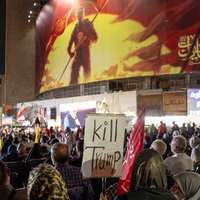
Iranians burn the U.S. flag during the 46th anniversary of the Islamic Revolution in Tehran, Iran.
The leaders of US adversaries Iran, Russia and China are working together to dominate their respective regions and undermine US security and values, Senator John Kennedy said on Thursday.
"I am convinced, based on classified classified information, that President Xi in China is working with President Putin in Russia and is working with the Ayatollah in Iran against the United States of America and western values, including, but not limited to freedom," the Louisiana Republican said in congress.
Russia plays a pivotal role in Iran's nuclear infrastructure, leading initiatives such as the expansion of the Bushehr Nuclear Power Plant. Iranian drones have aided Russia's full-scale invasion of Ukraine, leading to stricter US-led sanctions.
Iran's president said shortly after the election of President Donald Trump that the country seeks greater cooperation with Beijing and Moscow to confront what he called Washington's unilateralism.
"I believe their ultimate goal was to have Iran dominate the Middle East," Kennedy added, saying Moscow sought to hold sway over Eastern and Central Europe.
China's Xi Jinping, whom Kennedy described as "the quarterback of this ball club" would control the Indo-Pacific, sub-Saharan Africa and South America.
Tehran and Beijinginked a comprehensive strategic partnership in 2016 aimed at increasing bilateral trade to $600 billion by 2026. However, trade volume reached just $12.5 billion last year according to the International Monetary Fund.
China remains Iran's largest trade partner and purchases nearly all of Iran's crude oil in defiance of US sanctions.
"I don't want America to be the world's policeman, but I don't want President Xi or President Putin or the Ayatollah in Iran to be the world's policeman either," Kennedy said.
The objectives of our enemies, if I am correct, is not a world that would be safe for America. Weakness invites the wars. We have to spend more money on defense."
Fellow Republican senatorson Tuesday told Iran International that Supreme Leader Ali Khamenei was unwise to dismiss nuclear talks with the United States and President Trump is no paper tiger.
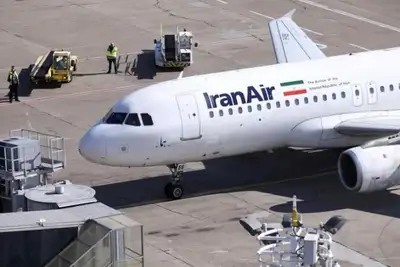
Iranian airlines Mahan Air and Iran Air, the country’s flagship carrier, will not be allowed to fly to Beirut, Lebanese TV network LBCI reported, citing Lebanon’s aviation authorities.
The decision follows allegations by Israel's military that Iran’s IRGC Quds Force uses civilian flights to smuggle money to Hezbollah via Beirut airport.
“The Iranian Quds Force and the terrorist group Hezbollah have been exploiting Beirut International Airport international flights over the past few weeks in an attempt to smuggle funds allocated to arm Hezbollah with the aim of carrying out attacks against the State of Israel,” Israel's military spokesman in Arabic, Avichay Adraee, wrote on X.
The cancellation of flights from Iran to Lebanon was on Thursday confirmed by Saeed Chalondari, CEO of Tehran's Imam Khomeini Airport, who said permission had not been granted for Beirut flights.
Shortly after the cancellations, images surfaces on social media purporting to show Hezbollah supporters in Lebanon blocking the road to Beirut Airport in protest against the refusal to allow Mahan Air to land.
On Monday, Lebanese media reported that incoming flights from Iraq to Beirut are being subject to inspection to prevent the transfer of money to Iran-backed militant group Hezbollah.
Since the ceasefire began in November, both Israel and Lebanon have accused the other of dozens of breaches. Israel has accused Hezbollah of rearming after weeks of bombardment from Israel, targeting key infrastructure and the group’s top leadership.
Lebanon accuses Israel of territorial breaches and ongoing military action which has seen dozens of Lebanese killed amid the ceasefire.
Two weeks ago, Israel accused Iran of sending tens of millions of dollars to Hezbollah through clandestine cash deliveries, lodging formal complaints with the US-led committee overseeing the ceasefire, according to a report in The Wall Street Journal.
Iranian envoys have been flying into Beirut from Tehran with suitcases stuffed with US dollars to finance Hezbollah’s operations. Additionally, Israel has reported that Turkish nationals have been used as couriers to transport funds from Istanbul to Beirut, the report said.
The mother of a protester who was killed during Iran's widespread 2022 protests now faces trial over alleged hijab violations and her advocacy efforts for her son, her family announced.
Mina Soltani has been ordered to appear before Branch 101 of Bukan’s Criminal Court on Saturday to face charges of propaganda against the Islamic Republic and appearing in public without mandatory hijab, her daughter Asrin Mohammadi announced in a post on Instagram.
"In the month when the Islamic Republic celebrates its revolution, a mother seeking justice is put on trial while the killers walk free," Asrin Mohammadi added condemning the summons.
Shahryar Mohammadi was shot by Iran’s security forces in Bukan in northwestern Iran on November 18, 2022. He later died from his injuries after being transferred to a local hospital.
His family including his mother, Mina Soltani, his sister Asrin Mohammadi and brother Milad Mohammadi have since become outspoken advocates for justice and have faced pressure from the Iranian authorities.
Soltani was arrested last September as part of a broader crackdown on activists and victims' families just days before the anniversary of the death in morality police custody of a young woman named Mahsa Amini, igniting the Women, Life, Freedom uprising. She was later released on bail.
This is not the first time the Mohammadi family has been targeted by Iranian authorities. In November 2023, just a few days before the anniversary of Shahryar’s death, his sister, Asrin Mohammadi, was arrested during a raid. She was later released on bail.
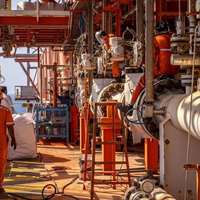
Despite President Donald Trump's announcement to reinstate his maximum pressure sanctions on Iran, experts doubt the policy can truly cut Tehran's oil shipments to force the concessions he seeks.
Although concerned about Trump's announcement last week, officials in Tehran insist that the country will continue its oil exports through illicit channels, drawing parallels to Russian oil sales.
Iran's oil minister said this week that Trump's sanctions policy on Tehran has failed, along with his goal of cutting Iran's oil exports to zero.
"The more they restrict us, the more complex our response will be," Mohsen Paknejad was quoted as saying by state media. "The dream of cutting Iran's oil exports to zero is one they will never achieve."
The CEO of the National Iranian Oil Company, Hamid Boord, said on February 13, "We are striving to ensure that oil exports continue without interruption despite possible challenges, so that Iran's economic engine does not stop."
Iran’s oil-dependent economy has faced severe financial difficulties since 2018, when President Trump withdrew from the 2015 JCPOA nuclear deal and imposed oil export sanctions on Tehran.
This cut exports to the 200,000–300,000 barrels per day range for the remainder of his first term, though shipments rose after Joe Biden took office. Shortly after returning to the White House, Trump vowed to bring Iran’s oil exports down to zero until Iran fully renounces its nuclear weapons option.
However, some analysts doubt whether the Trump administration can significantly curb Iran’s oil exports, which continue to flow to China through a shadow fleet of tankers and various circumvention methods.
Javier Blas, a Bloomberg columnist covering energy and commodities, expressed serious doubt this week about the US ability to curb Russian, Iranian and Venezuelan oil smuggling efforts.
He pointed to the substantial profits involved in the trade for numerous shipping companies and middlemen, who are adept at finding ways to benefit from illicit shipments.
“The sums involved are so vast and the business so lucrative that everyone involved — sellers, buyers and intermediaries — is highly motivated to find alternative routes, tricks and ploys to keep the wheels turning. Over time, the enforcers grow tired and the smugglers become wiser,” Blas argued.
The Paris-based International Energy Agency (IEA) expressed doubt on February 13 if recent additional sanctions imposed on Russia by the United States can reduce illicit shipments.
"Time and again, oil markets have shown remarkable resilience and adaptability in the face of major challenges – and this time is unlikely to be different," the IEA said.
Blas also pointed that industrial countries are sensitive to higher oil prices, which weakens their willingness to engage in real and tough sanctions enforcement.
In addition, Blas drew attention to Trump’s apparent uncertainty when he announced the return of maximum pressure against Iran.
“On paper, it was a strong action. But Trump undermined his own thunder by saying, pen in hand, that he was ‘torn about’ the memo. ‘Everyone wants me to sign it,’ he said, adding ‘I’m signing this, but I’m unhappy to do it’, Blas wrote.
He also argued that after Trump’s directive, no major sanctions enforcement action took place by his administration.
A separate statement was issued announcing measures against Iran’s oil shipping network, but the move targeted a single large oil tanker and two small ones. "Over the last few years, Iran has relied on more than 500 tankers to move its oil," it said.
Other oil experts have also voiced doubts to Iran International. “We’re not yet convinced that Iran’s oil exports will drop to the levels seen in May 2019, mainly because there wasn’t an extensive global dark fleet available back then, unlike what we have today," Tanker Trackers said last week.
US Secretary of State Marco Rubio's trip to the Middle East will heavily focus on countering the destabilizing activities of Iran and its proxies, as well as securing the release of hostages held by Hamas, the State Department announced.
Rubio's itinerary includes stops in Israel, Saudi Arabia, and the United Arab Emirates from February 15-18, following participation in the Munich Security Conference and G7 Foreign Ministers' Meeting starting February 13.
The State Department emphasized that discussions with senior officials will center on advancing regional cooperation, stability, and peace,with a key component being addressing the threat posed by Iran.
“The trip will center on freeing American and all other hostages from Hamas captivity, advancing to Phase II of the ceasefire agreement in Gaza, and countering the destabilizing activities of the Iranian regime and its proxies.”
On February 4, Trump signed a directive reviving his so-called maximum pressure policy on Iran from his first term aimed at driving the Islamic Republic's oil exports to zero. After signing the memorandum, he said he would prefer a deal with Tehran to an Israeli attack on their nuclear sites.
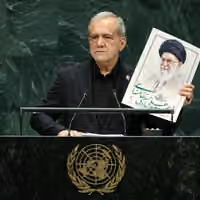
Iranian President Masoud Pezeshkian insisted on Wednesday that the country would not yield to external threats after US President Donald Trump mooted the bombing of its adversary earlier this week.
US President Donald Trump and his Russian counterpart Vladimir Putin discussed Iran's nuclear program in a phone call between the two leaders on Wednesday.
“The issues of Middle East settlement, Iran's nuclear program, and bilateral economic relations between Russia and the United States were also brought up during the conversation,” said the Kremlin in a statement.
The conversation also touched on the Ukraine crisis and a prisoner exchange agreement between the Washington and Moscow.
Their call hinted at future in-person meetings, potentially in Saudi Arabia. Trump suggested the summit could address broader issues, including Iran and Ukraine.
It is a turnaround after Russia's envoy in Tehran had said a day earlier that Western countries are attempting to sideline Russia and China in discussions about Iran's nuclear program due to their close relations with Tehran.
“The Russian Federation has been in this format (P5+1) from the very beginning. And, naturally, we expect that the relevant negotiations will continue in this format, since we have information that, unfortunately, Western countries are trying to wean Russia and China from this process.”
Russia continues to play a pivotal role in Iran's nuclear infrastructure, leading initiatives such as the expansion of the Bushehr Nuclear Power Plant.
A key focus of the call was Ukraine. As reported by Reuters, following over an hour of conversation with Putin, Trump said that the Russian leader, who initiated a full-scale invasion of Ukraine in 2022, expressed a desire to end the war.