Poor gasoline refining fuels Iran's cancer crisis, expert warns

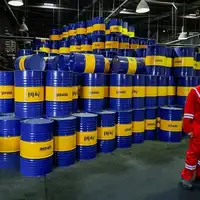
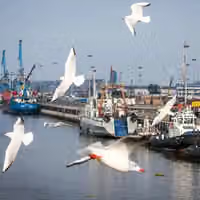
The use of poorly refined gasoline, a major source of air pollution in Iran, is driving the country's cancer crisis, a Mashhad University of Medical Sciences professor has warned.

The use of poorly refined gasoline, a major source of air pollution in Iran, is driving the country's cancer crisis, a Mashhad University of Medical Sciences professor has warned.
Speaking to ILNA, Mohammadreza Ghavam Nasiri said on Wednesday, "Smoking can lead to irreversible changes in respiratory cells, while air pollution, exacerbated by low-quality fuel, significantly impacts cancer incidence".
International sanctions on Iran, particularly those targeting the oil and energy sectors, have played a significant role in the production of low-quality gasoline within the country, the pollutants from which can cause a range of illnesses from cancer to cardiovascular disease.
Sanctions have restricted Iran's access to advanced refining technologies, equipment, and chemical additives required for producing high-quality fuels that meet international standards.
Air pollution remains a critical issue in Iran’s major cities, including Tehran and Ahvaz, where vehicle emissions and traffic congestion contribute to smog events.
Deputy Health Minister Alireza Raisi in December reported over 40,000 deaths in a year linked to pollution, mainly from cardiovascular and respiratory diseases, as well as cancer.
In January, Abbas Shahsavani, the head of the Air Health and Climate Change Group of the Ministry of Health, said that air pollution in Iran claimed the lives of over 30,000 people and cost the country an estimated $12 billion in last Iranian year, a 17% increase compared to the previous year, when 26,307 deaths were recorded.

Iran's Vice-President for Strategic Affairs Javad Zarif criticized US influence on the country's foreign policy, calling it an obstacle that must be removed.
Speaking at a conference titled Prospects of Regional and Global Developments in the Trump Era in Tehran, Zarif said, "I do not view the United States as an opportunity for Iran's foreign policy; I see it as an obstacle."
The event, hosted by the Institute for Iran-Eurasia Studies (IRAS), brought together diplomats and analysts to examine the challenges posed by Trump-era policies.
Zarif argued that US President Donald Trump's focus on reviving hard power through economic pressure—such as tariffs and visa restrictions—was emblematic of his administration's approach to global dominance.
He added that Trump divided countries into "smaller nations that must show loyalty and peer nations that do not." This dynamic, he suggested, “weakened the notion of stable alliances, replacing them with temporary, issue-based coalitions."
For decades, Iran has labeled the US its enemy, citing a history of sanctions, intervention, and regime-change attempts. The two nations broke diplomatic ties in 1980.
Trump’s maximum pressure campaign marked a peak in hostility, with severe sanctions targeting Iran's economy. Yet Tehran claims to have withstood these efforts, portraying its survival as a defeat of Washington's regional ambitions.
Zarif also addressed perceptions of Iran’s weakened state, refuting that it posed a greater nuclear threat. "They argue that military action is the only way to stop Iran," he said, but added that Trump’s flexibility might leave room for negotiations.
He said that based on Trump's recent statements, the new US president's mind is subject to change.
"Trump does not have a solidified perspective in this area, and depending on the circumstances he finds himself in at any given moment, he is willing to adjust some of his paradigms," he added.

To stabilize soaring potato prices, Iran is importing 50,000 tons of the staple vegetable, according to Iran’s deputy agricultural minister.
The imported potatoes will be sold at a target price of about 30 US cents per kilogram, less than half of the current market prices, Akbar Fat’hi said on Wednesday.
The average income of an Iranian wage earner is about $150.
He anticipates the influx of imported and domestically stored potatoes will lead to price reductions in the coming days.
Fathi attributed the current high prices to increased exports and the off-season for domestic potato production. He also noted that further potato imports may be necessary if the market does not stabilize as expected.
The move follows recent reports of significant price increases on essential food items, with some activists saying the real inflation rate for basic necessities is far higher than official figures suggest.
Labor activist Faramarz Tofighi, speaking to ILNA, highlighted the rising cost of vegetables, including potatoes, making it difficult for workers to afford basic necessities.
He argued that the real inflation rate for essential goods is likely above 50-60%, significantly higher than official figures announced to be about 40%.
He added that many families will soon be unable to afford even red meat monthly. He also cited rising prices for bread, meat, dairy, and an 80% increase in egg prices over the past two months.

Iran's political establishment continues to send mixed signals on its openness to talks with Washington, as the deputy speaker of parliament said Wednesday that Tehran supports negotiations, while a leading hardline newspaper doubled-down on its opposition.
Hamidreza Hajibabaei, the senior lawmaker and former minister in Mahmoud Ahmadinejad’s administration, told the media that Tehran has no “enmity or war with America.”
“We are open to negotiations, but they must be fair,” he added.
Iranian officials repeatedly stress the need for fair negotiations, indicating that any demands must fall within the scope of what they are willing to accept.
During talks between the two sides a decade ago, Tehran strongly rejected the inclusion of non-nuclear issues, including its ballistic missile program and regional activities.
Prior to Hajibabaei's remarks, Supreme Leader Ali Khamenei, who holds the highest authority in the Islamic Republic, cautioned top government officials to remain vigilant during any negotiations.
Several state-controlled media outlets and commentators interpreted this as a subtle signal of Khamenei’s approval for talks with the Trump administration.
In contrast, the ultra-hardliner Kayhan newspaper, with close ties to Khamenei’s office, sharply criticized the US for pressing maximalist demands on the Islamic Republic. According to Kayhan, these demands included imposing limits on its missile program, reducing its nuclear activities to what it described as a symbolic level, and prohibiting its interventions in the region.
Despite a rising number of Iranian officials and commentators, who are permitted to speak to the media, advocating for negotiations, Kayhan maintained that Tehran does not see an urgent need to negotiate the lifting of sanctions.
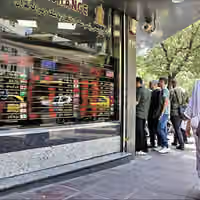
The country’s economic crisis, which has been ongoing for some time, has deepened in recent months, with the national currency losing more than half of its value and Iran facing severe shortages.
"The discussion of negotiations with the US, which will certainly lead nowhere, causes powerful governments that have formed the opposing front against the US to doubt Iran's seriousness in economic and multilateral cooperation," Kayhan's analysis concluded, potentially hinting at a partnership deal Tehran recently formalized with Moscow. "As a result, they may refrain from entering major partnerships with the Islamic Republic. Therefore, negotiating with the US is a lose-lose game for us and a win-win for the US."

Narges Mohammadi, the Nobel Peace Prize laureate and prominent human rights activist, has described the No to Execution Tuesdays campaign by female prisoners as a "civil movement capable of expanding across Iran".
Speaking during a virtual event on Clubhouse to mark the campaign's first anniversary, Mohammadi highlighted its significance in opposing the widespread use of executions in Iran.
"The Islamic Republic seeks to assert its hollow authority by creating fear through mass executions," said Mohammadi, one of the most outspoken activists inside Iran.
"This campaign is not just a protest but a deeply human rights-driven effort that holds the potential to unite and mobilize people against the death penalty."
The campaign began on January 30, 2024, when political prisoners in the women’s ward of Tehran’s Evin Prison launched hunger strikes every Tuesday to protest increasing executions and show solidarity with inmates at Ghezel Hesar Prison in Karaj who had done the same.
Now in its 53rd week, the movement has gained momentum, drawing support from political prisoners across Iran.
Mohammadi, currently on medical leave from imprisonment, expressed her hope for an Iran free of executions.
"The gallows ropes will be torn apart by the powerful hands of each one of us," she said.
"One day, these execution chambers will serve only as a historical lesson on the consequences of tyranny, guiding humanity toward progress, freedom and equality."
The campaign’s message has reached international audiences, amplified by the participation of Iranian political prisoners from diverse backgrounds.
Mohammadi called for continued unity among democracy and human rights advocates, underscoring the campaign’s potential to foster lasting change.

Iran's Islamic Revolutionary Guard Corps (IRGC) launched a new loitering unmanned aerial vehicle called Rezvan during drills held by its ground forces, according to state-run media.
The new drone which was unveiled in early January has a range of 20 kilometers (12.4 miles) and an operating time of 20 minutes.
"Rezvan is similar to the Russian-made Lancet and Israeli-made Hero drones," a Telegram channel affiliated with the IRGC reported Tuesday.
The drone has been designed for rapid deployment and targeted attacks, particularly in complex terrain, according to the IRGC.
The suicide drone is fired from a cylindrical launcher and transmits live video to the operator, allowing for precise target selection and engagement, IRGC media Tasnim reported.

Iran has been conducting multiple military exercises in the past few weeks, including air defense drills near nuclear sites like Natanz and a 110,000-strong Basij mobilization in Tehran, to showcase its capabilities and project a message of strength in the region, following consecutive defeats for its allies since September.
IRGC commander-in-chief Hossein Salami said earlier this month that the ongoing military exercises aim to make the enemies refine their assessments of Iran’s defense capabilities and demonstrate that the country’s deterrence is unaffected by external events, a tacit reference to the fall of Tehran’s longtime ally Bashar al-Assad in Syria.