Italian journalist returns home after being freed from Iran

Newspaper journalist and podcaster Cecilia Sala, 29, who had been arrested on unspecified charges last month in Iran, returned home after Tehran released her on Wednesday.

Newspaper journalist and podcaster Cecilia Sala, 29, who had been arrested on unspecified charges last month in Iran, returned home after Tehran released her on Wednesday.
Italian Foreign Minister Antonio Tajani announced on X Wednesday: "Diplomacy and teamwork: Cecilia Sala is coming home!"
Italian Prime Minister Giorgia Meloni also tweeted Wednesday that Sala has been released and is on a plane returning home.
Later in the day, a video was released by Reuters showing Sala getting off the plane and hugging her partner, Daniele Raineri, as well as her parents Elisabetta Vernoni and Renato Sala. She also met the Italian prime minister at the airport.
Earlier, the Italian newspaper La Stampa reported that Sala had been moved out of solitary confinement and was sharing a cell with another person.
Cecilia Sala, a 29-year-old newspaper journalist and podcaster, was arrested in Iran last month on unspecified charges despite holding a valid press pass. She was placed in solitary confinement, sparking international concern.
A source familiar with discussions between Sala's family and the Italian government revealed to Iran International that Tehran has linked her release to Italy's handling of an Iranian detainee. Iran reportedly signaled that Sala's freedom depends on the release of Mohammad Abedini Najafabadi, a 38-year-old Iranian arrested by Italian authorities at the request of the United States. Abedini is accused of providing technology used in a drone attack that killed three US soldiers in Jordan.
The source indicated that Iran is prepared to release Sala “on humanitarian grounds” if Italy halts extradition proceedings against Abedini and frees him from Milan's La Opera prison.
"Let's enjoy Cecilia Sala's return to Italy", Italian Foreign Minister Antonio Tajani said when pressed by reporters on the possible release of the Iranian national.
"The Iranians themselves have separated the two cases," the Italian foreign minister said. "From day one we were right, we did what we could and had to do to bring an Italian citizen home."
Italian Minister of Justice Carlo Nordio on Wednesday arrived at Palazzo Chigi, the Council of Ministers, to address the issue, according to Italian media, although he himself denied the meeting was held for that reason: "This is something I am not really thinking about at the moment".
Italian media reported that during New Year’s Day calls to her family, Sala described harsh conditions in detention. She said her prescription glasses had been confiscated, her cell was barely larger than her height, and she was forced to sleep on a blanket spread on the floor.

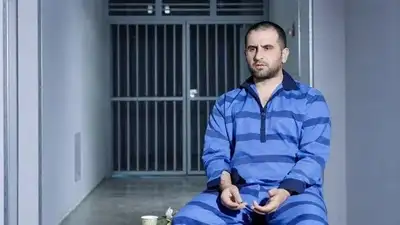
In recent letters from Tehran’s Evin prison, at least three political prisoners have described singing and dancing as acts of defiance against the system that has imprisoned them—or sentenced them to death—for their peaceful activities.
“We dance, we sing and dance in prison, but in that same prison—which you call a hotel—we endure the longing for our loved ones. The sick care for the sick, and we must struggle for months even to get treatment [in an outside medical facility], let alone for medical furlough,” Mahnaz Tarrah, a monarchist activist wrote in a letter smuggled from Tehran’s notorious Evin Prison a few days ago.
Tarrah who has been in and out of prison several times for her political activities is currently serving a sentence of four years and four months for “propaganda against the system” and similar charges.
Tarrah and other prisoners’ statements followed a controversy sparked by the release of a video clip on social media last week that showed Iran's Nobel Peace Laureate Narges Mohammadi singing and dancing in prison.
Iran's pro-establishment media used the footage as evidence that she and some other political prisoners systematically lied about their harsh conditions in Iranian prisons and the cruelties they endured.
Political rivals charged that the video proved Mohammadi had privileges in prison contrary to her self-portrayal as a harshly persecuted dissident.
Referring to the video clip, for instance, the Revolutionary Guards (IRGC)-linked Javan newspaper claimed on Sunday that Evin Prison was as comfortable as home or a hotel.
In her letter, Tarrah also emphasized that all her fellow inmates, including those who belonged to leftist groups, constitutional monarchists, and even reformists who are often criticized by others for not supporting the goal of overthrowing the Islamic Republic, were united in their expression of resistance and defiance in prison.
“We dance together, and we cry together… Judge us if you can bear one day and night of solitary confinement or the prolonged, Islamic Republic-style interrogations [that we have endured],” Tarrah wrote.
The videos of Mohammadi’s singing and dancing were recorded by her fellow inmates using mobile phones smuggled into the prison on two separate occasions in the large, shared rooms of the Women’s Ward of Tehran’s Evin prison where around seventy female political prisoners are currently serving their sentences.
Before their trials and sentencing, political prisoners and prisoners of conscience often spend long periods in solitary confinement at other wards of Evin. These wards are administered and controlled by the Revolutionary Guards’ Intelligence Organization (SAS), the Intelligence Ministry, and the Judiciary which has its own intelligence body.
Political prisoners have provided many horrifying accounts of Evin Prison’s solitary cells, where the lights are kept on at all times and prisoners are required to wear blindfolds every time they leave their cells to use the shower or to go to interrogation rooms.
Political prisoners are also often sent to other prisons with much worse conditions, such as the Gharchak Women’s Prison in the south of Tehran, as punishment for protesting in prison or refusing to cooperate with interrogators or prison authorities.
“I must cry out from Evin Prison that the [actions of the] government will never be whitewashed with [Mohammadi’s or anyone else’s] dancing,” Mahboubeh Rezaei, another monarchist prisoner who is seen in the dance video beside Mohammadi wrote in another letter from Evin last week.
“I have been thousands of kilometers away from my family for nearly two years and been deprived of seeing my mother, the only person I have, but these deprivations will not exhaust us,” she added. “I will continue to dance, hand in hand with my sisters, with more [expression of happiness].”
Rezaei was sentenced to 26 years in prison in 2023 for “undermining national security”.
Remembering the night when they found out their fellow inmate Pakhshan Azizi had been sentenced to death, she recounted in her letter how led by Azizi, they all danced and chanted that they would not give up the quest for freedom even if they had to give their lives for it.
Azizi is one of the three female political and labor activists sentenced to death on charges of “armed rebellion” against the Islamic Republic in July by Iran's Islamic Revolutionary Court.
In a third letter from Evin’s Women’s Ward in the past few days, political activist Golrokh Iraee who is serving a seven-year sentence recounted how Azizi and Varisheh Moradi, one of the other female activists sentenced to death, tried to keep up the spirits of their fellow inmates despite knowing they could be hanged any day.
“Pakhshan and Varisheh came to the general ward, after months of solitary confinement … They changed the atmosphere of the ward. They made Kurdish headdresses for others and taught us Kurdish dance … The sentences passed on them made no disruption in the inmates’ routine and their relations with other inmates,” Iraee wrote.

Hardliners in the Iranian parliament are determined to impeach four cabinet ministers just five months after the government’s formation, during an unprecedented economic crisis.
The hardliners' push began last week with a motion to impeach Economy Minister Abdolnasser Hemmati. According to the conservative Nameh News website, after Speaker Mohammad Bagher Ghalibaf opposed the move, the hardliners expanded their efforts to include three additional ministers: Labor Minister Ahmad Maydari, Oil Minister Mohsen Paknejad, and Energy Minister Abas Aliabadi.
However, moderate MP Gholamreza Tajgardoon suggested on Tuesday that Speaker Ghalibaf might still manage to persuade lawmakers to withdraw the impeachment motion.
The new government was barely a month old when Iran’s already weakened currency, the rial, began to plummet in September, losing 33% of its value. This sharp decline followed a series of consecutive regional setbacks for the Islamic Republic, including significant blows dealt by Israel to Hezbollah.

The ultraconservative daily Vatan Emrooz reported that "the motion for impeachment has been submitted to the Majles Presidium despite Ghalibaf's opposition." The newspaper noted that "the number of MPs supporting the impeachment of Hemmati exceeds those seeking to unseat the other three ministers." According to the report, while the motions to impeach the other ministers have been signed by around 10 MPs each, the call to impeach Hemmati has garnered over 70 signatories.
The new additions to the list of impeachments could be a tactic by hardliners to make sure that they can unseat at least one minister to demonstrate their power. That is important for hardliner majority as they have not been able to ratify any significant legislation since entering the parliament in May 2024.
Tajgardoon, chairman of the Majles Budget Committee, commented that "the calls for impeachment are rooted in factional motivations." He suggested that hardliners might be targeting the Oil and Labor Ministers, who only narrowly secured the parliament's vote of confidence. While recognizing that the primary target of the impeachment efforts is the Economy Minister, Tajgardoon expressed hope that the motion would not lead to Hemmati's removal from the government.
The conservative Nameh News has reported that "if successful, the impeachment would bring about a significant shift in the government and is likely to escalate tensions between the cabinet and parliament."
According to Nameh News, the hardliners have justified their impeachment efforts by stating that they are targeting Hemmati for the surging exchange rates, Paknejad for failing to supply fuel to power plants, Aliabadi for recurring power outages, and Meydari for his inability to improve workers' livelihoods or reduce unemployment in Iran.
However, none of these issues are new, as the newly formed government inherited longstanding shortages and structural problems from previous administrations, compounded by years of sanctions and ineffective governance.
The Alef website suggested that the true motive behind the impeachment push might lie in the economic interests of powerful insiders. As the rial plummeted, the government restricted access to cheap dollars previously supplied to influential importers—well-connected figures within Iran. According to Alef, "Eliminating the special lower exchange rate for importers and exporters, along with requiring exporters to repatriate their hard currency earnings to Iranian banks, has fueled the impeachment effort." The website supported its claims with statements from government spokeswoman Fatemeh Mohajerani and Vice President Mohammad Reza Aref, who defended Hemmati's foreign exchange policy reforms.
Reformist media outlets, including Rouydad24, have criticized the impeachment motions, noting that they come "during severe economic and foreign policy crises in Iran," while also citing "heightened international tensions in the region." Highlighting the factional motivations behind the push to impeach Hemmati, the website questioned, "Why was former President Raisi's economy minister never impeached, even after a 120-percent rise in exchange rates?"
While Ghaibaf has branded the impeachment as a "political show by hardliners," ultraconservative media such as Vatan Emrooz say "impeachments are a way of making the government accountable."

Iraq's prime minister emphasized the need for stability in Syria during a joint press conference with Iranian President Masoud Pezeshkian in Tehran on Wednesday, his first visit since Islamist rebels in neighboring Syria toppled the decades-old rule of the Assad dynasty.
Mohammed Shia' al-Sudani said: “Stability in Syria is the key to stability in the region."
He called for halting foreign interventions and ensuring that Syrians decide their future without external influence.
“We are ready to work with all parties to achieve stability in Syria, ensuring that all Syrians and various groups participate in shaping the country's future,” he added.
The meeting came in the wake of the December collapse of long-time President Bashar al-Assad’s government, marking a pivotal moment for Syria and the wider region.
Since the outbreak of Syria's conflict in 2011, Iran played a central role in supporting Assad’s regime.
Viewing Syria as a strategic ally in its Axis of Resistance against Israel and the West, Iran deployed financial and military resources, including IRGC personnel and Shiite militias.
However, Iran’s extensive involvement came at a severe cost to Syria's sovereignty and economy, fostering widespread resentment among Syrians.
President Pezeshkian welcomed al-Sudani’s visit, expressing hope for accelerated development in bilateral ties.
“We hope this visit, combined with the mutual trust between the two sides, will accelerate the development of cooperation and lead to significant progress in relations between the two countries,” he said.

Pezeshkian also said, “Both countries share common concerns regarding Syria. These include ensuring stability and peace in Syria, preserving its territorial integrity, combating terrorist groups, the necessity of the Zionist regime's withdrawal from occupied territories, and respecting religious sentiments, particularly concerning Shiite holy sites.”
Iraq’s risk of Iranian influence
While Iran remains a key partner, its actions in Iraq parallel its approach in Syria, fostering Shiite militias under the Popular Mobilization Forces (PMF). These groups, acting as extensions of Tehran’s interests, have strained Baghdad's authority and fueled fears that Iraq could face a fate similar to Syria.
“We invite all countries to engage in dialogue among the nations of the region to ensure peace, stability, and security. Since its victory over ISIS, Iraq has consistently worked towards fostering calm in the region. Iraq operates based on understanding and dialogue between nations," al-Sudani said.
He also held talks with Mohammad Bagher Ghalibaf, the Iranian Parliament Speaker after the joint press conference in a bid to smooth out a pathway for the future without the risk of extensive Iranian involvement in Iraq.

Iran will relocate its capital to the southern coastal region of Makran, the government spokeswoman said on Tuesday, in an ambitious plan aimed at bypassing Tehran’s enduring overpopulation, power shortages and water scarcity.
While officials emphasize the strategic and economic advantages of the shift, critics have voiced concerns over likely enormous financial and logistical demands.
“The new capital will definitely be in the south, in the Makran region, and this matter is currently being worked on,” government spokeswoman Fatemeh Mohajerani said on Tuesday.
She highlighted Tehran’s growing ecological pressures, including water scarcity and announced the formation of two councils to examine the feasibility of the move and develop a sea-based economy in the Makran region.
“We are seeking assistance from academics, elites and experts, including engineers, sociologists and economists,” she added, while stressing that the issue remains in the exploratory phase and is not urgent.
A divisive, costly undertaking
President Masoud Pezeshkian reignited the debate over the location of the capital, advocating for a move by describing the imbalance between Tehran’s financial resources and expenditures as unsustainable.
Advocating for a shift closer to the Persian Gulf, he said last week, “transporting raw materials from the south to the center, processing them, and returning them south for export drains our competitive capacity.”
However, critics, including conservative journalist Ali Gholhaki, have lambasted the proposal.
“Rebuilding Azadi Stadium takes 18 months and costs 19 trillion rials ($23.75 million); how much time and money does relocating the capital require? Think over a century and hundreds of billions of dollars!” Gholhaki wrote on X, calling the idea unrealistic and risky for a country under severe economic strain.

Discussions about relocating Iran’s capital have persisted since the 1979 Islamic Revolution but have been consistently derailed by financial constraints, political inertia and logistical challenges.
Previous Iranian administrations have considered various versions of the idea, but financial limitations and political stagnation have repeatedly hindered progress.
The concept gained momentum during Mahmoud Ahmadinejad’s presidency, primarily due to concerns over Tehran’s vulnerability to earthquakes.
In the mid-2010s, President Hassan Rouhani revived the discussion, emphasizing the city's unsustainable growth and mounting environmental issues.
While proponents point to Makran’s strategic location and potential economic benefits, critics argue the move could cripple Tehran’s economy and take decades to complete.

Tehran has no plan to acquire a nuclear bomb since Iran's Supreme Leader Ali Khamenei has forbidden it on religious grounds, Iran's president said on Tuesday.
"The Islamic Republic has absolutely no intention of utilizing its nuclear capabilities for military purposes based on its ideological beliefs and a fatwa by Supreme Leader Ali Khamenei," Masoud Pezeshkian said in a meeting with Britain's new ambassador to Tehran.
For two decades, the Supreme Leader's so-called nuclear fatwa has been repeatedly cited by senior officials as proof of Iran's peaceful intentions. But even supporters of that view say the decree could be amended.
"According to the Leader’s opinion, going in this direction is now forbidden, because he is a religious authority; (but) maybe he will change his opinion tomorrow," Shahid Beheshti University President Mahmood-Reza Aghamiri said recently in an interview.
The nuclear engineer went on to say that if Khamenei’s opinion changed, Iran would have the capacity to build a nuclear weapon.
Tehran ready for return to JCPOA
Pezeshkian's comments came one day after French President Emmanuel Macron warned Tehran's nuclear program is nearing the point of no return.
Iran says its uranium enrichment program is for peaceful purposes but has accelerated activity since US President-elect Donald Trump withdrew from the 2015 nuclear deal - officially known as the Joint Comprehensive Plan of Action (JCPOA) - during his first term and reimposed sanctions on Tehran.
"The Islamic Republic is fully prepared for all parties to return to the 2015 agreement and fulfill their mutual commitments," Pezeshkian added on Tuesday.
Last month, European powers France, Germany, and Britain warned that Iran’s actions had further eroded the agreement, noting that Tehran’s stockpile of highly enriched uranium has no credible civilian justification.
In December, the head of the UN nuclear watchdog reported that Iran was dramatically advancing enrichment close to the 90% purity needed only for weapons-grade material.
The three European nations, co-signatories of the 2015 accord, had brokered the deal under which Iran agreed to limit enrichment in exchange for the lifting sanctions.