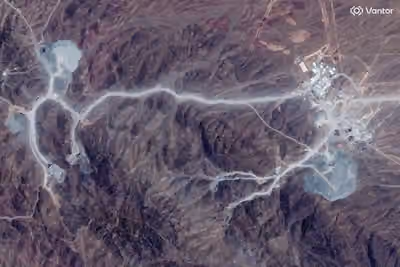
The Fordow site, located about 100 km south of Tehran, has been a focal point of tension due to its uranium enrichment activities. In February last year, inspectors discovered uranium particles enriched to 83.7% at the underground facility.
Iran said it started enriching uranium to 60% at Fordow two years ago, building on similar enrichment at the other site visited by Grossi, Natanz. This level, close to weapons-grade 90%, represented a significant escalation in its nuclear program.
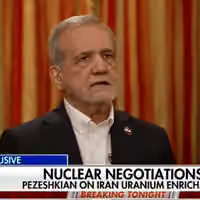
Grossi’s trip to Tehran included meetings with key officials, including President Masoud Pezeshkian and Foreign Minister Abbas Araghchi.
President Pezeshkian signaled Iran’s willingness to cooperate with the IAEA to clarify ambiguities regarding its nuclear activities and again asserted the peaceful intentions of the program.
Meanwhile, Mohammad Eslami, head of Iran’s Atomic Energy Organization, warned that any resolution by the IAEA’s Board of Governors criticizing Iran’s nuclear program would prompt immediate retaliatory actions.
“We will not allow pressure to dictate the course of our peaceful nuclear activities,” Eslami said during a joint press conference with Grossi.
The IAEA’s Board of Governors is set to meet next week, and European powers are advocating for a resolution to increase scrutiny of Iran’s nuclear program and press Tehran to return to negotiations.
Simultaneously, the geopolitical landscape remains tense. Israeli strikes last month destroyed a nuclear weapons research facility in the Parchin military complex near Tehran, according to a report by Axios.
European powers, seeking to curb Iran’s nuclear advancements, are pushing for a comprehensive IAEA report detailing problem areas, including the discovery of unexplained uranium traces at undeclared sites.
Iranian state media, IRNA, emphasized the positive atmosphere during Grossi's visit, saying: "In Tehran, Grossi was met with goodwill from Iranian officials, who conveyed a message of readiness to negotiate and revive the path of constructive engagement."
This shift in tone is particularly striking given that just a year ago, Iran barred nearly one-third of the IAEA's monitoring team, a move Grossi described at the time as a severe impediment to oversight.
Tehran labeled the excluded inspectors as "extremists," further heightening tensions between Iran and the international community over its nuclear activities.
But, while Iran signals a willingness to cooperate, Washington remains wary.
“What we want to see from Iran is actual behavior change and action, not just signs of something or indications of something,” said Vedant Patel, Principal Deputy Spokesperson, adding that all options are on the table to prevent Iran from developing a nuclear weapon.
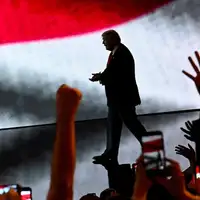
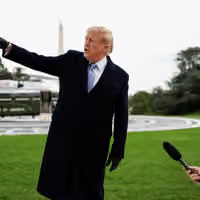
Iran’s diplomatic moves, including Grossi’s visit, appear aimed at de-escalating tensions ahead of the return of US President-elect Donald Trump, who is expected to adopt a hardline stance on Iran’s nuclear program.
The IAEA meeting next week may prove critical to gauge the direction of Iran’s nuclear program and any way forward for renewed negotiations.