US Secretary of Defense Lloyd Austin, in a phone call with his Israeli counterpart Yoav Gallant , "expressed full support for Israel's right to defend itself against Iran-backed terrorist groups." He also stated that the US remains positioned to protect its forces and facilities in the region and is committed to Israel's defense.
Mehran Kamrava, professor of government at Georgetown University in Qatar, told Reuters that there is a complex mix of emotions in the region’s Arab capitals following the recent developments. "There's a mixture of apprehension and also a hidden sense of joy," he explained, noting that none of the conservative Arab states have been particularly supportive of Hezbollah. He observed that while some regional leaders are uneasy about Israeli Prime Minister Benjamin Netanyahu’s expansion of the war, there is also "some relief that Hassan Nasrallah has been removed."
Kamrava added that Iran is unlikely to act immediately even in the face of this significant loss. "Tehran has a doctrine called strategic patience, whereby they play the long game," he said, suggesting that this doctrine will persist and that Iran is reluctant to engage Israel in any direct confrontation.
Israeli Defense Minister Yoav Galant, in a message, said Israel "eliminated" the leader of Hezbollah, adding that Nasrallah "was the murderer of thousands of Israelis and foreign citizens. He was an immediate threat to the lives of thousands of Israelis and other citizens."
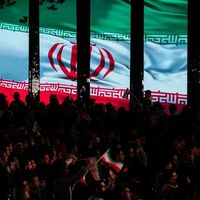
Public mourning has been declared in Lebanon, Iraq, and Syria following the death of Hezbollah leader Hassan Nasrallah. However, Iranian officials have not yet issued a formal statement regarding national mourning or the observance of public holidays.

Hassan Nasrallah’s killing and Hezbollah’s weakening raise serious concerns for Iran-backed groups, Lina Khatib, associate fellow at the Middle East and North Africa Programme at Chatham House, wrote in The Times.
"If Israel is able to bring Iran’s most powerful asset in the Middle East to its knees, then smaller, newer groups in Iran’s network are potentially easier to undermine," she argued.
Khatib also compared Nasrallah’s death with that of IRGC-QF commander Qasem Soleimani, who was killed in a US drone strike in Iraq in 2020. She noted that, unlike Soleimani's assassination, which was an isolated incident, Nasrallah’s killing is part of a broader Israeli strategy to dismantle Hezbollah, potentially signaling the start of Iran's diminishing influence in the region.