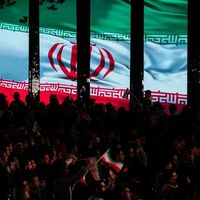
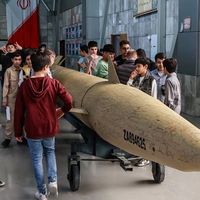
Public mourning has been declared in Lebanon, Iraq, and Syria following the death of Hezbollah leader Hassan Nasrallah. However, Iranian officials have not yet issued a formal statement regarding national mourning or the observance of public holidays.
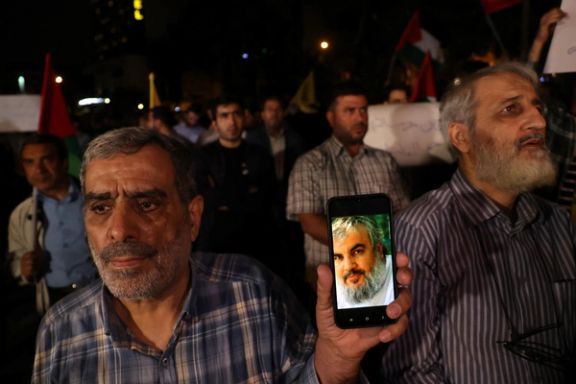
Hassan Nasrallah’s killing and Hezbollah’s weakening raise serious concerns for Iran-backed groups, Lina Khatib, associate fellow at the Middle East and North Africa Programme at Chatham House, wrote in The Times.
"If Israel is able to bring Iran’s most powerful asset in the Middle East to its knees, then smaller, newer groups in Iran’s network are potentially easier to undermine," she argued.
Khatib also compared Nasrallah’s death with that of IRGC-QF commander Qasem Soleimani, who was killed in a US drone strike in Iraq in 2020. She noted that, unlike Soleimani's assassination, which was an isolated incident, Nasrallah’s killing is part of a broader Israeli strategy to dismantle Hezbollah, potentially signaling the start of Iran's diminishing influence in the region.
In a statement mourning the death of Hassan Nasrallah, Iran's President Masoud Pezeshkian condemned the attack that killed him, placing blame on the US.
"The international community will not forget that the order for this terrorist attack was issued from New York, and the Americans cannot absolve themselves of complicity with the Zionists," the statement published on Iran's official government website read.

The official account of Iran's Supreme Leader, Ali Khamenei, on X posted: "The Zionist criminals need to know that they are far too weak to be able to inflict any significant damage on the solid structure of Lebanon’s Hezbollah."
This follows Khamenei's earlier statement, where he called on Muslims "to stand by the people of Lebanon," notably without mentioning Hassan Nasrallah.
Mohammad-Javad Larijani, a former top advisor to Supreme Leader Ali Khamenei, described the attack that killed Hassan Nasrallah as the result of a "serious informational and security breach" within the Tehran-supported regional militia, referred to as Resistance. He said that the "Zionist regime managed to exploit vulnerabilities, causing significant damage," whether through "pagers or other gaps," and stressed that "even the recent bombing was the result of infiltration."

Hashem Safieddine, a key figure in Hezbollah's political and social efforts, is seen as a potential successor to Hassan Nasrallah as Secretary General of Hezbollah, according to three senior Israeli defense officials cited by The New York Times. Safieddine, a cousin of Nasrallah, was notably one of the senior leaders not present at the site of the strike that killed several Hezbollah commanders.