Iran brokers secret Russia-Houthi missile talks - Reuters

Iran has facilitated secret negotiations between Russia and Yemen's Houthis in order for Moscow to provide the militia with advanced anti-ship missiles amid the Red Sea blockade.
Iran has facilitated secret negotiations between Russia and Yemen's Houthis in order for Moscow to provide the militia with advanced anti-ship missiles amid the Red Sea blockade.
Three sources confirmed to Reuters that discussions are ongoing, although Russia has not yet committed to providing the Yakhont supersonic missiles, also known as P-800 Oniks.
Such weapons would enhance the Houthis' ability to strike commercial vessels in the Red Sea with greater accuracy amid the blockade which began in November, posing a heightened threat to US and European warships defending the area.
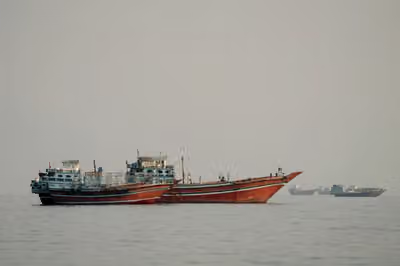
Amid the ongoing war in Gaza, the Houthis, claiming solidarity with Iran-backed Hamas, have enforced a maritime blockade of the Red Sea, targeting commercial shipping, on the orders of Iran's Supreme Leader, Ali Khamenei.
Initially focused on the Red Sea, these attacks have now extended to other key waterways, including the Indian Ocean, disrupting international shipping and resulting in dozens of international seamen unrelated to Israel being taken hostage.
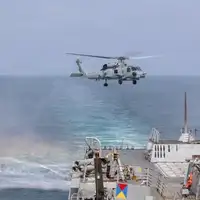
A US-led coalition of over 20 nations has mobilized to address the threat to global trade and the freedom of movement in the vital maritime corridors.
"Russia is negotiating with the Houthis for the transfer of Yakhont supersonic anti-ship missiles," a Western intelligence source told Reuters. "The Iranians are brokering the talks but do not want to have their signature over it."
In July, The Wall Street Journal reported that Russia was considering sending the missiles. In August, CNN reported that Russia had prepared to deliver missiles and other military equipment to the Houthis but pulled back last minute amid behind-the-scenes efforts by the United States and Saudi Arabia to halt the transfer.
Two regional officials said that the Houthis and Russians met in Tehran at least twice this year and that talks to supply dozens of missiles, which have a range of about 300 km (186 miles), were ongoing, with further meetings expected in the coming weeks.
For years, Iran has been accused of supplying the Houthis with funding, weapons and technical expertise, enabling the group to develop long-range missiles and drones. These shipments, often disguised as commercial cargo, have sometimes been intercepted by US naval forces and other international military operations.
In early September, the Houthis reached central Israel with a missile for the first time, which they claimed was hypersonic. The missile landed in an open area near Ben Gurion International Airport, causing no casualties and minimal damage.
Following the incident, Israeli Prime Minister Benjamin Netanyahu vowed that Israel would exact a "heavy price" on the Houthis, who control northern Yemen. In a press conference, Iranian President Masoud Pezeshkian denied that Tehran had supplied hypersonic missiles to the Houthis or short-range ballistic missiles to Russia.