PODCAST - Eye for Iran : Is Pezeshkian a ploy in case of Trump presidency?
Iran's newly elected president is likely an attempt to be a 'charm offensive' in anticipation of a possible second Trump presidency, a former US special envoy told the 'Eye for Iran' podcast.
Ellie Cohanim, a former Deputy Special Envoy to Monitor and Combat Anti-Semitism during the Donald Trump administration, was urging the public not to be fooled by an image campaign touting Iran's newly elected president as a reformer or a game changer .
She accused Tehran of promoting Masoud Pezeshkian in a ploy to turn up the 'charm' to try and manipulate the West - and Donald Trump.
Pezeshkian won Iran's run-off presidential election on July 6, besting hardliner Saeed Jalili. The whole election process triggered by the sudden death of President Ebrahim Raisi, was a process tightly controlled by the core of the regime that hand-picked candidates.
"I understand that in Iran, they are already talking about and preparing in some ways for a Trump presidency." said Cohanim on 'Eye for Iran.'
"I don't think it would have any effect whatsoever. I don't think that Islamic Republic charm offensive is going to sway president Donald Trump."
But just why has that image campaign worked when Pezeshkian refers to himself as a "reformist principlist" who is devoted to Iran's Supreme Leader? Why then has Western media largely propagated him as the hope Iranians need?
Cohanim points to the the Iranian influence network that is operating at the heart of the US government, citing an Iran International investigation. The investigation by Iran International'sBozorgmehr Sharafedin uncovered Iran experts who have worked closely with Robert Malley, as members of an influence network formed and guided by Tehran.
Iran’s president-elect set out his government’s foreign policy in an open letter to the world Friday, praising the eastern powers and attacking the west, only a day after NATO concluded its summit with unequivocal criticism of China, Russia and Iran.
Masoud Pezeshkian’s letter, published in English in the Iranian state-run daily Tehran Times, is yet another sign of Iran’s firm embracing of Russia and China, despite the president-elect’s claim that his government would be committed to pursue “constructive engagement” with all the world’s countries but Israel.
“China and Russia have consistently stood by us during challenging times,” Pezeshkian wrote in his piece titled A Message to the New World. “We look forward to collaborating more extensively with Beijing as we advance towards a new global order… and my administration will remain committed to expanding and enhancing our cooperation [with Russia].”
Iran has been tilting eastward for many years now, having moved on from its original mantra of “Neither East Nor West,” put forward by the Islamic Republic’s first Supreme Leader, Ruhollah Khomeini, right after the Revolution in 1979. The eastward tilt reached an unprecedented pace when Iran began arming Russia with kamikaze drones that have since been used to hit targets in Ukraine.
In contrast to his expression of gratitude to Russia and China, Pezeshkian’s letter shows little warmth towards the west. He blames the United States and Europe for inflicting “hundreds of billions of dollars in damage” to Iran’s economy, and “untold suffering, death and destruction on the Iranian people,” mainly through sanctions that have been tightening steadily, ever since the Trump administration withdrew from the 2015 nuclear deal.
“The US and its Western allies, not only missed a historic opportunity to reduce and manage tensions in the region and the world,but also seriously undermined the Non-Proliferation Treaty (NPT) by showing that the costs of adhering to the tenets of the non-proliferation regime could outweigh the benefits it may offer,” Pezeshkian writes, accusing the western powers of “abusing” the NPT and “fabricating” a crisis over Iran’s nuclear activity.
For more than two decades now, Iranian administrations have been claiming that the country’s nuclear program is “purely civilian.” Expert opinion, however, including that of the UN nuclear watchdog (IAEA), is unanimous that Iran’s highly-enriched uranium cannot be explained in the absence of a weapons program. The IAEA has been pushing Iran for years to gain more extensive access to its sites, but Iran has not only denied this request, but has limited IAEA inspection in retaliation for the US withdrawal of the nuclear deal.
It is unclear if the ‘moderate’ Pezeshkian would hold enough sway to attempt a de-escalation of the nuclear crisis –or a revival of the deal, which he has promised Iranian voters to pursue. Judging by his tone in the Message to the New World, Iran’s relationship with the west is as likely to improve as it is to escalate.
“I look forward to engaging in constructive dialogue with European countries,” Iran’s president-elect says, following with a warning line that the Europeans “should realize” that Iranians’ rights and dignity “can no longer be overlooked”. But the harshest message is expectedly reserved for the US. “The United States also needs to recognize the reality and understand, once and for all, that Iran does not—and will not—respond to pressure.”
Pezeshkian’s message “to the new world” follows the letter he published in Arabic Wednesday, where he addressed Iran’s neighbors, calling for cooperation and a united front against the “monopoly of certain forces over world decision.” The regional charm offensive is repeated in the president-elect’s second letter.
“Under my administration, we will prioritize strengthening relations with our neighbors. We will champion the establishment of a strong region rather than one where a single country pursues hegemony and dominance over the others,” Pezeshkian says. “I firmly believe that neighboring and brotherly nations should not waste their valuable resources on erosive competitions, arms races, or the unwarranted containment of each other.”
The United States on Friday sanctioned an Iranian company over its alleged contribution to Iran's efforts to develop chemical weapons, vowing to block any such attempts in the future.
In late May, the US ambassador to the Organization for the Prohibition of Chemical Weapons (OPCW) accused Iran of "maintaining a chemical weapons program that includes incapacitating agents for offensive purposes."
However, this is the first time the Biden administration is imposing sanctions against the Islamic Republic's chemical weapons program.
"The Department of State is today imposing sanctions on Hakiman Shargh Research Company for its involvement in Iran’s chemical weapons research and development," the State Department said in a Friday press release.
It said the sanctions are being imposed under the Executive Order 13382, which targets proliferators of weapons of mass destruction and their supporters.
The State Department accused the Isfahan-based company of "engaging or attempting to engage in activities or transactions that materially contribute to the proliferation of weapons of mass destruction by Iran."
The Biden administration also vowed to continue to counter "any efforts by the Iranian regime to develop chemical weapons, including those that may be used by its proxies and partners to support Iran’s destabilizing agenda of inciting and prolonging conflict around the world."
"While the world has been focused on Tehran’s nuclear program, reports from inside Iran and statements from the US government point to a growing industry of pharmaceutical-based weapons ... which are based on substances such as fentanyl... and are aimed at rendering targets unconscious," the report said.
"Leaks from regime-backed universities in Iran appear to show that fentanyl and other central nervous system-acting substances are being developed into aerosolized forms for use on civilians in riot control situations," it added.
Since 2018, the State Department said Friday, the US has assessed Iran as being in noncompliance with the CWC for its "failure to fully declare its chemical weapons-related activities and facilities."
In the midst of Iran's 2022 antigovernment protests, the reported use of a “green gas” against protesters in the Kurdish cities of Javanrud and Piranshahr raised serious concerns among Iranians.
Two videos were posted on social media that showed thick green smoke wafting through the streets in Javanrud, a city of around 50,000 in the western province of Kermanshah, amid heavy clashes between stone-throwing protesters and security forces shooting at them. Reports also emerged on the same day of the use of a similar green gas in Piranshahr in West Azarbaijan Province.
The use of an unidentified gas that causes skin irritation, nausea and other symptoms has conjured up memories of Saddam Hussein’s chemical attack on the Kurdish border city of Sardasht, also in West Azarbaijan during Iran-Iraq War (1980-1988) in the minds of many, particularly people in Iran's Kurdish areas.
Saddam’s chemical attack during which mustard gas was used killed at least 130 people and injured 8,000 of the 12,000 inhabitants of the city in 1983. Many victims still struggle with respiratory and other health issues.
Some chemists and physicians have identified the green gas used in Javanrud and Piranshahr as hexachloroethane, others say it is adamsite (DM), a chemical used as a riot control agent.
Also in 2023, several schoolgirls were poisoned in what some activists called a “revenge” for the role young women played in the 2022 protests against the mandatory hijab.
The scale of the intentional poisoning of female students -- which started in the religious city of Qom and spread further throughout the country and reached schools in small towns and villages -- turned it into a national crisis and even sparked international reactions.
The patterns of the school attacks were similar to chemical attacks committed by radical Islamists in Chechnya and the Taliban in Afghanistan. However, the Islamic Republic downplayed the attacks and denied any foul play, without making any arrests.
One week after Iran's presidential runoff, the election appears far from over for ultraconservative candidate Saeed Jalili and his supporters. who consider themselves as the backbone of 'revolutionary forces.'
Although he officially congratulated President-Elect Masoud Pezeshkian's victory, still he and his hardline supporters and campaign managers keepthreatening Pezeshkian and other reformists that if they do not behave in the way the ultraconservatives expect, they are going to come forward and possibly unseat them.
Some of those close to Jalili this week went as far as betting that Pezeshkian cannot survive as President even until the Iranian new year in Match 2025. All this is taking place in a situation as if the hardliners have won the election.
In the meantime, as if they are taking revenge on Pezeshkian for winning the election, a large number of heavy sentences have been issued by hardliners in the Judiciary and security organizations for political prisoners particularly female inmates and women's rights activists.
Former MP Mahmoud Sadeghi has told the press in Tehran that major energy companies and other rich firms have been changing hands in a series of non-conventional transactions during recent days.
In another bid to secure positions of power within the government, ultraconservatives have reportedly been issuing numerous personnel actions to appoint like-minded individuals to key roles in government banks and companies. This is occurring despite orders from Pezeshkian and Mohammad Mokhber, the head of President Ebrahim Raisi's outgoing administration.
In another development, Jalili's allies in the outgoing government are reportedly exploiting the power shortage to increase dissatisfaction with the incoming administration. Some accuse hardliners within the water authority of deliberately releasing water reserves from dams into rivers to exacerbate electricity shortages, affecting more residential and industrial areas. This alleged manipulation comes during a summer when temperatures in at least 10 Iranian provinces have exceeded 50 degrees Celsius.
The statement clearly overlooks the severity of the economic and political problems inherited from the Raisi administration, including an unusually high budget deficit, rising inflation, unemployment, and numerous sanctions-related issues, such as obstacles to repatriating Iran's oil revenue. Many predict that a catalogue of economic challenges will soon confront the new Iranian government after it is formed in September.
Economic journalist Maryam Shokrani saysthese include a 8,700 trillion-rial ($15 billion) debt left by the Raisi administration to be paid by Pezeshkian's government.
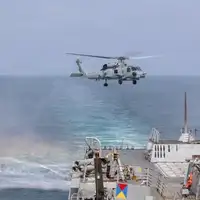
Iran has once more rejected fresh US military claims that the Houthi rebels in Yemen received weapons from Tehran, despite the fact that several Iranian vessels carrying weapons for the Houthis have been seized in the past few months.
On Thursday, the US Defense Intelligence Agency said a missile launched by Houthis towards a Norwegian-flagged oil tanker in the Red Sea last December is likely to have been an Iranian-made anti-ship cruise missile.
Iran’s UN envoy on Friday denied that Iranian weapons may have been used to target commercial vessels, claiming that the Houthis have developed significant military capabilities on their own.
The Houthis began targeting commercial ships in the Red Sea after Israel began its onslaught against Gaza in response to Hamas’ attack on Israel last October. The rebel group says its only objective is to disrupt the flow of goods to and from Israeli ports. And it has to some extent succeeded at that, forcing many of the biggest logistics companies in the world to reroute.
Iran has consistently supported and praised the Houthis, but rejected claims that it has provided them with arms.
In January 2022, the French Navy intercepted an Iranian ship in the Gulf of Oman, with thousands of rifles, machine guns, and anti-tank missiles. A month later, another Iranian ship carrying ballistic missile components bound for Yemen was seized by British forces.
In late May this year, the IRGC affiliated Tasnim News Agency reported that the technology for Iran's first naval ballistic missile (called Qadr) had been transferred to the Houthis. The Houthi missile "Moheet" was reportedly modeled after the Qadr.
The US Defense Intelligence Agency in its Thursday report linked Iran with the attack on the Norwegian-flagged ship, Strinda. The report seems to corroborate the findings of a Norwegian insurance company that had examined material recovered from the ship.
The Strinda, carrying a cargo of palm oil from Malaysia to the Suez Canal, was struck by a missile on December 20 last year, causing a major fire but no crew injuries. An investigation by the US military showed that parts of the missile engine found on the ship matched those of the Iranian anti-ship cruise missile, “Noor”.
The missile, developed by reverse-engineering the Chinese C-802 anti-ship missile, has a range of up to 170 kilometers, with its upgraded version, Qadr, said to be capable of reaching targets 300 kilometers away. The Houthis possess a similar missile named Mandab-2 with comparable range.
Devastating fires sweeping through Iran's protected Khaeez area, which includes forests and wildlife habitats in the south of the country, are exposing significant shortcomings in the nation's crisis management system.
The authorities in the affected regions, Behbahan and the neighboring Kohgiluyeh and Boyer-Ahmad provinces, have reportedly struggled to contain the blazes.
Despite the deployment of two Red Crescent helicopters, local media report that the fire remains unchecked.
The fire, which ignited on Monday afternoon, has reemphasized concerns among observers about the vulnerabilities in Iran's nature reserves and the state's failure to protect these critical areas.
Azam Bahrami, an environmental activist, spoke to International, highlighting the lack of effective planning for such disasters: "There is no proper planning in place in Iran to deal with such fires," she said, pointing out flaws that exacerbate the situation in Khaeez and the broader Zagros region.
Confirming extensive damage, Hamzeh Mohaqeqzadeh, the governor of Kohgiluyeh district, reported that large areas of farms, grasslands, and plant life have been consumed by the fire.
Environmental activists have long advocated for more effective firefighting strategies, especially in terrains characterized by mountainous regions, dry vegetation, and strong winds, as these measures could help prevent such disasters.
"Khaeez is burning, and there is nothing we can do about it," said Behnam Andik, a water resources student at the University of Tehran who expressed his frustration on social media about the lack of resources.
Bahrami also criticized the state's Crisis Management Organization for its ineffectiveness, noting, "The Organization is essentially a crisis in itself, despite being a complex body with influential members, including the governor and the president."
He also pointed out that the budget, ranging from 6,000 to 7,000 billion rials (approximately 10 to 11.5 million USD), is insufficient to handle natural disasters such as fires and floods.
The ongoing fires in Khaeez, home to wildlife such as deer, goats, leopards, and caracals, highlight both an environmental catastrophe and a governance failure. Established in 1998 and spanning over 33,000 hectares, this protected area is crucial for biodiversity and the livelihoods of local and nomadic communities.
Following a fire in the Zagros forests on June 24, the state-run Tasnim News Agency quoted environmental activist Mohammad Yazdanpour, who claimed that the fires were intentionally set to convert the forest into vineyards and fig orchards.
Yazdanpour also mentioned that the Crisis Management Organization failed to convene a meeting to address the situation, which was a departure from their previous responses to such incidents.
"One of the reasons for the prolonged firefighting efforts in forests is the lack of new equipment. The obsolescence of firefighting facilities and equipment, along with economic and social challenges, are major contributors to these fires," Dadmehr said.
As Iran's forests, especially in the Zagros range, face ongoing threats from fires worsened by land-clearing, agricultural mismanagement, and inadequate crisis response, these challenges will continue to endanger one of the nation's most vital ecological and cultural resources.