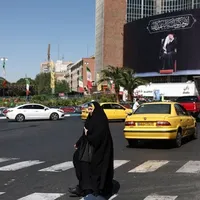
India advised its citizens on Friday against travelling to Iran and Israel until further notice in view of the "prevailing situation in the region".
The advisory from the foreign ministry came amid Iran's threats to retaliate against an Israeli airstrike on its consulate in Syria this month.
Countries including the US and Russia have issued similar travel advisories for their staff and citizens in the region.

India advised its citizens on Friday against travelling to Iran and Israel until further notice in view of the "prevailing situation in the region".
The advisory from the foreign ministry came amid Iran's threats to retaliate against an Israeli airstrike on its consulate in Syria this month.
Countries including the US and Russia have issued similar travel advisories for their staff and citizens in the region.
India's foreign ministry said its citizens in the two countries should observe "utmost precautions about their safety and restrict their movements to the minimum".
It is feared that retaliation by Iran can widen the six-month old conflict between Iran-backed Hamas militants and Israel in Gaza.
The US has reached out to the foreign ministers of Saudi Arabia, UAE, Qatar and Iraq, asking them to urge Iran to lower tensions with Israel, as part of its efforts to contain the conflict.
The region and the United States have been on alert for an attack by Iran since April 1, when Israeli warplanes bombed the Iranian embassy compound.
On Thursday, Germany's Lufthansa extended a suspension of its flights to Tehran with the Middle East on alert for the possible Iranian retaliation.
(Reporting by Reuters)

As Israel is planning for an imminent attack from Iran – Tehran has not yet made a final decision on its plans to attack, the Wall Street Journal reported citing two separate anonymous sources.
Iran has threatened to retaliate for a widely-believed Israeli attack on Damascus less than two weeks ago, which killed several top Iranian military officials.
The US top military commander for the Middle East, CENTCOM Commander Michael Erik Kurilla arrived in Israel on Thursday, to coordinate talks on preparing for a potential attack by Iran.
This week’s US intelligence reports said that an attack on Israeli assets by Tehran or its proxies could be imminent, though the WSJ source says the attack could be within Israel’s borders.
The US Embassy in Israel has meanwhile announced travel restrictions for its diplomatic personnel and their families, confining them to central Israel, Jerusalem, and Beersheba until further notice.
This week, Israeli Prime Minister Benjamin Netanyahu, speaking from a southern Israeli air base, has reiterated Israel's unwavering resolve to retaliate against any aggression.
“Whoever harms us, we will harm them. We are prepared to meet all of the security needs of the State of Israel, both defensively and offensively,” he said.
Reportedly, while Iran weighs its options, various scenarios are being considered, including a direct assault using sophisticated medium-range missiles, as disclosed by an adviser to the Iranian paramilitary force.
The international community is actively working to prevent further escalation, as foreign ministers from Germany and the UK have called on Tehran to avoid attacking Israel, officials from both countries confirm.

Secret letters found during the Gaza war show the Iranian government's significant financial support for the Palestinian Islamist group Hamas totaling at least $222 million between 2014 and 2020, according to an exclusive report by The Times.
Detailing the flow of money from Tehran to Gaza, the report includes purportedly signed letters by Marwan Issa, the chief of staff of Hamas’ military wing who is believed to have been killed in an Israeli strike on Gaza.
Another letter, reportedly was addressed to Abu Ibrahim – another name used by Yahya Sinwar, the leader of Hamas in Gaza.
The report suggests that the content of the letters likely means they were intended for internal communication within Hamas's leadership.
While it has been clear for many years that Tehran was financially and militarily supporting Hamas and the Islamic Jihad in Gaza, these latest documents more likely reveal part of the financial contributions by the Islamic Republic.
The funds were allegedly transferred in cash from Iran to Lebanon – then to Gaza, through a network of intermediaries, potentially involving cryptocurrency or credit systems.
Israel, which recovered the documents, suspects that the funds were used to finance Hamas's military operations, including the arsenal of rockets and weapons used in conflicts with Israel.
While there were periods where the payments from Tehran fluctuated, the cash flow to Hamas spiked after the 2021 conflict – with the report suggesting that it indicates the regime’s appreciation for Hamas's actions.
Israeli intelligence believes the financial support continued until at least the October 7 attack, the report said.
The Times report comes at a particularly volatile moment – as Iran appears to contemplate how and whether it should retaliate to an Israeli attack that killed several high-ranking IRGC officials in Damascus.
The current Israel–Hamas started when Hamas killed 1,200 Israelis in a surprise attack, mostly civilians. Palestinian militants also took around 250 people hostage.
Previously, Tehran has acknowledged that it helps finance and train Hamas – and has praised the attack on Israel but continues to deny that it played a role in the actual attack. Hamas is now considered one of the Iranian regime's armed militant proxy forces in the region, alongside the Lebanese Hezbollah, Yemeni Houthis and a collection of Shiite militias in Iraq and Syria.
Last year, Hamas leader Ismail Haniyeh, in an interview with Al Jazeera television, said that his group had received $70 million in military help from Iran.
"We have rockets that are locally manufactured but the long-range rockets came from abroad, from Iran, Syria and others through Egypt," he said.
The US State Department estimated previously that Tehran’s support for Palestinian terror groups, including Hamas, reached $100 million a year.

An Iranian lawmaker, involved in drafting Iran’s controversial new compulsory hijab bill, claims it is "compassionate" in nature.
The bill, imposing severe punishments on women and girls for not wearing the mandated hijab, has previously been described by UN experts as constituting "gender apartheid."
"It's crucial for the public to recognize that the approach in the legislation has been gentle from its inception," said Mehdi Bagheri.
The bill, officially titled "Protection of Family Through Promotion of Hijab and Chastity Culture," initially secured parliamentary approval in September 2023.
Encountering an unexpected setback, the proposal faced rejection from the Guardian Council, which holds ultimate legislative authority. The council cited alleged formal deficiencies and called for revisions to clarify ambiguous terms.
The regime’s focus on the country’s hijab law comes amidst numerous reports of Iranian women refusing to adhere to the regime’s Islamic dress code after nationwide protests in 2022 erupted, following the the killing of Mahsa Jina Amini in the custody of so-called morality police for reportedly not wearing her hijab properly. The months-long protests marked the largest uprising since the establishment of the Islamic Republic in 1979.
Highlighting an intensifying trend of harsh penalties against women, the bill proposes travel restrictions and other methods of punishment.
Bagheri, whose political influence has waned in recent elections, also proposed that under the latest version of the “hijab and chastity” bill, judges could impose penalties such as hindering promotions or initiating temporary or permanent dismissals from service for female employees.
Bagheri also emphasized the possibility of imprisonment for women resisting the compulsory hijab.
Senior figures and clerics in the Iranian regime have continued to stress the significance of enforcing the compulsory hijab for women – with many arguing that it is one of the main pillars of the Islamic Republic.
Supreme Leader Ali Khamenei labeled it a "religious duty" on April 3, condemning any attempts to challenge its enforcement within Iran. Khamenei attributed such challenges to external influences aimed at undermining societal norms regarding hijab, emphasizing that even women not adhering to Sharia law are obligated to observe compulsory hijab.

Israeli Defense Minister Yoav Gallant said on Thursday that Israel would respond directly to any attack by Iran, Amid strong messages of support by the United States.
“A direct Iranian attack will require an appropriate Israeli response against Iran," Gallant told US Secretary of Defense Lloyd Austin, according to remarks issued by his office.
The Pentagon said the two discussed the United States' "iron-clad" commitment to Israel's security against threats from Iran and its proxies.
"Echoing President Biden's unequivocal message to Israeli Prime Minister Netanyahu, Secretary Austin assured Minister Gallant that Israel could count on full US support to defend Israel against Iranian attacks, which Tehran has publicly threatened," the Pentagon said.
It added that a visit by the top US general for the Middle East, Army General Michael "Erik" Kurilla, to Israel had been moved up so he could meet with Israeli military leadership and discuss "current security threats." Kurilla has been travelling to Israel regularly in recent months.
Republican Senator Joni Ernst, a critic of the Biden administration’s policies toward Iran, expressed gratitude for President Joe Biden’s strong message of support to Netanyahu in an interview with Iran International on Thursday.
Although Tehran has made repeated threats of a forceful response to the Israeli airstrike that killed two top IRGC generals in Damascus on April1, so far it has hesitated.