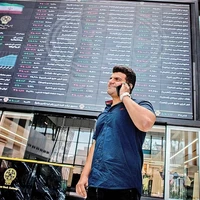
Iran Approves Full Internet Access SIM Cards For Foreign Tourists

Iran has approved a plan to provide unrestricted SIM cards to foreign tourists, while the internet is severely restricted for its own citizens.

Iran has approved a plan to provide unrestricted SIM cards to foreign tourists, while the internet is severely restricted for its own citizens.
Ali Asghar Shalbafian, the Deputy for Tourism at the Ministry of Cultural Heritage, said tourism is a priority in the plan, and in the first phase, a list of "approved" travel agencies will be provided with uncensored internet.
All international messaging apps and social media platforms, as well as tens of thousands of websites are blocked in Iran and users must deploy VPNs to circumvent the restrictions.
Shalbafian also emphasized that under the plan, unfiltered SIM cards will be provided to foreign tourists visiting Iran. In addition to tourists, hotel staff and tour guides will also have such SIM cards.
The news of providing unrestricted SIM cards to foreign tourists was first published in late February by the government. Strong reactions to the news led the government to delete the tweet a few hours after its publication.
Following that, Issa Zarepour, the Minister of Communications and Information Technology, explained that foreign tourists were facing difficulties due to the blocking of platforms like Instagram and WhatsApp.
Ezzatollah Zarghami, the Minister of Cultural Heritage and Tourism, also emphasized that providing free access to the internet for foreigners is a “necessity.”
With the approval and implementation of the plan, it seems that the Iranian authorities are taking another significant step toward tiered internet access.
Although it's not the first time that certain individuals in the country have had access to the internet without restrictions, the clear distinction between Iranian citizens and non-Iranians is a matter that some have described as digital segregation.
Currently, employees of government ministries, members of parliament, university professors, and members of some associations and guilds, including specific groups, are among those who benefit from tiered and uncensored internet access in Iran.

Iran has extended its outdated development plan for the third time since 2021, as the parliament has refused to approve the new plan by the Raisi administration.
The old document, the 6th Development Plan, was to be implemented between 2016 and 2021, but many parts of it have remained untouched as the government lacked the appropriate resources due to a catalogue of foreign policy and economic problems.
The latest extension of the old plan gives the Iranian government time to catch up with what it has not been able to accomplish during the past seven years. Experts, however, say it is unlikely that the administration, known for its inefficiency,would be able to improve its performance in the next two years. They say the old plan might even be extended for another two years when the Majles reviews the government's performance in about six months from now.
According to former presidential candidate Mostafa Hashemitaba, in the meantime, the government has either to amend the 7th Development Plan, which is by no means acceptable to the parliament, or to come up with new plan to present to the Majles.

According to Hashemitaba, only 20 to 25 percent of the 6th plan has been implemented during the past seven years. He added in an article in the reformist Shargh daily that the 7th plan is simply a "booklet put together by the government" and that "it has nothing to do with the country's future and its people's livelihood. Hashemi Taba further charged that it makes no difference for the officials which direction the country's economy will take as a result of not having a real development plan in hand.
He said those who have drafted the plan either do not know anything about the country's situation or pretend not to know about pressing issues. "When the priorities are forgotten, what comes next is destruction," Hashemitaba said, adding that "what the officials are doing is giving a coat of paint to a building on the verge of collapse."
Meanwhile, reformist commentator Abbas Abdi wrote in a commentary in the reformist Etemad newspaper that Iran's economy heavily relies on state subsidies and the government cannot implement any practical policy as long as it cannot liberalize the prices of bread, fuel and energy because it fears the re-emergence of protests that have taken place in Iran since 2018.
Abdi wrote the government is constantly manipulating the prices of these three items and continues to allocate subsidies to them sometimes selling what it buys at a higher price to the people at a lower subsidized price. However, he pointed out that current rise in the price of bread in Iran cannot be defended, as it puts more pressure on the lower strata of the population. The government's only solution is to rebuild the people's trust in the government and that is difficult.
Hashemitaba also pointed out in his article that the Iranian government has stated at various points that it needs to make tough decisions, meaning to increase the prices of essential commodities, but every time, it took backs down and manipulates the markets without cutting the subsidies.
In another development, Iranian journalist, women's rights activist, and reformist politician Zahra Nejad-Bahram wrote in Etemad newspaper, criticizing the government for treating development plans as perfunctory documents and instead, handling affairs of state on a day to day basis.
She pointed out that the 6th Development Plan is too outdated, it has already been extended twice, and another extension of it will be beneficial. She questioned how an outdated plan could meet the country's future needs. Nejad-Bahram maintained: "Perhaps the officials believe Iran does not need a new development plan!"

Iranian conservative politician Mohammad Mohajeri proposes dedicating one TV channel for domestic critics of the system.
In his Telegram channel, Mohajeri wrote: "The fact that programs, for instance, the most-watched ones on the state TV, do not even have 10-15% viewership, demonstrates that this organization becomes more of a failure each day."
He proposed the solution to rescue the state TV from its current state, suggesting that if Islamic Republic of Iran’s Broadcasting (IRIB) were to allocate just one channel out of its 30-40 television channels to loyal critics of the system and the government, all its problems would be resolved.
According to a recent survey conducted by the Netherlands-based Gamaan Institute, the majority of Iranians prefer to get their news from foreign-based media outlets, with Iran International being their favored choice.
The survey, which gathered input from 38,445 individuals within Iran, indicates that only approximately 21 percent of respondents follow developments in Iran through the state-run Islamic Republic of Iran Broadcasting (IRIB), with an annual budget will over $600 million.
Critics argue that IRIB, under tight control by Iran's authoritarian ruler Ali Khamenei, has been losing its audience due to heavy religious content, extensive censorship, and biased programming. Many view it as a propaganda tool benefiting from a substantial government subsidy, estimated at a minimum of $600 million, and lacking accountability, in addition to commercial income. It employs around 40,000 people.

One of Iran’s hardline conservatives Mohammad Sadegh Koushki has called on President Ebrahim Raisi to suspend bodybuilding competitions.
His comments come after an incident at Iran's bodybuilding championships, during which Reza Beiranvand, a participant, expressed his protest against the judges by striking pictures of those killed in the Iran-Iraq war with his foot.
Koushki, known for his conservative stance and prior criticisms of athletes, voiced his concerns on his Telegram channel. He deemed bodybuilding competitions “shameful, and a sort of nudity” and asserted, "When the very essence of a competition contradicts ethical values, it is only natural that such events may lead to disrespect for martyrs." Addressing President Raisi, he questioned the issuance of permits for these competitions and the absence of preventive measures.
On the other hand, Amirhossein Ghazi-Zadeh Hashemi, the head of the Martyrs Foundation, condemned Beiranvand's actions, describing them as "disrespectful behavior towards the images of martyrs." He called on the Minister of Sports to take appropriate action against the athlete.
Abdolmahdi Nasirzadeh, the head of the Bodybuilding Federation also offered insights into the incident, saying, "Beiranvand's actions stemmed from his frustration with the judges' decisions, although he was unaware that he was kicking images of martyrs. Upon realizing his mistake, he promptly issued an apology."
In response, the disciplinary committee of the Bodybuilding Federation swiftly imposed a two-year ban on Beiranvand and another protesting bodybuilder, Kianoush Khorramipour, who also expressed dissatisfaction with the judges' decisions during the competition.

Israeli Ambassador to the UN, told Iran International, “It’s unacceptable that… they treat a mass murderer, the Butcher of Tehran, President Raisi, with a red carpet.”
Speaking on the sidelines of the UN General Assembly in New York, Gilad Erdan said, “he cannot be so respected here while he’s oppressing, executing, murdering his own people.”
Ebrahim Raisi was a member of the infamous Death Committee which oversaw summary execution of up to 5,000 thousand Iranian political prisoners in 1988.
Raisi’s speech at the UN General Assembly last Tuesday coincided with the first anniversary of the killing of Mahsa amini.
Amini was a 22-year old women arrested in Tehran because the police felt her hair wasn’t covered properly. She was hit on the head in custody and died in hospital on 16 September 2022.
Her killing sparked a wave of protests that challenged the foundations of the Islamic Republic like never before. More than 500 protesters were killed, and thousands injured by armed forces and thugs loyal to the regime. Security forces arrested 22,000 people and seven protesters were hanged.
Ambassador Erdan made headlines a few days ago when he held up a poster of Mahsa Amini with the caption “Iranian women deserve freedom” during Raisi's speech at the General Assembly.
“It’s quite sad to see the people in Isfaham don’t have water and all the money is spent on weapons of mass destruction, on arming their terrorist proxis in the region,” Erdan said in a chat with Fardad Farahzad of Iran Internation TV in New York.
He did reiterate the Israeli position that the regime in Iran and its nuclear ambitions should be a source of concern for “the entire world” but also a blessing in disguise.
“In some ways we should be thanking Iran,” Erdan said, “because they’re one of the reasons why all the moderate countries in the region that are looking to the future and care for their children, they are creating an alliance.”
Arab-Israeli relations have improved significantly in recent years. It was one of the major topics of discussion when Benjamin Netanyahu and President Biden met on the sidelines of the UN General Assmebly.
Netanyahu expressed optimist in that meeting that a “historic peace between Israel and Saudi Arabia” can be reached under Biden’s “leadership”.
The sentiment was echoed by Saudi Crown Prince Mohammad bin Salman in a rare interview with Fox News that was aired 20 September.
“Every day we get closer,” he said, when he was asked about the normalization of relations with Israel.
Ambassador Erdan emphasized the significance of this remark in his interview with Fardad Farahzad.
“These statements are historic. You could never hear the leader of Saudi Arabia saying these things publicly. And obviously when the President of the United States feels that he can also talk about it, it means that they know that it’s a matter of time.”
In the same interview with Fox News, the Saudi Crown Prince said that if Iran gets nuclear weapons, “we have to get one, for security reasons, for ballancing power in the Middle Ease. But we don’t want to see that.”

Iran’s foreign minister Hossein Amir-Abdollahian told UN General Secretary Antonio Guterres that diplomatic contacts continue to revive the JCPOA nuclear deal.
Amir-Abdollahian, stated that communications with the United States are taking place, and an initiative by Oman remains on the table. If the other parties are willing, Iran is determined to return to the JCPOA (Joint Comprehensive Plan of Action).
The Iranian foreign minister met with Guterres, the Secretary-General of the United Nations, at the UN headquarters in New York on Friday.
The diplomatic efforts of the United States and Europe to address the Iranian nuclear issue come at a time when Israel considers these actions insufficient and emphasizes the need to increase pressure and resort to serious military threats.
Negotiations to resurrect the JCPOA, which former US President Donald Trump abandoned in 2018, collapsed about a year ago. Washington has been exploring alternative approaches to encourage Tehran to curb its nuclear program. Recently, the Biden administration released a total of $8.7 billion in Iran’s funds blocked in Iraq and South Korea.
Amir-Abdollahian also had a meeting with his Saudi counterpart in New York. According to the Iranian Ministry of Foreign Affairs, where the two sides discussed bilateral relations and regional issues.
Saudi Crown Prince Mohammed bin Salman, in an interview with Fox News on Thursday, highlighted the danger posed by Iran potentially acquiring nuclear weapons. He stated, "If they obtain one, we'll have to acquire one for security reasons and to maintain the balance of power in the Middle East. However, we do not wish to see that happen."