Iran Accuses US Of Destabilizing Acts In Cybersphere
Iran has accused the US of destabilizing cybersphere, claiming that lack of fair international laws has made it vulnerable to US influence.

Iran has accused the US of destabilizing cybersphere, claiming that lack of fair international laws has made it vulnerable to US influence.
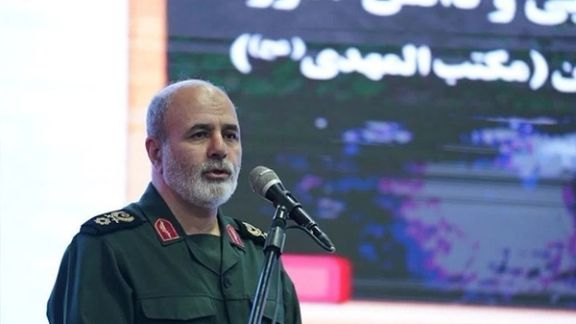
Speaking at a meeting of national security advisors and secretaries of BRICS countries in South Africa, Iran’s Secretary of the Supreme National Security Council Ali Akbar Ahmadian warned of the impacts of Washington’s interference on the internet.
"The experience of Iran has shown how Americans have tried to make different types of interferences and create insecurity in other societies through cyberspace," Ahmadian said.
He claimed that the US’s control over online platforms like Google, Twitter, Instagram, etc. has made it possible for Washington to assert control over the global online media.
In a subtle attempt to justify the regime’s restrictions on the Internet and access to information, he said "The cyberspace of each country... must be managed exclusively by their respective governments."
Among the challenges the regime faces to stifle voices of dissent and crack down on popular protests, authorities have blocked access to Instagram and WhatsApp in September, when the death of Mahsa Amini in police custody ignited the boldest uprising against the Islamic Republic since its establishment. Facebook, Twitter, and Telegram had previously been banned after the 2009 presidential election and the November 2019 protests.
His remarks came as concerns have been raised over cyber threats emanating from Iran. Hackers linked to the country have targeted critical US infrastructure, including transport, energy, and ports, prompting heightened vigilance in the United States.


Yet more businesses in Iran are being closed down as rising numbers of women defy hijab laws.
The latest was online retailer Digikala whose office building was sealed and a renowned bakery has also been closed.
The incidents were prompted by the publication of pictures showing female employees of Digikala’s online shop without hijab, sparking demands from hardliners to take action against the company and its employees.
Following the publication of the photos, the Mizan news agency, affiliated with the judiciary, reported that a court case had been filed against the employees. Police officers sealed the company's building on Sunday evening, citing the refusal of some female employees to comply with the mandatory hijab. Despite the sealing of the office building, Digikala said operations continue.
In addition, France Confectionery, a renowned bakery in Tehran, also made headlines by announcing its closure. Although the reason was not explicitly mentioned, speculation suggested employees had also forgone the hijab. It is one of many companies targeted by the regime which has closed innumerable businesses where either employees or customers had broken hijab rules.
The incidents come amid a recent trend of women choosing to opt out of the mandatory hijab, spurred by the "Woman, Life, Freedom" protests and the tragic death of Mahsa Amini while in the custody of morality police.
In response to this civil disobedience, Iranian authorities have taken various measures, including sealing commercial and recreational centers, barring women without hijab from public services, issuing warnings, and even resorting to car seizure and violent arrests. However, these measures have so far been ineffective in quelling the growing defiance among Iranian women.
ReplyReply allForward

As Iran’s water crisis continues, Tehran’s dams are experiencing massive declines.
According to official government statistics, the volume of reservoirs in five of Tehran's dams has experienced a sharp decrease of 31 million cubic meters.
The semi-official ISNA news agency published a report on Monday attributing the decline to a combination of reduced rainfall in Tehran and the impact of climate change. As a result, the dams in the city are now holding considerably less water than in the previous year.
Out of the five dams under scrutiny, only Amir Kabir dam in Karaj, west of Tehran, stands as an exception, boasting a substantial increase in water volume. The reservoir at Amir Kabir dam currently holds 154 million cubic meters of water, representing a 28% growth compared to the previous year when it contained 125 million cubic meters.
However, the situation is markedly different for other dams in Tehran, as they continue to grapple with declining water levels.
Iran's water shortage problem has reached critical levels, prompting the Minister of Energy to pledge to address water tensions in some Iranian cities. Regrettably, despite this promise, reports indicate that water scarcity has spread to a vast majority of provinces, leaving only seven provinces unaffected.
In an alarming revelation, the Ministry of Energy disclosed that as many as 10,000 villages across Iran are experiencing a shortage of drinking water. Among the worst-hit areas is Kerman province, where 669 villages are facing severe water shortages.

A news website in Iran has claimed that authorities are encouraging the growth of the Afghan population with incentives such as subsidized energy and food.
In an unattributed commentary earlier this month, Aftab News in Tehran said millions of Afghan immigrants consume at least $5b of around $90 to 100 billion annual subsidies that the government is spending to keep fuel, other energy and food prices down. The website suggested that this is only one of the ways in which the authorities are encouraging Afghans to stay in Iran.
The article suggested that the Islamic Republic might be facilitating Afghan immigration as a remedy to the problem of population decline. “We should not start to import a big population that lacks national and religious [conformity with the Iranian population] under the pretext that the country’s population may decline within the next few decades,” it said.
Iran’s Supreme Leader Ali Khamenei believes efforts to increase the country's population are among the most urgent duties and essential policies of the Islamic Republic as the main Shia government in the Muslim world.

Aftab News is a website close to former President Hassan Rouhani and the moderate conservative Moderation and Development Party.
“It is not difficult to understand that the presence of foreign nationals is highly beneficial to some segments of the state who can use these immigrants to serve their political and ideological interests, [particularly] in areas where Iranians are less inclined to participate,” the commentary said.
Iranian authorities usually refer to Afghan immigrants and refugees as ‘foreign nationals’.
“This is a very vague statement, but it is probably suggesting that authorities are hoping that immigrants, Shiite Afghans in particular, will fight for the regime should there be a war as some of them, the Fatemiyoun brigade, fought for the Revolutionary Guards in Syria, because recruiting Iranians to fight in such wars in becoming more and more difficult,” a political analyst who asked not to be quoted by name told Iran International.
Thousands of Afghans fleeing the economic hardships under the Taliban enter Iran daily from official border points or illegally from other areas along the 900 km border to find work in Iran to support their families back home or to continue their journey towards Europe.
In April 2021 Foreign Minister Hossein Amir-Abdollahian said one million more Afghans had entered Iran since the Taliban took power in August the previous year, bringing the number of refugees and economic migrant to five million. According to the UN Refugee Agency (UNHCR), Only 780,000 of Afghans residing in Iran are recognized as refugees. Most other Afghans are considered economic migrants who have been an important workforce in Iran.

The article also claimed that the number of Afghans has uncharacteristically increased in several Iranian cities including Qom where it said Afghans have been given the right to legally purchase property. Qom in central Iran is home to Iran's largest religious seminaries where many foreign nationals including Shia Afghans study.
Allowing Afghans to buy property in Qom, it suggested, is proof that there is no resolve in related government agencies to control the Afghan immigration to Iran.
The article also alleged that lack of control at eastern borders of the country, issuing thousands of tourist visas every day when applicants do not intend to return to their home country, automatic renewal of tourist, pilgrimage and other types of visas, elimination or reduction of cash fines for illegal entry and stay, illegal immigrants’ easy access to various services including education and healthcare “indicate targeted planning.”

On Sunday, Iran initiated its annual air force drill, named Fadaeian Velyat-11, with 11 Iranian air force bases participating.
The drill comes as the US announced deployment of additional fighter planes to the region to deter any attempts by the Islamic Republic to seize commercial vessels in the Persian Gulf area.
More than 90 fighter planes, bombers, and drones are set to take part in the drill, named Devotees of the Supreme Leader-11), according to local media.
Air Force Chief Hamid Vahedi claimed the drill’s message is “friendship, peace, and regional security”. He said: "Sustainable security, improving and fostering regional ties, peaceful coexistence, and defending air borders are on the agenda."
Iran, facing long-running sanctions and arms embargoes, relies primarily on missiles and drones, rather than having a viable modern air force.
In response to previous Iranian attempts to seize commercial ships in the Strait of Hormuz and Gulf of Oman, the US is reinforcing its presence in the area. The Pentagon announced earlier that the USS Thomas Hudner, a destroyer, along with a number of F-35 fighter jets, will be deployed to enhance security in the region.
Tensions have escalated due to recent incidents involving Iranian actions towards commercial vessels. Last month, Iran attempted to seize two oil tankers, the Marshall Islands-flagged TRF Moss, and the Bahamian-flagged Richmond Voyager, with one of the ships coming under fire.
The US Navy has accused Iran of seizing at least five commercial vessels over the past two years and harassing several others.
Iran denies these allegations, claiming that the seizures occurred after the vessels collided with local ships and polluted the waterway.

Dust storms and air pollution hit 14 Iranian provinces, forcing office and school closures in Markazi province.
The Meteorological Organization of Iran issued a warning for 14 provinces, cautioning about yellow weather conditions characterized by strong winds, rising dust, and declining air quality.
Sahar Tajbakhsh, the head of Iran's meteorological organization, expressed concern over the escalating sandstorms, attributing them to "the impact of climate change and powerful winds".
The situation has prompted authorities to advise respiratory patients, elderly individuals, children, and desert hikers in the affected provinces to avoid unnecessary travel.
In Markazi province, air pollution caused by dust has persisted for several days. The emergency working group of Qom province has also taken measures by reducing working hours due to worsening conditions.
While offices and schools in Tehran province remain open, environmental authorities have warned about the escalation of dust levels, reports state.
Desertification is considered a significant contributing factor to the problem. Approximately one million hectares of Iran's wetlands are transformed into fine dust centers each year, driven by the drying of wetlands.
Earlier, Iran's health ministry revealed that approximately half of the country’s population is currently facing hazardous dust storms, posing serious risks to people's health.