Iran Politician Says Foreign Policy Mistakes Lead To Tehran's Isolation

A former senior Iranian lawmaker has said that by repeated foreign policy mistakes for 40 years Tehran has lost many opportunities and has isolated itself.
A former senior Iranian lawmaker has said that by repeated foreign policy mistakes for 40 years Tehran has lost many opportunities and has isolated itself.
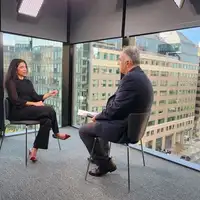
Heshmatollah Falahatpisheh, former chairman of parliament’s National Security and Foreign Policy Committee, in an interview with Iran Diplomacy in Tehran has said that the Islamic Republic has a habit of persisting in its mistakes until it is forced to retreat, paying a high price each time.
As an example, the former lawmaker mentioned Tehran’s decision last week to “voluntarily” cooperate with UN’s nuclear watchdog, the International Atomic Energy Agency (IAEA) and allow it to install new cameras at a nuclear workshop that it refused to permit for months. Once world powers began discussing the issue at the UN Security Council, suddenly President Ebrahim Raisi’s government retreated and announced its willingness to cooperate, Falahatpisheh said, adding that he does not believe for a moment this was a voluntary decision. It was simply the specter of the Security Council that forced Iran to cooperate.
“Tehran, with its wrong decisions opens the door to its own isolation by losing opportunities that other countries…grab,” Falhatpisheh said. In four decades, the Islamic Republic has still not learned that by “piling crisis upon crises” it cannot solve any of them, he said. “We still witness wrong and costly decisions.”
Falahatpisheh, as is customary in public discourse of politicians in Iran, also attacked Israel, calling it a “destructive power”, along with “some Persian Gulf states”.
In order to be able to criticize the government, public figures in their discourse usually attack Israel, the United States and any other country on Islamic Republic’s blacklist at a given moment.
As Iran’s economic crisis has worsened, more public figures have come out criticizing the Raisi administration’s foreign policy, particularly its strategy in the Vienna nuclear talks. Pundits can often get away with targeting the government, but no one would dare to mention Supreme Leader Ali Khamenei, who is the real foreign policy decision maker.
Falahatpisheh argued that Iran’s nuclear issue has only three sides: Iran, The United States and the IAEA. All the rest, including the European troika, China, Russia and side players like Israel and some Arab sates have entered the fray because of Iran’s wrong policies. He added that Iran’s mistake of “sticking to its taboo”, rejecting direct negotiations with the United States has only complicated the situation and allowed others to try to take advantage for their own interests.
The former influential lawmaker, who is not considered a reformist, maintained that if Iran reaches an agreement with the United States and restores the 2015 nuclear deal (JCPOA), “Israel will face isolation” if it attacks Iran.