• العربية
  • فارسی
BrandBrand
  • Iran Insight
  • Politics
  • Economy
  • Analysis
  • Special Report
  • Opinion
  • Podcast
  • Live TV
  • Iran Insight
  • Politics
  • Economy
  • Analysis
  • Special Report
  • Opinion
  • Podcast
  • Live TV
  • Theme
  • Language
    • العربية
    • فارسی
  • Iran Insight
  • Politics
  • Economy
  • Analysis
  • Special Report
  • Opinion
  • Podcast
  • Live TV
All rights reserved for Volant Media UK Limited
volant media logo

Iran’s rial nears 3 million to the US dollar as families struggle to get by

Nov 29, 2026, 00:32 GMT+0
FILE PHOTO: Iranian rials, U.S. dollars and Iraqi dinars at a currency exchange shop in Basra, Iraq, November 3, 2018.

Iran’s currency weakened to just under 3 million rials per US dollar on the open market on Saturday, deepening a squeeze on households already facing consumer prices nearly 90% higher than a year earlier.

The dollar traded between 2.98 million and just under 3 million rials on Saturday, according to exchange rate tracking websites. It had passed 2.90 million rials on Wednesday and 2.95 million on Thursday.

The euro rose above 3.26 million rials and the British pound topped 3.9 million on Saturday.

The record-breaking devaluation of rial comes as some Iranians told Iran International in recent days that they could no longer cover basic expenses. Others said rising costs had forced them to close their businesses.

Iran’s Statistical Center put year-on-year consumer inflation at 88.7% in the Iranian month ending in October.

Central Bank governor under fire

A senior lawmaker called for the dismissal of Central Bank Governor Abdolnaser Hemmati on Saturday, making him a target of mounting criticism over the country's deepening economic crisis.

Alaeddin Boroujerdi, a member of parliament's National Security and Foreign Policy Committee, said Hemmati should be held accountable for the currency's collapse, accusing him of overseeing a fivefold increase in the dollar's value during his time as economy minister and then central bank chief.

He sarcastically described Hemmati as a “specialist in raising exchange rates,” saying he should be replaced if he could not stabilize the currency and protect Iranians' purchasing power.

Hemmati was previously dismissed as economy minister by parliament in March 2025 over the rial's decline, but returned to government as central bank governor in December.

Hemmati attributed the rial’s latest decline to US sanctions on the Iran Center for Exchange of Currency and Gold, allegations about Iran’s shadow banking network and a jump in the price of the dollar-pegged cryptocurrency Tether on unlicensed exchanges.

The US Treasury on Monday imposed sanctions on eight people and 22 companies and other entities it linked to the network. Washington said the measures aimed to limit Tehran’s access to financial channels it uses to move oil revenue.

Banking curbs reach six more crypto platforms

Crypto exchange Nobitex said Saturday it had temporarily suspended Tether trading because of sharp price swings and frenzied trading, the Revolutionary Guards-affiliated Fars news agency reported. Currency traders in Iran use Tether’s price in rials as a gauge of the open-market dollar rate.

Separately, the central bank said it had restricted six more crypto platforms’ ability to withdraw funds remotely from their bank accounts. It accused them of violating trading rules and promoting stablecoin prices that lacked a clear benchmark. It did not identify the platforms or say how long the restrictions would last.

On Wednesday, the bank ordered a halt to deposits into accounts belonging to three exchanges, Nikpardakht, Bitmit and Rivonex, with approval from the prosecutor general’s office. Authorities accused the three of disrupting the economic system.

Most Viewed

Trump deploys extra aircraft carrier, says Iran is making ‘big mistakes’
1

Trump deploys extra aircraft carrier, says Iran is making ‘big mistakes’

2
INSIGHT

Iraq shuts more border crossings with Iran under US pressure to seal land routes

3

Iran’s central bank chief admits economic squeeze is hurting families

4

A dark, cold office: Pezeshkian's austerity gesture backfires

5
PODCAST

Who flogs a singer? The ‘public decency’ case against Parastoo Ahmadi

Banner

Spotlight

  • Iran cries wolf over nuclear treaty withdrawal
    ANALYSIS

    Iran cries wolf over nuclear treaty withdrawal

  • Who flogs a singer? The ‘public decency’ case against Parastoo Ahmadi
    PODCAST

    Who flogs a singer? The ‘public decency’ case against Parastoo Ahmadi

  • A dark, cold office: Pezeshkian's austerity gesture backfires

    A dark, cold office: Pezeshkian's austerity gesture backfires

  • Iranian women break silence on a lifetime of violence
    VOICES FROM IRAN

    Iranian women break silence on a lifetime of violence

  • Too poor to marry, young Iranians are offered religious workarounds
    INSIGHT

    Too poor to marry, young Iranians are offered religious workarounds

Banner
Banner
Banner
Banner
Banner
Banner
•
•
•

More Stories

Iran leader's adviser warns Iraq against becoming 'tool' of US

Nov 28, 2026, 16:21 GMT+0
100%
Mohammad Mokhber, senior adviser to Iran's Supreme Leader Mojtaba Khamenei, attends an event in Tehran

A senior adviser to Iran's supreme leader warned Iraq on Saturday against yielding to US pressure over border controls, as closures threaten one of Iran's main remaining trade routes.

Mohammad Mokhber, an adviser to Supreme Leader Mojtaba Khamenei, said Iran had stood by the Iraqi people during their most difficult days and had proven its friendship.

"This unbreakable bond requires Baghdad to remain vigilant on the issue of borders so that it does not become a tool of the enemies of Islam or give in to the policies of the criminal Trump," Mokhber wrote on X.

The warning followed weeks of border closures, including two more crossings shut on Thursday, after Washington formally asked Baghdad to keep only two crossings with Iran open.

Iraqi Foreign Minister Fuad Hussein disclosed the US request on November 8, saying it would be difficult to implement without damaging Iraq's economy.

Trade between the neighbors is worth $15 billion to $18 billion annually, including about $4 billion in Iranian gas, according to Hussein.

Iraq's national security adviser, Qasim al-Aboudi, arrived in Iran on Saturday, the state-owned Iraqi Media Network reported. An Iraqi official told Al Jazeera that the closure of unofficial border crossings would be discussed during the visit.

The official also said Iraq had reinforced its army's 8th and 11th divisions across large areas of Kirkuk province, including areas bordering Sulaymaniyah, Nineveh and Salahuddin, to prevent smuggling through unofficial routes.

Iraq’s Ministry of Interior also announced the continuation of work to complete comprehensive security fortifications in the Hawizeh Marshes on the border between Iraq and Iran.

Between a rock and a hard place

Baghdad faces competing demands from Washington and Tehran.

The United States has sought to disrupt the movement of weapons, sanctioned goods and illicit revenue across Iran's land borders. For Tehran, the stakes have risen as the US naval blockade has severely restricted its seaborne oil exports.

Iraq is one of Iran's largest export markets and its biggest buyer of gas and electricity. The two countries share a border of roughly 1,600 kilometers, with nine official crossings and numerous unofficial routes.

Baghdad has closed several crossings in recent weeks, including Sheikh Saleh and Bashta on Thursday. About 300 trucks carrying goods and building materials were stranded at Sheikh Saleh, according to Iranian customs officials.

The closures have also stirred opposition within Iraq. Political factions aligned with Tehran have condemned what they describe as American interference, while traders have protested the economic disruption.

Iran-aligned factions retain influence in Iraq's parliament, governing coalition and security establishment, while the country remains financially exposed to Washington.

Iraq's oil revenues pass through an account at the Federal Reserve Bank of New York.

According to Reuters, Washington warned Baghdad earlier this year that it could restrict access to those funds unless it reduced Tehran's influence in its government.

Turkish aviation firm to shut down over US sanctions for Iran ties

Nov 28, 2026, 13:44 GMT+0
100%
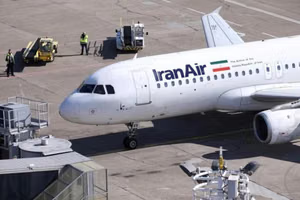
An Iran Air passenger aircraft surrounded by ground-handling vehicles and airport personnel.

Turkish airport ground-handling company FUGO will cease operations after the United States sanctioned it for providing services to Iranian airlines, Turkey’s Demirören News Agency (DHA) reported on Friday.

The company will terminate its operations on November 30, raising uncertainty over the continuation of flights by several Iranian airlines to Turkey, Iranian media reported.

Despite complying with the Turkish Commercial Code, relevant legislation and aviation requirements, the company could no longer continue operations under the current circumstances, FUGO said in a statement cited by DHA.

The company had provided ground-handling services across Turkey for seven years, contributing to the country’s civil aviation and tourism sectors.

  • US sanctions all Iranian airlines in sweeping aviation crackdown

    US sanctions all Iranian airlines in sweeping aviation crackdown

All outstanding payments owed to employees would be settled in full, and discussions with other ground-handling companies were underway to secure alternative employment for staff, FUGO added.

The company described the US sanctions imposed on it as “unfair and unlawful,” Turkish aviation news outlet AirportHaber reported.

US sanctions on Iranian aviation

The US Treasury Department sanctioned FUGO on November 4 for providing ground-handling and other services to sanctioned Iranian airlines that continued to operate flights to Turkey.

Iran Airtour, Saha Airlines, Sepehran Airlines, Varesh Airlines, Taban Air and ATA Airlines had direct contracts with FUGO, the Treasury said.

Washington imposed sanctions on 35 companies and one individual linked to Iran’s aviation industry on September 8. FUGO began providing services to several Iranian airlines in the weeks following those sanctions, the department added.

The Treasury warned that it would continue targeting entities supporting Iran’s aviation industry, citing the sector’s role in facilitating weapons proliferation and terrorist activities.

Efforts to maintain flights

Preparations to establish a new ground-handling company to service Iranian and potentially Russian airlines were underway following FUGO’s designation, Turkish newspaper Aydınlık reported on November 17

Strong demand for travel between Iran and Turkey made a complete suspension of flights unfeasible, aviation industry representatives told the newspaper.

  • Iranian airlines continue foreign flights after US sanctions deadline - Bloomberg

    Iranian airlines continue foreign flights after US sanctions deadline - Bloomberg

Istanbul Airport recorded 748 flights on its Tehran route in October, Aydınlık reported.

The United Arab Emirates, Oman, Iraq, Georgia and Azerbaijan have barred Iranian airlines from operating and cancelled flights to Iran, the US Treasury said on October 30. Turkey has also suspended all Mahan Air flights.

OPEC+ set to keep oil output targets steady amid Iran war uncertainty

Nov 28, 2026, 01:11 GMT+0
100%
Oil/Chemical Tanker "Bald Man" at the Port of Fujairah, as the U.S.-Israel conflict with Iran limits marine traffic in the Strait of Hormuz, in Fujairah, United Arab Emirates, May 6, 2026. REUTERS

OPEC+ has reached a preliminary agreement to keep oil production targets unchanged in the first quarter of 2027 amid uncertainty over the Iran war and disagreements over members’ production capacity, Reuters reported Friday.

Oil ministers from the group, which includes OPEC members and allies such as Russia, are due to meet Sunday to discuss production policy for next year.

The meeting comes amid renewed attacks on tankers in the Strait of Hormuz and Saudi energy infrastructure, raising concerns over further disruptions to global oil supplies.

Brent crude recorded its first weekly gain in November despite falling 1.2% on Friday to $95.44 a barrel.

Energy consultancy Rapidan Energy Group expects OPEC+ to leave production targets unchanged on Sunday, citing uncertainty over the duration of the Iran war and its impact on crude production and exports.

Despite the risk of further supply disruptions, Rystad Energy forecasts a global oil surplus of around five million barrels per day in 2027, equivalent to roughly 5% of global demand, even if Persian Gulf supplies recover only partially.

The International Energy Agency said last week that the war had already resulted in cumulative losses of 2.8 billion barrels of oil supplies from the Persian Gulf.

The agency also said stronger energy-security measures in response to the war could reduce global oil demand by more than 4% by 2035 compared with its scenario based on governments’ stated policies.

Differences over how much individual members should be allowed to produce have also complicated negotiations over next year’s output targets.

OPEC+ had planned to use the findings of its first review of members’ production capacity to help set quotas for 2027, but several countries are seeking higher capacity estimates.

Iraqi Oil Minister Basim Mohammed Khudair said Friday that Baghdad was negotiating with OPEC for a higher production quota to support the development of its energy infrastructure.

Iraq, OPEC’s second-largest producer, is dissatisfied with a preliminary assessment putting its production capacity at 4.9 million barrels per day. Kazakhstan is also seeking a higher estimate, Reuters reported earlier this week.

Russian Deputy Prime Minister Alexander Novak said Wednesday that the capacity review would be completed by the end of the year.

Iraq has warned it could leave OPEC unless its quota is raised, following the United Arab Emirates’ withdrawal from both OPEC and OPEC+ earlier this year over longstanding disagreements about its production quota. Angola left OPEC in early 2024.

Baghdad has also faced pressure from Washington over its membership. In a separate report Friday, Reuters said the Trump administration had encouraged Iraq and Venezuela to consider leaving OPEC earlier this year.

A dark, cold office: Pezeshkian's austerity gesture backfires

Nov 27, 2026, 20:59 GMT+0
•
Maryam Sinaiee
100%
Iranian President Masoud Pezeshkian, wearing a jacket, reviews documents by the light of a desk lamp in his dimly lit office as part of a publicized effort to conserve energy.

Iranian President Masoud Pezeshkian's attempts to set an example by working in a dimly lit, unheated office have drawn criticism from hardliners who say the gesture projects weakness during the country's confrontation with the United States.

In a televised interview earlier this week, Pezeshkian said he wore a jacket because his office was cold, slept wearing one at home and would move to a smaller room if temperatures fell further to save energy.

What supporters portray as personal austerity and solidarity with the public has become a political controversy, with some critics comparing the president's gestures to the populist style of former president Mahmoud Ahmadinejad.

Tabnak, a news website close to Mohsen Rezaei, secretary of Iran's Supreme National Security Council, published an article titled "Mr. Pezeshkian, Your Dark Room Is a Display of Weakness."

The article acknowledged that the president presumably intended to demonstrate solidarity with Iranians facing difficult conditions and encourage energy conservation.

"But does staging a blackout in the president's workplace, especially when the country remains engaged in a difficult and costly war, really send the right message to society and beyond its borders?" it asked.

The website argued that a country at war and resisting foreign pressure should project effective management and strength.

‘Have a wonderful winter’

The conservative newspaper Farhikhtegan also criticized Pezeshkian in an article titled "The Wrong Signal from the Dark Room," describing the gesture as a staged performance. Instead of communicating "resistance," it argued, the president had conveyed "shortage" and "passivity."

Farhikhtegan also cited Foreign Minister Abbas Araghchi's readiness to reopen the Strait of Hormuz for two days as another example of what it called the government's "message of weakness."

Hardline analyst Ali Abdi questioned the president's public presentation during a roundtable discussion in a video published Friday by Hokmranan Online.

"Have people ever seen pictures of Putin or Zelensky sitting in a dark room after five years of war?" he asked.

US Treasury Secretary Scott Bessent appeared to seize on the images, sharing a Washington Post report about Pezeshkian's dimly lit, unheated office with a mocking message on X.

"Good job, guys. Have a wonderful winter," Bessent wrote.

‘Populist behaviour’

The controversy has revived comparisons with former president Mahmoud Ahmadinejad, who cultivated an image of modest living and informality as part of his populist appeal.

Similar comparisons emerged in November last year after photographs showed Pezeshkian playing soccer alongside members of Iran's national team at the country's National Football Center.

The news website Rouydad24 argued at the time that the episode might appear to be a friendly encounter with players but, viewed alongside the president's other public appearances, revealed a pattern.

"The more critical the country's situation becomes, the more populist President Pezeshkian's behavior becomes," the website wrote.

‘Being honest’

Government officials defended the president's gestures as an appeal for energy conservation during wartime.

Spokeswoman Fatemeh Mohajerani described his conduct as courageous and honest, saying it demonstrated the need to conserve energy under difficult conditions.

Elias Hazrati, head of the government's Information Council, said Pezeshkian had turned off the lights to encourage conservation, strengthen economic resilience and help the country withstand pressure from Trump and the United States.

The president did not need to sit behind a desk in a hall filled with chandeliers to demonstrate Iran's greatness, Hazrati argued.

The reformist newspaper Sazandegi offered a broader defense in a Wednesday editorial titled "The Neorealist President."

It argued that Pezeshkian's behavior reflected honesty and a refusal to mislead the public. His jacket, remarks about energy conservation and dimly lit office challenged a longstanding tradition in Iranian politics of concealing uncomfortable realities while projecting an image of perfection.

"His primary responsibility is to see reality, not conceal it, be honest with the people, and have solutions for overcoming the situation—and to implement those solutions with all his strength and capacity," the editorial said.

Iran’s central bank chief admits economic squeeze is hurting families

Nov 27, 2026, 18:20 GMT+0
100%
A woman walks in a local market in Tehran, Iran, September 26, 2026. Majid Asgaripour/WANA (West Asia News Agency)

Iran’s central bank governor acknowledged Friday that access to foreign currency was limited, government revenues were under pressure and soaring prices were eroding families’ purchasing power, with the dollar trading above 2.93 million rials on the unofficial market.

“We know how heavily high prices and instability weigh on your lives,” Abdolnaser Hemmati wrote in an open letter to Iranians. “People have the right to be worried, to ask questions and to demand results from officials.”

Hemmati said sanctions and the US naval blockade had made trade more expensive and restricted Iran’s access to its financial resources. Those pressures, together with the strain on state revenues, were affecting both the exchange rate and the prices Iranians pay, he said.

Two days earlier, Hemmati had credited central bank intervention with keeping the currency market relatively stable over the previous two months. The dollar crossed 2.9 million rials that day, up from about 1.6 million in early April. By Friday, the rial had lost about 45% of its value against the dollar over that period.

“The foreign currency constraints are real,” Hemmati wrote, though he rejected the suggestion that Iran had reached a deadlock. He also dismissed talk of an imminent economic collapse, saying the central bank had supplied more than $32 billion in foreign currency for imports through official channels. He gave no timeframe for the figure.

US Treasury Secretary Scott Bessent, in an interview with Iran International last month, warned Iranians to stock up on gasoline and heating fuel ahead of expected shortages, predicting the economy would shrink by more than a quarter in the year ending March 2027.

“I would predict that from March of '26 until March of '27, the economy would contract more than 25 percent, which is more than the Soviet Union contracted after its collapse,” Bessent said, adding that the campaign was intended to pressure Iran's leadership rather than its population.

Hemmati accused the United States and Israel of seeking to turn economic hardship into social instability. But he also conceded that Tehran’s own policies needed reform and that officials had a responsibility beyond asking people to endure the cost.

“Blaming every problem on sanctions is no substitute for reforming domestic policies,” he wrote. The letter announced no new relief for households or producers.

Iran raised the basic monthly minimum wage by about 60% to 166 million rials for the Iranian year that began in March. At Friday’s exchange rate, that wage was worth about $57.

Even at the time of the wage talks, it covered less than 40% of the estimated 429 million rials a worker’s household needed each month for basic necessities. A promised wage review has yet to produce a decision.

Consumer prices in October were 88.7% higher than a year earlier, according to the Statistical Center of Iran. October was the ninth consecutive month in which food prices were more than double their level a year earlier.