• العربية
  • فارسی
BrandBrand
  • Iran Insight
  • Politics
  • Economy
  • Analysis
  • Special Report
  • Opinion
  • Podcast
  • Live TV
  • Iran Insight
  • Politics
  • Economy
  • Analysis
  • Special Report
  • Opinion
  • Podcast
  • Live TV
  • Theme
  • Language
    • العربية
    • فارسی
  • Iran Insight
  • Politics
  • Economy
  • Analysis
  • Special Report
  • Opinion
  • Podcast
  • Live TV
All rights reserved for Volant Media UK Limited
volant media logo

Iranian lawmaker links economic troubles to possible infiltration

Nov 28, 2026, 12:19 GMT+0

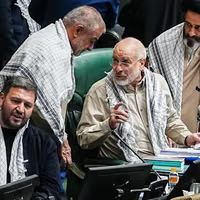
A member of the Iranian parliament’s national security committee said on Saturday that some of the country’s economic problems may be the result of activities by infiltrators, a member of parliament’s national security committee said on Saturday.

Salar Velayatmadar told state media that countering infiltration should remain a priority despite the economic hardships facing Iranians.

“Some believe that given the country’s economic conditions and the problems people face, countering infiltration is not a priority, whereas some of the economic damage and existing problems may be the result of infiltrators’ activities,” he said.

His remarks came as the US dollar approached the unprecedented level of 3 million rials on Iran’s open market, with soaring inflation and rising living costs putting further pressure on Iranian households.

Most Viewed

Trump deploys extra aircraft carrier, says Iran is making ‘big mistakes’
1

Trump deploys extra aircraft carrier, says Iran is making ‘big mistakes’

2

Iran faces global condemnation over Kuwait attack that killed two Italians

3
INSIGHT

Iraq shuts more border crossings with Iran under US pressure to seal land routes

4

Iran’s ‘self-sanctions’ compound pressure from US blockade, critics say

5

A dark, cold office: Pezeshkian's austerity gesture backfires

Banner

Spotlight

  • Iran cries wolf over nuclear treaty withdrawal
    ANALYSIS

    Iran cries wolf over nuclear treaty withdrawal

  • Who flogs a singer? The ‘public decency’ case against Parastoo Ahmadi
    PODCAST

    Who flogs a singer? The ‘public decency’ case against Parastoo Ahmadi

  • A dark, cold office: Pezeshkian's austerity gesture backfires

    A dark, cold office: Pezeshkian's austerity gesture backfires

  • Iranian women break silence on a lifetime of violence
    VOICES FROM IRAN

    Iranian women break silence on a lifetime of violence

  • Too poor to marry, young Iranians are offered religious workarounds
    INSIGHT

    Too poor to marry, young Iranians are offered religious workarounds

Banner
Banner
Banner
Banner
Banner
Banner
•
•
•

More Stories

UK revokes Iran-linked TV channel’s broadcasting licence

Nov 28, 2026, 09:40 GMT+0
100%
Houthi leader Abdul-Malik al-Houthi addresses followers via a video link at the al-Shaab Mosque, formerly al-Saleh Mosque, in Sanaa, Yemen February 6, 2024.

Britain’s media regulator Ofcom on Friday revoked the broadcasting licence of Arabic-language channel Lualua TV over content glorifying the October 7 attacks on Israel and the actions of Iran-backed armed groups.

The channel’s licence holder, Shells for Media Productions Limited, was no longer considered fit and proper to hold a British broadcasting licence, Ofcom said, citing antisemitic content, support for proscribed organizations and a lack of transparency during its investigation.

“Freedom of expression is something we guard fiercely in this country, and the bar for action against broadcasters is rightly set very high,” Ofcom’s Broadcasting and Media Group Director Cristina Nicolotti Squires said.

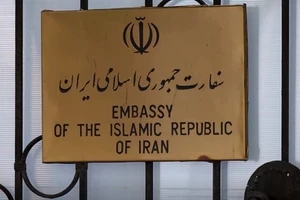
  • Iran uses embassies abroad for surveillance and subterfuge, ex-staff say

    Iran uses embassies abroad for surveillance and subterfuge, ex-staff say

Founded by Bahraini opposition figures, Lualua TV operates from an office in northwest London.

Experts had warned the British government that the channel was a propaganda arm of Iran’s Revolutionary Guards and part of Tehran’s covert influence operations, the Telegraph reported in February.

Praise for Iran-backed groups

Lualua TV livestreamed a 45-minute speech by Yemen’s Houthi leader Abdul Malik al-Houthi on October 7, the third anniversary of the Hamas-led attacks on Israel.

The speech praised Hamas, Palestinian Islamic Jihad and Hezbollah, all proscribed terrorist organizations in Britain. A slogan containing the phrase “Death to Israel” and a curse against Jews appeared throughout the broadcast.

Ofcom found that the channel had aired antisemitic hate speech without editorial challenge or critical analysis. It also identified social media posts glorifying Hezbollah leaders and their actions.

Lualua TV is listed as a member of the Islamic Radio and Television Union, which the US Treasury sanctioned in 2020 for being owned or controlled by the Revolutionary Guards’ Quds Force.

Iran’s media influence in Britain

Ofcom found that the licence holder had failed to provide accurate recordings and did not respond to an invitation to make representations.

The decision bars Lualua TV from regulated British television platforms but does not prevent it from streaming online.

  • One man’s road from Westminster to the machine that carries Iran’s story abroad

    One man’s road from Westminster to the machine that carries Iran’s story abroad

An Iran International investigation published on November 6 found that Tehran had used front companies and cash payments through its embassy in Britain to expand its media influence, including through networks involving former Press TV employees.

US repels drones suspected of Iran links at UK air base – FT

Nov 28, 2026, 09:08 GMT+0
100%
The main entrance at the RAF Lakenheath airbase, which hosts United States Air Force (USAF) personnel, amid reports of a security threat in Lakenheath, Britain, November 13, 2026.

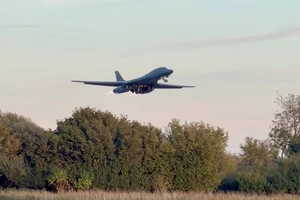
US forces repelled around six drones near a British air base in an episode suspected of having links to Iran earlier this month, the Financial Times reported on Saturday, citing people familiar with the matter.

The drones were driven away using US counter-drone systems after they were spotted flying around RAF Lakenheath in eastern England on November 13, but none were recovered by American or British personnel.

The US Air Force confirmed at the time that it had responded to “suspected unauthorised drone activity” and that “no personnel, aircraft or infrastructure were affected”.

The failure to recover the drones has left US and British authorities unable to rule out the possibility that they were carrying weapons or espionage equipment, the FT reported.

US personnel were instructed to shelter in place following a security alert. News of the episode emerged at the time, but few details were made public.

Home to the US Air Force’s 48th Fighter Wing, Lakenheath is the largest US fighter jet operation in Europe, with nearly 7,000 personnel.

Suspected Iranian plots

The episode follows a series of security threats against British military installations used by US forces, including a suspected plot to attack RAF Fairford. Tehran has denied involvement.

The US military withdrew aircraft from RAF Mildenhall over threats from Iran, the Wall Street Journal reported on November 10, weeks after US bombers were withdrawn from Fairford over similar concerns.

  • UK blames IRGC for RAF plot, vows crackdown on Iranian networks

    UK blames IRGC for RAF plot, vows crackdown on Iranian networks

British Prime Minister Andy Burnham previously said the Iranian government was almost certainly behind the suspected Fairford plot.

Iran had significantly shifted its approach towards targeting British military installations this year, MI5 Director General Ken McCallum warned in October.

Britain strengthens base security

US Air Forces in Europe declined on Friday to discuss its counter-drone systems, citing operational security concerns, and urged the public to report suspicious activity.

“We continually review and strengthen our security arrangements,” Britain’s Ministry of Defence said.

  • Seven-man Iran-linked network helped orchestrate wave of attacks across Europe - ITV

    Seven-man Iran-linked network helped orchestrate wave of attacks across Europe - ITV

Britain is investing £470 million to strengthen security at military installations, including physical protection, surveillance and counter-drone capabilities, the FT reported.

The Royal Air Force has also been moving some aircraft into hangars overnight and plans to install anti-drone netting around others left in the open, Sky News previously reported.

Trump officials move to military bases, Iran threats among concerns

Nov 28, 2026, 08:51 GMT+0
100%
US Treasury Secretary Scott Bessent arrives for the annual Thanksgiving turkey pardoning of two turkeys from West Virginia named Freedom and Feathers, at the White House in Washington, DC, US, November 24, 2026. REUTERS

Threats from Iran are among the security concerns that have driven a growing number of senior Trump administration officials into military housing, prompting congressional scrutiny over the costs and legal basis of the arrangements, USA Today reported Friday.

Secretary of State Marco Rubio, Defense Secretary Pete Hegseth and White House chief of staff Stephen Miller are among the officials who have taken up residence on military installations.

Bessent, who has led Washington’s economic pressure campaign against the Islamic Republic, confirmed on November 20 that he was still living on a military base following threats from Iran.

“If the Iranians are after me, it means that they are being squeezed. We’re going to continue squeezing them,” Bessent told CNBC.

The Treasury secretary said earlier this month that he had relocated on the advice of the Secret Service and would not be intimidated by threats against his life.

  • US Treasury chief moves to military base after Iranian threats

    US Treasury chief moves to military base after Iranian threats

Iranian plots targeting US personnel and American citizens had reached an advanced stage, a senior US intelligence official warned in a memo seen by Reuters in late October. Tehran has denied plotting attacks on American soil.

Attorney General Todd Blanche was also recently relocated over security concerns, CNN reported. Former Attorney General Pam Bondi and former Homeland Security Secretary Kristi Noem have also lived in military housing.

Not all the relocations have been linked to Iran. Miller and his family moved into military housing last year following a campaign of harassment and threats targeting their home, the White House said.

Congress scrutinizes costs and legal basis

The growing use of residences traditionally reserved for senior military officers has prompted questions in Congress over the legal basis for housing civilian officials on military installations and whether they are paying fair-market rents.

Under a measure advanced by the House Armed Services Committee in June, the Pentagon is to submit a report by May 1, 2027, detailing the use of military housing by political appointees during the first two years of Trump’s second term.

Lawmakers have requested details of the threats that prompted the relocations, the legal authority for granting officials military accommodation and the cost of protecting them at private residences.

  • Iran could launch dirty-bomb attack, but risks make it unlikely

    Iran could launch dirty-bomb attack, but risks make it unlikely

The Army was preparing to spend more than $137,000 on repairs and improvements to Hegseth’s military residence, CNN previously reported.

The practice predates Trump’s presidency. The Pentagon argued in 2008 that moving then-Defense Secretary Robert Gates into military housing could reduce the cost of protecting him.

Jim Mattis and Mike Pompeo, who served as defense secretary and secretary of state during Trump’s first term, later followed suit.

The expansion of the practice during Trump’s second term has put renewed focus on the balance between protecting senior government officials and the cost to taxpayers.

Iran cries wolf over nuclear treaty withdrawal

Nov 28, 2026, 03:57 GMT+0
•
Behrouz Turani
100%
Iranian parliament speaker Mohammad Bagher Ghalibaf (center) speaks with fellow lawmakers during a session of the Majlis in Tehran, November 21, 2026

Another bill to withdraw Iran from the Nuclear Non-Proliferation Treaty was introduced in parliament this week, as repeated threats to abandon the treaty appear to be losing their force.

The double-urgency bill, registered by MP Mohammad Manan Raisi on November 22, would automatically trigger withdrawal if Iran's nuclear facilities were attacked again, without requiring a further parliamentary vote.

It is the latest in a series of initiatives. Ebrahim Rezaei, spokesman for the Majlis National Security Committee, has said at least ten withdrawal bills have been registered. None has reached a floor vote.

Six years of stalled motions

The pattern goes back to January 2020, when a withdrawal motion was tabled after the E3 triggered the JCPOA dispute mechanism. Foreign Minister Mohammad Javad Zarif warned that Iran would leave the treaty if its nuclear file were referred to the UN Security Council.

The warnings resurfaced after the June 2025 war. In September, following the activation of snapback sanctions, one MP declared a withdrawal motion "finalized and ready for a vote".

In March 2026, as US and Israeli strikes resumed, Malek Shariati submitted a triple-urgency bill. Six months later, 32 former officials signed an open letter calling for withdrawal.

Each effort stalled. One MP complained that the Majlis presiding board had blocked the bill last year. The Supreme National Security Council has never endorsed withdrawal.

Asked earlier this week whether Iran would leave the NPT, Foreign Ministry spokesman Esmaeil Baghaei replied: "So far no decision on this has been communicated to us."

Former foreign minister Manouchehr Mottaki, a supporter of withdrawal, said all 290 MPs would vote in favour if the Supreme Leader approved. His remark underscored the central reality: parliament makes the threats, but the decision rests elsewhere.

A diminishing threat

Iran's restrictions on international nuclear inspections have also complicated the significance of any formal withdrawal.

The IAEA has been unable to verify Iran's near-weapons-grade uranium stockpile since the June 2025 bombing campaign. Before inspections were disrupted, Iran had about 440 kilograms of uranium enriched to 60%, potentially enough for ten nuclear weapons if further enriched and weaponized, according to IAEA Director General Rafael Grossi.

With inspectors already denied access to much of Iran's nuclear programme, withdrawal would not necessarily change monitoring immediately. But it would mark a significant legal and diplomatic break.

Even some opponents of withdrawal favour maintaining treaty membership without restoring inspections. Tehran MP Mohammad Seraj argues that Iran should remain in the NPT while refusing IAEA inspectors access.

Critics inside the system

Seraj told Khabaronline that leaving would signal an intention to acquire a nuclear weapon and cause Iran to "lose our friends". He noted that the United States, Russia and China all oppose such a move.

Ali Jannati, culture minister during Hassan Rouhani's presidency, told Jamaran that advocates of withdrawal fail to understand how profoundly it conflicts with Iran's national interests. Even discussing the idea, he argued, could increase the risk of war.

Former MP Heshmatollah Falahatpisheh has argued that withdrawal would conceal parts of the nuclear programme without serving any national objective.

Esmail Gerami Moghaddam of the Etemad-e Melli party called the bill a trap that would strengthen claims Iran seeks a bomb.

Others object to the timing. Ahmad Bakhshayesh Ardestani, a member of the National Security Committee, has argued that Iran should leave only after acquiring a nuclear weapon. Announcing withdrawal beforehand, he says, would impose the costs without delivering any deterrent benefit.

The case for withdrawal

Advocates of withdrawal remain vocal.

Hossein Shariatmadari, the leader-appointed chief of hardline daily Kayhan, argues there is no reason for Iran to remain in the treaty after attacks on its nuclear sites.

IRGC-linked Tasnim News maintains that withdrawal would not signal a pursuit of nuclear weapons but would end what it calls "espionage" under the cover of IAEA inspections.

The ultraconservative Paydari Front has called for withdrawal, while the Assembly of Experts recently described a review of NPT membership and Iran's defence doctrine as "an unavoidable necessity".

Calls now come from Friday prayer pulpits, state television and the Expediency Council. Yet none of the parliamentary initiatives has secured the political approval needed to proceed.

What an exit would cost

Tehran's strongest argument abroad is that it is a treaty member whose nuclear facilities came under attack while subject to international safeguards. Leaving would weaken that argument and strengthen the case advanced by the United States and Israel.

It would also strain relations with important partners. The Kremlin has publicly opposed withdrawal.

The NPT requires three months' notice for withdrawal. Such an announcement could increase pressure on Washington and Israel to consider military action before Iran's departure took effect.

Withdrawal could also make a negotiated settlement, and the prospect of sanctions relief, considerably more difficult.

Iran is already subject to UN sanctions and a US-led oil embargo. Producer inflation reached 120% during the summer, while quarterly growth is estimated at minus 14%. Further isolation would add to the pressure on an already strained economy.

A warning sign, not leverage

Raisi's bill is therefore best understood as an attempt to deter further attacks and an instrument in the Majlis's internal factional battles, rather than a clear roadmap to withdrawal.

The repeated initiatives have produced no change in Iran's treaty status, while exposing disagreements within the Islamic Republic over whether abandoning the NPT would strengthen national security or undermine it.

The threat's remaining significance lies less in its deterrent value than in the possibility that it could help trigger the very conflict its supporters claim to be trying to prevent.

Hezbollah-linked plot in Jordan points to wider Iranian ambitions, researcher says

Nov 28, 2026, 02:56 GMT+0
100%
A Jordanian flag flies over the capital city, Amman, Jordan. REUTERS

A Jordanian court has upheld a six-year sentence with hard labor against a man convicted over an equestrian club project funded by Iran-backed Hezbollah, a case an Israeli researcher says points to Tehran’s ambitions in the kingdom.

Jordan’s Court of Cassation unanimously upheld the conviction of Yasser Marji, a Lebanese-French national, for acts threatening public order and endangering public safety and security, Jordanian news agency Madar Al-Saa reported on Tuesday, citing a ruling it had exclusively obtained.

The court found that Hezbollah had provided around $430,000 to establish an equestrian club and academy in the southern port city of Aqaba as a cover for illegal activities.

Hezbollah denied the allegations on Wednesday, saying it had no involvement in the case and accusing its detractors of seeking to portray the group as a threat to the security and stability of Arab countries.

According to the ruling, Marji had maintained ties with Hezbollah operatives for several years and received military and security training in Lebanon.

He established a company and entered into business agreements with Jordanian partners who were unaware of the source of the funding. Jordanian intelligence arrested him in June 2025.

Marji argued on appeal that the project was a legitimate investment and challenged the court’s reliance on statements he made during the investigation.

The court rejected his arguments, ruling that witness testimony, business agreements and evidence concerning financial transfers supported his conviction under Jordan’s anti-terrorism law.

The current management of the Aqaba Equestrian Club also distanced itself from the case, saying the investigation concerned a previous venture and that the club now operates under Jordanian ownership and management.

Iran’s ambitions in Jordan

The Hezbollah official identified by the Jordanian court as having assigned Marji the task in late 2023 was Hassan Badir, who was killed in an Israeli airstrike in Beirut on April 1, 2025.

The Israeli military said at the time that Badir belonged to Hezbollah’s Unit 3900 and Iran’s Quds Force, the overseas operations arm of the Islamic Revolutionary Guard Corps (IRGC).

In a report published Thursday, Tal Beeri of Israel’s Alma Research and Education Center argued that Badir’s involvement pointed to a wider Iranian effort to gain a foothold in Jordan.

The reported court findings, however, do not establish that Tehran directly ordered or financed the Aqaba operation.

Beeri said the fall of Bashar al-Assad in Syria in December 2024 and the military setbacks suffered by Iran-backed Hezbollah in Lebanon could make Jordan increasingly important to Tehran as a potential front against Israel and a means of supporting Palestinian armed groups in the West Bank.

More than a year earlier, in September 2025, Jordanian security sources told Iran International that Iranian recruitment and financing activities in the kingdom had intensified.

In April 2025, Jordan announced the arrest of 16 people accused of involvement in a security plot. A Jordanian security source subsequently told Iran International that Hamas members had conducted training in Lebanon while Hezbollah had provided facilities and expertise.

The same source said Tehran had sought to establish a front in Jordan even before Hezbollah suffered major losses in Lebanon.

A senior Jordanian official, however, drew a distinction between Iran’s ambitions and its ability to pursue them, saying the setbacks in Syria and Lebanon had weakened Tehran’s capacity to act against Jordan.