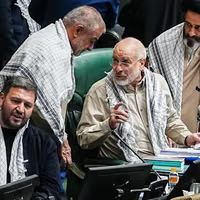
The double-urgency bill, registered by MP Mohammad Manan Raisi on November 22, would automatically trigger withdrawal if Iran's nuclear facilities were attacked again, without requiring a further parliamentary vote.
It is the latest in a series of initiatives. Ebrahim Rezaei, spokesman for the Majlis National Security Committee, has said at least ten withdrawal bills have been registered. None has reached a floor vote.
Six years of stalled motions
The pattern goes back to January 2020, when a withdrawal motion was tabled after the E3 triggered the JCPOA dispute mechanism. Foreign Minister Mohammad Javad Zarif warned that Iran would leave the treaty if its nuclear file were referred to the UN Security Council.
The warnings resurfaced after the June 2025 war. In September, following the activation of snapback sanctions, one MP declared a withdrawal motion "finalized and ready for a vote".
In March 2026, as US and Israeli strikes resumed, Malek Shariati submitted a triple-urgency bill. Six months later, 32 former officials signed an open letter calling for withdrawal.
Each effort stalled. One MP complained that the Majlis presiding board had blocked the bill last year. The Supreme National Security Council has never endorsed withdrawal.
Asked earlier this week whether Iran would leave the NPT, Foreign Ministry spokesman Esmaeil Baghaei replied: "So far no decision on this has been communicated to us."
Former foreign minister Manouchehr Mottaki, a supporter of withdrawal, said all 290 MPs would vote in favour if the Supreme Leader approved. His remark underscored the central reality: parliament makes the threats, but the decision rests elsewhere.
A diminishing threat
Iran's restrictions on international nuclear inspections have also complicated the significance of any formal withdrawal.
The IAEA has been unable to verify Iran's near-weapons-grade uranium stockpile since the June 2025 bombing campaign. Before inspections were disrupted, Iran had about 440 kilograms of uranium enriched to 60%, potentially enough for ten nuclear weapons if further enriched and weaponized, according to IAEA Director General Rafael Grossi.
With inspectors already denied access to much of Iran's nuclear programme, withdrawal would not necessarily change monitoring immediately. But it would mark a significant legal and diplomatic break.
Even some opponents of withdrawal favour maintaining treaty membership without restoring inspections. Tehran MP Mohammad Seraj argues that Iran should remain in the NPT while refusing IAEA inspectors access.
Critics inside the system
Seraj told Khabaronline that leaving would signal an intention to acquire a nuclear weapon and cause Iran to "lose our friends". He noted that the United States, Russia and China all oppose such a move.
Ali Jannati, culture minister during Hassan Rouhani's presidency, told Jamaran that advocates of withdrawal fail to understand how profoundly it conflicts with Iran's national interests. Even discussing the idea, he argued, could increase the risk of war.
Former MP Heshmatollah Falahatpisheh has argued that withdrawal would conceal parts of the nuclear programme without serving any national objective.
Esmail Gerami Moghaddam of the Etemad-e Melli party called the bill a trap that would strengthen claims Iran seeks a bomb.
Others object to the timing. Ahmad Bakhshayesh Ardestani, a member of the National Security Committee, has argued that Iran should leave only after acquiring a nuclear weapon. Announcing withdrawal beforehand, he says, would impose the costs without delivering any deterrent benefit.
The case for withdrawal
Advocates of withdrawal remain vocal.
Hossein Shariatmadari, the leader-appointed chief of hardline daily Kayhan, argues there is no reason for Iran to remain in the treaty after attacks on its nuclear sites.
IRGC-linked Tasnim News maintains that withdrawal would not signal a pursuit of nuclear weapons but would end what it calls "espionage" under the cover of IAEA inspections.
The ultraconservative Paydari Front has called for withdrawal, while the Assembly of Experts recently described a review of NPT membership and Iran's defence doctrine as "an unavoidable necessity".
Calls now come from Friday prayer pulpits, state television and the Expediency Council. Yet none of the parliamentary initiatives has secured the political approval needed to proceed.
What an exit would cost
Tehran's strongest argument abroad is that it is a treaty member whose nuclear facilities came under attack while subject to international safeguards. Leaving would weaken that argument and strengthen the case advanced by the United States and Israel.
It would also strain relations with important partners. The Kremlin has publicly opposed withdrawal.
The NPT requires three months' notice for withdrawal. Such an announcement could increase pressure on Washington and Israel to consider military action before Iran's departure took effect.
Withdrawal could also make a negotiated settlement, and the prospect of sanctions relief, considerably more difficult.
Iran is already subject to UN sanctions and a US-led oil embargo. Producer inflation reached 120% during the summer, while quarterly growth is estimated at minus 14%. Further isolation would add to the pressure on an already strained economy.
A warning sign, not leverage
Raisi's bill is therefore best understood as an attempt to deter further attacks and an instrument in the Majlis's internal factional battles, rather than a clear roadmap to withdrawal.
The repeated initiatives have produced no change in Iran's treaty status, while exposing disagreements within the Islamic Republic over whether abandoning the NPT would strengthen national security or undermine it.
The threat's remaining significance lies less in its deterrent value than in the possibility that it could help trigger the very conflict its supporters claim to be trying to prevent.