• العربية
  • فارسی
BrandBrand
  • Iran Insight
  • Politics
  • Economy
  • Analysis
  • Special Report
  • Opinion
  • Podcast
  • Live TV
  • Iran Insight
  • Politics
  • Economy
  • Analysis
  • Special Report
  • Opinion
  • Podcast
  • Live TV
  • Theme
  • Language
    • العربية
    • فارسی
  • Iran Insight
  • Politics
  • Economy
  • Analysis
  • Special Report
  • Opinion
  • Podcast
  • Live TV
All rights reserved for Volant Media UK Limited
volant media logo

Strait of Hormuz shipping 65% below pre-war levels in mid-November, UKMTO says

Nov 21, 2026, 03:11 GMT+0
Strait of Hormuz, Persian Gulf (ISNA)

Shipping through the Strait of Hormuz remained about 65% below pre-war levels in the week ending November 18, with six attacks on tankers reported during the period, the United Kingdom Maritime Trade Operations said Friday.

UKMTO recorded 263 vessel transits through the strategic waterway during the week, down from 308 the previous week. The latest figures included 115 outbound and 148 inbound transits, compared with 139 outbound and 169 inbound crossings a week earlier.

About half the vessels passing through the strait were energy carriers, UKMTO said. Most ships transmitting their positions continued to use the route through Iranian waters, although traffic along the southern route had increased.

UKMTO reported six attacks on tankers during the week, four in the Strait of Hormuz and two in the Persian Gulf. Two vessels required assistance, while the outcomes of the other four incidents remained unknown.

The agency said 106 incidents had been reported in the strait since the conflict began on February 28.

The Joint Maritime Information Center assessed the threat level in the Strait of Hormuz as severe, meaning an attack was highly likely.

UKMTO cautioned that figures for US-facilitated vessel transits could not be independently verified and that some maritime security incidents might have gone unreported.

Most Viewed

Tanker loads Iranian crude in Persian Gulf as Tehran weighs resuming exports
1

Tanker loads Iranian crude in Persian Gulf as Tehran weighs resuming exports

2

Houthi missile attack damages Riyadh’s tallest building

3

Iran readies tankers to run US blockade, threatens Persian Gulf oil if fired on

4

Iran hardliners push tanker convoy to defy US blockade

5
ANALYSIS

War damage leaves Iran with few options to avert winter gas crunch

Banner

Spotlight

  • Iran-linked hackers posed as US expert to target Australian broadcaster
    PODCAST

    Iran-linked hackers posed as US expert to target Australian broadcaster

  • Who gets to be a journalist? Iran seeks greater control over press
    INSIGHT

    Who gets to be a journalist? Iran seeks greater control over press

  • Iran hardliners push tanker convoy to defy US blockade

    Iran hardliners push tanker convoy to defy US blockade

  • War damage leaves Iran with few options to avert winter gas crunch
    ANALYSIS

    War damage leaves Iran with few options to avert winter gas crunch

  • A tough winter for Iran's cement industry, a tougher one for steel
    ANALYSIS

    A tough winter for Iran's cement industry, a tougher one for steel

  • How Iranians are turning grief into defiance
    OPINION

    How Iranians are turning grief into defiance

Banner
Banner
Banner
Banner
Banner
Banner
•
•
•

More Stories

Iran hardliners push tanker convoy to defy US blockade

Nov 21, 2026, 02:29 GMT+0
•
Maryam Sinaiee
100%
An illustration published by the Revolutionary Guards-affiliated Fars News Agency depicts the mythical Persian hero Fereydoun leading a convoy of Iranian oil tankers escorted by warships

Iranian hardliners are calling for a convoy of oil tankers to challenge the US naval blockade, threatening military retaliation against regional energy infrastructure if Washington attempts to stop the vessels.

The proposal, published Thursday by the Revolutionary Guards-affiliated Fars News Agency, calls for tankers to sail to China and threatens strikes on oil facilities in the United Arab Emirates, Saudi Arabia and Qatar if the US intervenes. It emerged shortly after reports that an unsanctioned tanker had been loaded at Iran's Kharg Island oil terminal.

Fars dubbed the plan “Operation Fereydoun,” after a legendary hero in the Persian epic Shahnameh.

No official plans for a convoy have been announced, although Foreign Minister Abbas Araghchi said Friday that Iran would break the blockade.

“A blockade is a military action. A military action also has a military response,” political and military analyst Nima Akbarkhani said during a Thursday night discussion on Iranian state television.

Akbarkhani described a previously discussed scenario in which Iranian tankers would sail individually with their Automatic Identification System (AIS) signals switched on and Iranian flags displayed, while Tehran announced in advance which regional facilities it would target if any vessel were attacked.

During the Be Vaght-e Iran program, host Ruhollah Razavi suggested placing media teams, members of the public and international anti-war activists aboard the tankers to increase the political and media costs of any US intervention.

Akbarkhani endorsed the idea, arguing that unlike vessels sent to Gaza, which Israel prevented from reaching their destination despite extensive media coverage, Iran could deter attacks on blockade-breaking tankers by threatening military retaliation.

Support for confrontation grows

Political analyst Mostafa Najafi, recently described in Iranian media as an adviser to Supreme National Security Council Secretary Mohsen Rezaei, wrote on X that Supreme Leader Mojtaba Khamenei had ordered an end to the “neither war nor peace” situation some time ago.

Najafi suggested that the effort extended beyond diplomacy, with military options also under consideration.

“Apparently, Tehran no longer wants to sit back and watch the blockade and threats,” he wrote.

Majid-Reza Hariri, president of the Iran-China Chamber of Commerce, called on Iranians across the political spectrum to support efforts to break the blockade.

“After months of pursuing negotiations in various ways, every Iranian patriot, regardless of political outlook, should support the government in breaking the naval blockade imposed by the aggressive United States by any means possible,” he wrote Friday.

Media analyst Alireza Shiva argued that Iran was signaling that energy security in the Persian Gulf could not be defined unilaterally.

“You cannot target Iran's oil exports while expecting the energy exports of others to continue in complete security,” he wrote on X.

A high-risk strategy

Hardline journalist Parisa Nasr argued that Iran had made a strategic mistake by treating the blockade as a negotiating issue rather than a wartime measure intended to weaken the country and force its surrender.

She advocated a strategy of “bringing the crisis to the brink” to pressure Washington into easing the blockade while strengthening Iran's deterrence against attacks on its tankers.

Energy analyst Abdullah Babakhani offered a more cautious assessment, suggesting that US forces might initially allow some Iranian tankers through before pursuing and potentially seizing them in international waters.

He compared the scenario to operations involving the pursuit and seizure of tankers linked to Venezuela last year, saying Iran's response to such an eventuality remained unpredictable.

China, Iran's largest oil buyer before the blockade, has been identified as the intended destination for the proposed convoy. Whether Beijing would accept the shipments remains unclear.

The proposal therefore presents Tehran with a potentially consequential choice: continue seeking a negotiated end to the blockade or test Washington's willingness to enforce it at the risk of a wider military confrontation.

Who is Mohammad Javad Bavand, the ex-IRGC official sanctioned by US?

Nov 21, 2026, 00:10 GMT+0
100%

Mohammad Javad Bavand, a former IRGC intelligence official sanctioned by the United States on Friday, has played a key role in Iran's sanctioned oil trade, working through a network of intermediaries to sell crude and recover revenues held abroad.

The US Treasury sanctioned Bavand alongside three other Iranians — Majid Taj, Mojtaba Arabnejad and Mohammadhossein Servati — over their roles in networks supporting Iran's oil trade and sanctions evasion.

The Treasury said Bavand worked with intermediaries, including Taj, the brother of Iranian Football Federation president Mehdi Taj, to recover proceeds from Iranian oil sales held abroad, despite members of the network owing billions of dollars from previous transactions.

Iran International investigations have documented Bavand's rise from the Revolutionary Guards Intelligence Organization to senior positions overseeing oil sales, including the allocation of millions of barrels of crude to intermediaries with billions of dollars in outstanding debts.

From intelligence officer to oil trader

Bavand previously served as deputy head of the economic directorate of the Revolutionary Guards Intelligence Organization under Mostafa Ahadi.

Following the US withdrawal from the nuclear agreement in 2018, he represented Guards intelligence on a Supreme National Security Council committee responsible for overseeing sanctioned oil sales.

He later became a special assistant to the oil minister under former President Ebrahim Raisi. After leaving the position under President Masoud Pezeshkian, Bavand returned to the Oil Ministry in June 2026 to oversee oil trading.

Millions of barrels entrusted to indebted traders

In September, Iran International published confidential documents raising questions about the allocation of sanctioned crude to four intermediaries who had failed to return billions of dollars from earlier sales.

The documents showed that the traders were offered unusually steep discounts despite their outstanding debts.

A subsequent investigation found that Bavand and oil-trading official Ali Akbar Pour-Ebrahim had assigned 86 million barrels of Iranian crude to four intermediaries, including Hossein Shamkhani and Mohammad Hadi Momenin.

The findings formed part of Iran International's reporting on a struggle between networks linked to the Revolutionary Guards Intelligence Organization and the Intelligence Ministry for control of Iran's sanctioned oil trade.

A November 9 investigation revealed further details of Iran's efforts to use oil terminals and storage facilities in China to circumvent US sanctions.

It cited an earlier document showing that Bavand had instructed Momenin, an oil intermediary who owed $2 billion in outstanding proceeds, to use a vessel linked to Hossein Shamkhani to deliver oil for storage at a Chinese port.

Treasury names Bavand's associates

The Treasury said Bavand had worked with the Revolutionary Guards and Sepehr Energy Jahan Nama Pars, a previously sanctioned company tasked with selling oil for Iran's Armed Forces General Staff.

Its designation of Majid Taj also brought renewed attention to a relationship documented in Iran International's earlier investigations into the oil-trading network.

Bavand and Taj were sanctioned under Executive Order 13902, which targets designated sectors of Iran's economy. Arabnejad, who was linked to Mahan Air, and Servati, who was linked to Sepehr Energy Jahan Nama Pars, were sanctioned under counterterrorism-related authorities.

The measures block any assets the four hold under US jurisdiction and generally prohibit Americans from conducting transactions with them.

Over 500 million Claude tokens help explain 1,000 years of Persian poetry

Nov 20, 2026, 21:20 GMT+0
100%
Siyavush, on the black horse at center, plays polo as the Turanian king Afrasiyab watches. The painting, attributed to Qasim ibn Ali, was made in Tabriz around 1525–30 for Shah Tahmasp’s copy of Ferdowsi’s Shahnameh (Book of Kings). (The Metropolitan Museum of Art, public domain)

A Toronto-based Iranian software engineer has used Claude to explain more than 1.6 million Persian couplets in modern Persian, an effort to help readers understand poetry they still quote and turn to for advice.

One verse about a lavish dowry shows what Arman Nejad hoped to fix. An AI-generated note on Ganjoor, a popular free online library of Persian poetry, had mistaken Delaray, a woman’s name, for the word “dollar.” Readers who turned to the note for help were told the verse described a rise in the value of the US currency.

Errors like that posed a problem for Nejad, who had built a search engine called Ganjoorjoor, roughly “Ganjoor Finder,” for readers who remember what a poem says but have forgotten the words. The search engine draws on Ganjoor’s explanations to find matching verses. A note about exchange rates could send someone looking for poetry about a dowry to the wrong place.

100%
A Persian-language post on X mocks Ganjoor's earlier AI-generated note, which read the name Delaray as the word "dollar" and described a rise in the US currency.

On a sleepless night on November 9, Nejad estimated it would cost about $3,000 to redo the notes and appealed for help on X. By the next morning, he said, the post had drawn 10,000 views and offers of support. Two AI platforms, mana.space and zharf.ai, donated credits, and he covered the rest himself.

By November 16, Nejad had finished the new notes for works by all 245 poets in the collection, from Rudaki to Shahriar. Ganjoor had been using AI-generated notes for about two years. By Nejad’s count, only about 1.5 percent of its couplets had explanations written by people.

Ganjoor said Friday it had published Nejad’s poem summaries and plain-language explanations on its website and in its public data repository. It kept the notes readers had already edited.

Putting AI through Iran’s university entrance exam

To decide which model to trust with the poetry, Nejad gave several of them the first booklet from the humanities track of Iran’s national university entrance exam, known as the Konkour. The exam offered freshly written questions in Persian and an answer key he could use to score each model.

Of the 80 multiple-choice questions, 30 tested Persian language and literature, 20 covered mathematics, and 15 each covered social sciences and psychology. Each model received the same text and images with web access disabled. Nejad tested each at three settings that varied how much processing it could devote to an answer.

100%
Accuracy of each AI model and setting on the 80-question Konkour exam booklet. Claude Opus 5.5 (medium) and Gemini 3.8 Flash (highest) tied at 74 of 80.

Anthropic’s Claude Opus 5.5, on its medium setting, tied for first overall with Google’s Gemini 3.8 Flash on its highest setting. Each answered 74 of 80 questions correctly. On the literature questions, which mattered most to Nejad, Claude came first with 27 out of 30.

Nejad then tested 23 sets of instructions for Claude. He selected 160 poems with human annotations, using half to compare the instructions and reserving the other half to check the winner. Two AI judges, one from Anthropic and one from OpenAI, compared Claude’s explanations with the human notes. The finalists scored between 97.4 and 97.9 percent, so Nejad chose the cheapest to run.

100%
On the 30 Persian literature questions, Claude Opus 5.5 (medium setting) came first, answering 27 correctly.

The instructions gave Claude the poet’s name, the book, the chapter and the surrounding lines. “You don’t need to teach Opus how to read Persian poetry,” Nejad wrote in an essay about the project. “You just need to tell it what it’s reading.”

The full run took about 155,000 requests over several days, Nejad said. It used 566 million tokens, the units of text a language model processes, and cost roughly $3,100.

Majnun’s uncle and Khayyam’s wine

In Nezami’s Leyli and Majnun, an old man named Salim goes looking for Majnun each month to bring him food and clothes. The poet calls him Majnun’s khal, a Persian word for a maternal uncle that can also mean a beauty mark. The old note gave Salim a mole on his forehead. The new one introduces him as Majnun’s uncle and picks up Nezami’s play on both meanings later in the passage, Nejad wrote.

In Nezami’s 12th-century epic Haft Peykar, the word gur can mean both “grave” and “wild ass.” The old note had a man stepping into a grave as a lion approached carrying a bow. In the new reading, King Bahram holds the bow and rides in pursuit of wild asses. It is Bahram whom the poet likens to a lion.

100%
An AI-generated illustration of the corrected reading of Nezami's Haft Peykar, in which King Bahram, bow in hand, gallops after wild asses.

In a quatrain attributed to Omar Khayyam, the earlier note advised readers to keep wise company and avoid pleasure. The new one reads the verse as an invitation to drink wine. Those who spent their lives puzzling over philosophical questions, in this reading, were like sour grapes that shriveled into raisins before they ever ripened.

Nejad said reviewers compared the old and new explanations for 500 randomly selected couplets, reading each alongside its neighboring verses. They preferred the new note in 413 cases, favored the old one in four and judged the two about the same in the remaining 83.

Beyond Hafez

On Yalda, the longest night of the year, many Iranian families make a wish, open the collected poems of the 14th-century poet Hafez at random and read the poem they land on as his answer.

“Hafez left us more than six hundred years ago, and Iranians still ask him for advice,” Nejad wrote. “Getting an answer has never been the hard part. Understanding it is.”

Readers of Hafez have centuries of commentary to draw on. In Istanbul in 1594, the scholar Sudi finished a verse-by-verse commentary on his collected poems for Ottoman readers. For a sense of what readers face elsewhere in the collection, Nejad pointed to Waqif Lahori, who died in 1776. Until this month, Nejad said, none of Waqif’s 12,312 couplets on Ganjoor had an explanation.

“Sudi did Hafez,” Nejad wrote. “In 2026, we did everyone.”

War damage leaves Iran with few options to avert winter gas crunch

Nov 20, 2026, 20:14 GMT+0
•
Dalga Khatinoglu
100%
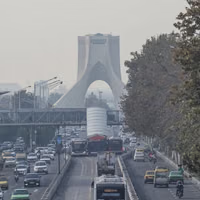
Traffic moves along a smog-covered highway near Tehran's Azadi Tower, as air pollution blankets the Iranian capital, November 18, 2026

Iran faces a worsening winter energy crisis after wartime damage to its gas infrastructure cut production capacity, with officials warning of shortages in 11 provinces and limited options to make up the shortfall.

The country's daily gas deficit, estimated at around 300 million cubic metres last winter, is expected to reach 430 million cubic metres this winter.

Mohammad Sadegh Azimifar, head of the National Iranian Oil Products Distribution Company (NIOPDC), has announced that 60 million litres of kerosene have been stockpiled in some provinces facing severe gas shortages.

He said LPG reserves for household consumption would also be increased.

Azimifar also reported that 3.2 billion litres of diesel and mazut (fuel oil) have been stockpiled to compensate for gas shortages at power plants.

Production below prewar levels

Iranian officials say gas processing facilities in Asaluyeh were targeted during the recent war, reducing the country's daily gas production capacity by 230 million cubic metres.

Some facilities have returned to operation in recent weeks, bringing the daily production shortfall down to 130 million cubic metres.

The latest figures released by Iranian gas officials indicate that the country is currently producing around 690 million cubic metres of gas per day (mcm/d), compared with 793 mcm/d during the same period last year.

During the peak winter consumption period, Iran normally raises daily gas production to more than 830 mcm/d.

It remains unclear whether all production facilities are operating at their full technical capacity. Nevertheless, the available figures suggest that Iran's gas production capacity has declined by at least 100 mcm/d.

These figures refer to raw gas extracted from fields, rather than processed gas delivered to the national network. Non-methane components are removed during processing, while some gas is consumed by production and transmission facilities.

Last winter, for example, Iran extracted around 837 mcm/d of raw gas but delivered approximately 750 mcm/d of processed gas to the national network.

Of that amount, just under 700 mcm/d reached domestic consumers, with around 40 mcm/d exported and the remainder lost through the country's ageing transmission and distribution network.

Winter demand forces cuts to industry

According to Statistical Center data, Iran's daily household gas consumption in winter is more than 2.5 times its average level during other seasons. A similar seasonal pattern applies to the commercial, public and agricultural sectors.

To meet this demand, the government sharply curtails gas supplies to industries, petrochemical plants and power stations.

Last winter, combined gas consumption by households and the agricultural, commercial and public sectors reached 388 mcm/d, compared with an average of 154 mcm/d during other seasons.

By contrast, daily gas deliveries to power plants, petrochemical facilities, industries and the transport sector fell to 311 million cubic metres, down from an average of 493 mcm/d during other seasons.

With little scope to restrict household consumption during winter, the government has to absorb the seasonal surge by reducing supplies to other sectors.

Limited alternatives to natural gas

Iran already made extensive use of alternative fuels in power plants and industrial facilities last winter, leaving limited room to compensate for further gas shortages.

Only 15% of the country's thermal power generation capacity can operate on liquid fuels, namely mazut and diesel, according to the report's figures.

These power plants already switch to alternative fuels during peak winter demand, leaving little additional scope to increase their use.

Meanwhile, half of the industrial sector's winter gas consumption comes from small-scale industries, many operating within urban areas and unable to switch to alternative fuels.

According to Kpler data, Iran exported an average of approximately 256,000 barrels per day of mazut and 378,000 barrels per day of propane and butane (LPG) by sea last year.

These exports have been halted by the US naval blockade. The combined energy content of the fuels is equivalent to around 85 million cubic metres of natural gas per day.

In theory, retaining these fuels for domestic use could help offset part of the winter gas deficit. But doing so would require industries and power plants to substitute mazut and LPG for natural gas wherever possible, alongside a suspension of natural gas exports.

Both scenarios face significant obstacles.

Many industries lack the technical capacity to switch fuels, while Iran urgently needs gas export revenues, particularly given the severe disruption to its oil revenues.

With alternative fuels already widely used last winter, power plants and industrial facilities are unlikely to have much additional capacity to absorb them this year.

Greater reliance on liquid fuels would also come against the backdrop of Iran's winter air pollution crisis. Last winter, government offices and schools were closed for approximately four weeks because of air pollution and energy shortages.

Eleven provinces face gas supply stress

Iranian officials say 11 provinces will face gas supply stress this winter, with the situation expected to be particularly severe in the northern provinces of Mazandaran, Gilan and North Khorasan.

An examination of Ministry of Energy data shows that these three provinces consumed an average of around 50 mcm/d of gas in 2023, including 21 mcm/d used by households and the commercial, public and agricultural sectors.

Azimifar's announcement that 60 million litres of kerosene have been stockpiled in some provinces facing severe shortages underscores the government's preparations for possible supply disruptions.

The stockpile has an energy content equivalent to approximately 59 million cubic metres of natural gas, although the extent to which it can replace gas consumption depends on the availability of suitable equipment and the sectors receiving the fuel.

Eight other provinces are also expected to face supply stress.

Together, the 11 provinces consumed around 240 million cubic metres of gas per day in 2023, accounting for 37% of the country's total consumption that year.

Iran uses executions to silence dissent and spread fear, US says

Nov 20, 2026, 17:14 GMT+0
100%
A screengrab from a video sent to Iran International showing a graffiti of executions in Iran's Ekbatan neighborhood in January 2025.

The US State Department on Friday accused Iranian authorities of using death sentences to intimidate protesters demanding basic rights and relief from economic hardship, and of carrying out a wave of executions to silence dissent and maintain their grip on power.

In a post on its Persian-language X account, the department said Tehran was resorting to intimidation and the gallows rather than addressing the country’s crises and the legitimate demands of its people.

“When citizens take to the streets to demand their basic rights and relief from unbearable economic pressures, the regime responds by hastily carrying out death sentences and bringing severe, repressive charges,” the department wrote.

Citing death sentences issued against protesters Amir Delshad, Matin Shabani and Arman Marefati, the department said Iran’s judiciary was being used to instill fear. It said treating free expression as a capital offense exposed the government’s inability to respond to public grievances.

The department said Iranian authorities had announced the executions of more than 730 Iranians since late December 2025, most following what it called sham trials.

A tally compiled from reports by human rights monitors puts the number of people executed in Iran between January 1 and November 18 at no fewer than 1,158. It includes executions the authorities never announced.

Iran Human Rights, a Norway-based monitor, said Monday that at least 39 men had been executed in connection with the January protests and at least 121 people arrested over the demonstrations remained under sentence of death.

Among those executed were Hassan Dioband, Hamid Kazemi and Reza Zangeneh, who were hanged on November 8 over protests in Karaj, west of Tehran, the group said.

An Iran International investigation in October showed Iran had executed nearly two people a week in political and security cases since the January protests, including over protest- and war-related accusations, while another 190 people faced death sentences.

At least 70 people were executed from January 7 to October 5. Human rights organizations and activists say the figures are minimum totals, covering only cases that have been reported and verified.

Of the 70 people executed, 35 were put to death in cases connected to the January protests, nine in cases linked to the 12-day and 40-day wars, and 26 in other political and security cases.