His five-year term, which began in September 2021, ended on September 29 amid criticism over declining audiences, political imbalance and the perceived domination of the broadcaster by figures associated with the ultrahardline Paydari Front.
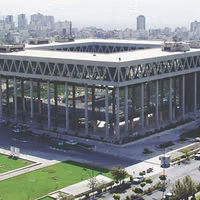
The eventual appointment, which must be made by Supreme Leader Mojtaba Khamenei, could signal whether the leadership intends to curb the influence of hardline factions associated with Saeed Jalili or preserve their dominance over the Islamic Republic of Iran Broadcasting (IRIB), which holds a constitutional monopoly over domestic radio and television broadcasting.
Jalili, who has promoted the idea of a “shadow government,” is a key member of the Supreme National Security Council. His brother, Vahid Jalili, serves as the broadcaster's deputy chief and oversees much of its content.
Several other figures associated with the hardline faction were appointed to senior positions across the broadcaster's channels after 2021.
IRIB is a central instrument for agenda-setting, elite messaging and crisis management, and one of the principal platforms through which the Supreme Leader's office communicates with the public.
Its leadership also controls a vast patronage network encompassing thousands of managerial, editorial and production appointments.
How an IRIB chief is selected
Unlike ministers or executives of state-owned companies, the head of IRIB is not selected by parliament, the government or the broadcaster's supervisory council.
Under Article 175 of the Iranian Constitution, the head of IRIB is appointed directly by the Supreme Leader.
The six-member supervisory council, whose members are drawn from the executive, legislative and judicial branches, oversees the organization but does not choose its chief executive and generally exercises little influence over day-to-day management.
In practice, informal consultations take place among key political, security and cultural actors. The Supreme Leader's office assesses potential candidates, while factional lobbying emerges through media leaks and elite networks.
Ultimately, the Supreme Leader issues a decree either appointing a new chief or extending the incumbent's term.
Why the appointment remains unresolved
The political realignment following the crises of 2025–26 has made the succession unusually consequential.
In mid-October, Jomhouri Eslami, citing unofficial sources, reported that the decision to replace Jebelli had already been made and that several names were under consideration. Yet no announcement has followed.
One possible explanation is factional deadlock. Reappointing Jebelli would likely upset parts of the establishment that have criticized his tenure, while removing him could provoke resistance from Jalili's supporters.
Another factor may be uncertainty over decision-making authority under Mojtaba Khamenei. More than eight months after becoming Supreme Leader, he has made no public appearance, and no authenticated audio or video recording of him has been released. Whether this has contributed to the delay remains unclear.
Delays in senior appointments also occurred under Ali Khamenei. Yet the contrast with other recent decisions is notable. Mojtaba Khamenei reappointed Judiciary Chief Gholamhossein Mohseni-Ejei in June, just three days after the expiration of his previous term.
A similar institutional limbo has surrounded the Intelligence Ministry for more than eight months since the death of former Intelligence Minister Esmaeil Khatib.
The prolonged silence over IRIB may therefore reveal something about the new Supreme Leader's authority and decision-making style, particularly his ability or willingness to resolve competing demands within the political establishment.
What the appointment could signal
Under Jebelli, the broadcaster became a stronghold of the anti-negotiation camp. For years, hardline factions skeptical of engagement with the United States have used IRIB as a platform to undermine pragmatic efforts to improve relations with Washington.
The next appointment could therefore serve as an early indicator of the postwar balance between advocates of confrontation and supporters of diplomacy, as well as the new leadership's broader orientation toward negotiations with the United States.
Other factors heighten the importance of the decision, including significant audience erosion and IRIB's strained relationship with President Massoud Pezeshkian's administration.
Several senior officials, including Pezeshkian, have publicly criticized aspects of its coverage, while critics argue that IRIB has increasingly functioned as a platform for specific ideological factions rather than a genuinely national broadcaster.
Although Iranian media outlets have identified several potential successors, most speculation remains tentative. Few observers have a clear understanding of Mojtaba Khamenei's views, making predictions particularly difficult.
Three scenarios
Broadly speaking, three scenarios could shape the broadcaster's future.
The first is that Jebelli remains in office, suggesting that the leadership is broadly satisfied with the current direction despite mounting criticism.
The second involves appointing a successor from the Jalili network. Selecting someone already serving within IRIB's senior leadership would signal continuity with the ideological transformation that began after 2021.
The third is the emergence of a consensus candidate with a more institutional profile. Appointing someone such as former IRIB Deputy Chief Ali Darabi, a pragmatic conservative, or another veteran administrator could indicate an effort to broaden the broadcaster's appeal, reduce factional tensions and address audience decline.
Such a move would not necessarily represent liberalization, but it could signal a managerial recalibration.
Ultimately, the most important question is not which individual prevails, but which political tendency does. The succession has become a proxy struggle over control of the Islamic Republic's most influential domestic media institution.
One particularly useful indicator may be the subsequent selection of key deputies and channel heads.
Positions such as the political and cultural deputies, the heads of prominent channels One and Three and the news network IRINN may provide a clearer indication of IRIB's future editorial direction than the formal appointment decree alone.
Historically, these secondary appointments have often revealed more about the broadcaster's strategic trajectory than the choice of chief executive itself.