• العربية
  • فارسی
BrandBrand
  • Iran Insight
  • Politics
  • Economy
  • Analysis
  • Special Report
  • Opinion
  • Podcast
  • Live TV
  • Iran Insight
  • Politics
  • Economy
  • Analysis
  • Special Report
  • Opinion
  • Podcast
  • Live TV
  • Theme
  • Language
    • العربية
    • فارسی
  • Iran Insight
  • Politics
  • Economy
  • Analysis
  • Special Report
  • Opinion
  • Podcast
  • Live TV
All rights reserved for Volant Media UK Limited
volant media logo

Saudi-led coalition intercepts Houthi cruise missile, destroys launcher in Dhamar

Nov 19, 2026, 05:30 GMT+0

The Saudi-led coalition said on Thursday it intercepted and destroyed a Houthi cruise missile fired toward Saudi Arabia’s southern region and destroyed a ballistic missile launch platform in Yemen’s Dhamar governorate.

The coalition said the Houthis had used the platform in an attempted attack on Riyadh. It did not provide further details about either incident.

Most Viewed

Iranian girl's suspected honor killing raises questions over school's role
1

Iranian girl's suspected honor killing raises questions over school's role

2

Daily reports secret bread rationing in two Iranian provinces

3
EXCLUSIVE

How Thai clerics in Iran were recruited to attack Israeli embassy in Bangkok

4

US strikes Qeshm Island after Iran drone attack on American base in Bahrain

5

Iran's wartime rallies turn against officials, fuel political feuds

Banner
Banner
Banner
Banner
Banner
Banner
Banner

Spotlight

  • A tough winter for Iran's cement industry, a tougher one for steel
    ANALYSIS

    A tough winter for Iran's cement industry, a tougher one for steel

  • Tehran seizes on NYT dam report to widen retaliation threats

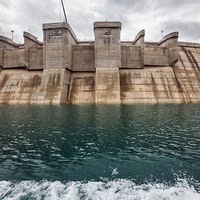
    Tehran seizes on NYT dam report to widen retaliation threats

  • How Iranians are turning grief into defiance
    OPINION

    How Iranians are turning grief into defiance

  • A cow's sit-in: why a comedy sketch struck a nerve in Iran

    A cow's sit-in: why a comedy sketch struck a nerve in Iran

  • Iran could launch dirty-bomb attack, but risks make it unlikely, experts say
    ANALYSIS

    Iran could launch dirty-bomb attack, but risks make it unlikely, experts say

  • Iran's wartime rallies turn against officials, fuel political feuds

    Iran's wartime rallies turn against officials, fuel political feuds

  • How Thai clerics in Iran were recruited to attack Israeli embassy in Bangkok
    EXCLUSIVE

    How Thai clerics in Iran were recruited to attack Israeli embassy in Bangkok

  • Iraq’s move on militia stronghold may do little to curb Iran’s influence
    ANALYSIS

    Iraq’s move on militia stronghold may do little to curb Iran’s influence

•
•
•

More Stories

A tough winter for Iran's cement industry, a tougher one for steel

Nov 19, 2026, 04:13 GMT+0
•
Umud Shokri
100%
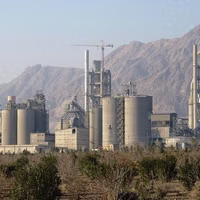
File photo: Tehran Cement factory has faced restrictions because of environmental concerns over air pollution in nearby populated areas of Iran's capital

The question facing Iran’s steel and cement industries this winter is not simply whether their gas supplies are cut, but how much they can continue producing afterward.


Iran faces a peak gas deficit of about 430 million cubic meters daily, compared with 300 million before US-Israeli strikes damaged its energy infrastructure.

Households take priority, but how much of the shortfall will fall on either industry remains uncertain.

Cement needs heat, which can come from alternative fuels. Much of Iranian steelmaking, however, needs gas to transform iron ore itself.

A cement factory that loses natural gas may still have a working kiln tomorrow. A steel plant that loses the gas feeding its iron-reduction unit may not.

Cement: The challenge of getting fuel

Iran's grey-cement producers were receiving only five to eight million cubic meters of gas daily against normal industry demand of 28 million before losing the remainder in late October, according to Tasnim. Most had already turned to mazut, a heavy fuel oil.

Iran nevertheless produced 6.44 million tonnes of clinker in October. That provides a baseline before the cutoff, not evidence that production continued at the same rate afterward.

Using the International Energy Agency's energy benchmark, maintaining October's clinker output without gas would require approximately 19 million liters of mazut daily, equivalent to about 760 deliveries by 25,000-liter tankers.

These are estimates, not forecasts. Kilns differ in efficiency, and the fuel must actually arrive. Losing 200 tanker deliveries would mean losing enough heat to produce roughly 54,000 tonnes of clinker daily, assuming no backup fuel.

Cost is another obstacle. Tasnim reported mazut transport charges of 2,000–2,500 tomans per liter. At 19 million liters, trucking alone would cost 38–47.5 billion tomans daily, excluding fuel purchases. Power plants also compete for the same tankers and mazut.

Iran International reported that 22 cement factories stopped their kilns in December 2024. Tehran Cement could not burn mazut because of pollution restrictions near populated areas. A 2026 report described Lamerd Cement operating at around 60 percent of capacity over the preceding two years because its distance from fuel suppliers made reliable mazut deliveries uneconomic.

Having an alternative fuel, in other words, does not guarantee that a factory can use it.

Cement can outlast its kilns, briefly

Even when a kiln stops, a grinding mill can turn stored clinker into finished cement, provided electricity remains available. This can conceal the scale of disruption.

In July, clinker production fell nearly 39 percent year-on-year, while cement production rose 5 percent.

October cement output averaged approximately 214,000 tonnes daily. Assuming clinker accounts for 80 percent of finished cement, sustaining that rate with every kiln stopped would consume about 171,000 tonnes of stored clinker each day.

At that pace, one million tonnes of accessible clinker would last fewer than six days. Maintaining production for a month would require more than five million tonnes. National inventories are not publicly verified.

October's exports included 668,000 tonnes of cement and 285,000 tonnes of clinker, adding to competition for available supplies. Slower production can stretch stocks but reduces sales, while electricity shortages can stop grinding mills even sooner.

Steel: Gas is an ingredient

Iran's electric-furnace steel industry is particularly exposed because much of it relies on direct-reduced iron, also known as sponge iron.

In these plants, natural gas is converted into hydrogen and carbon monoxide to remove oxygen from iron ore.

Iran produced about 14 million tonnes of sponge iron during January–June 2026. Using a published benchmark of 265 cubic meters of gas per tonne of sponge iron, maintaining that production rate would require approximately 20.5 million cubic meters of gas daily.

A daily gas reduction of five million cubic meters could put roughly 19,000 tonnes of sponge-iron production at risk; a ten-million-cubic-meter cut could put 38,000 tonnes at risk.

These are estimates of potential exposure, not predictions of actual production losses.

Plants also cannot necessarily operate at half capacity when their gas supply is halved. Iron-reduction units require specific gas flows, temperatures and chemical conditions. Below certain levels, an entire unit may have to shut down.

Where the alternatives run out

Steelmakers can keep their furnaces running for a time by using stored sponge iron, purchasing other iron materials or increasing their use of scrap metal. Iran's smaller blast-furnace operations also rely on a different production process.

Replacing just ten days of Iran's recent sponge-iron output would require around 770,000 tonnes of suitable material. Finding that much would be difficult when supplies are tight, prices are high and electricity shortages are already disrupting operations.

Some steel production could therefore continue after gas supplies are cut, but maintaining normal output would become difficult as available materials run low.

Cement producers have more flexibility, but their experience shows that fuel substitution depends on delivery, cost and permission to burn alternative fuels. Neither industry's losses can be reliably forecast without knowing how much fuel and material individual factories have in reserve.

Both industries may continue producing after gas supplies are cut, but their output will depend on the availability and cost of alternative fuels and raw materials.

What matters this winter is not simply whether factories remain open, but how much they can produce, at what cost and for how long.

Trump says he won’t ask Xi or Putin for help on Iran

Nov 19, 2026, 03:46 GMT+0
100%
US President Donald Trump, Russian President Vladimir Putin and China’s President Xi Jinping attend a photo session before the welcome banquet at the Asia-Pacific Economic Cooperation (APEC) summit in Shenzhen, Guangdong province, southern China, November 18, 2026. Iori Sagisawa/Pool via REUTERS

US President Donald Trump said Wednesday in an interview with Fox News that he would not ask Chinese President Xi Jinping or Russian President Vladimir Putin for help ending the war with Iran.

The three leaders are scheduled to meet Thursday afternoon in Shenzhen, China, on the sidelines of the Asia-Pacific Economic Cooperation (APEC) summit.

Speaking to Fox News senior White House correspondent Jacqui Heinrich in Shenzhen, Trump said: “We don't need any help. We've defeated their navy. We've defeated their air force. We've defeated their anti-aircraft.”

“I'm not going to go in asking for help,” he said, adding that the United States had total control of the Strait of Hormuz.

Earlier this week, Trump said he planned to discuss Iran, the war in Ukraine, nuclear arms control and trade with Xi and Putin. The precise agenda remains unclear.

The diplomatic gathering also comes amid differences between Washington, Beijing and Moscow over trade and international security. Xi criticized trade protectionism and called for open trade, while Putin said Western sanctions imposed on Russia over the war in Ukraine had backfired.

Trump also told Fox News that a preliminary agreement with Iran reached in Islamabad had been “a waste of time,” while pledging to bring the war to an end soon.

“I want a deal that can be lasting,” he said. “I'm going to finish it off — soon. One way or the other, we'll finish it off.”

He praised the US naval blockade of Iran as Washington's most effective measure and said the preliminary understanding had allowed the administration to assess Tehran's approach to negotiations.

The comments came amid reports that Washington was considering renewed military action against Iran. The New York Times reported Wednesday that Trump was weighing another round of extensive strikes, although no decision had been made.

Trump warns of Iran's chemical, biological weapons

Trump also said there were indications Iran was exploring chemical and biological weapons following US efforts to curb its nuclear program.

“There is an indication that Iran is looking at gas, is looking at bio, because we've shut them out with the nuclear,” he told Fox News.

Asked about reports of a possible Iranian plot to detonate a radioactive dirty bomb in Washington, Trump warned of retaliation.

“If it does happen, we wipe them out,” he said.

CNN reported Monday, citing seven US officials, that intelligence indicated Iran was developing plans to potentially target senior Trump administration officials in Washington with a radioactive dirty bomb or chemical weapon.

US officials differed over whether Iran had the capability or intention to carry out such an attack, according to CNN.

The New York Times also reported Wednesday that US Treasury Secretary Scott Bessent's relocation to a military base was linked to Israeli intelligence about an Iranian plot to use chemical agents against senior American officials, citing a person briefed on the intelligence.

Bessent's relocation linked to Iran chemical threat – NYT

Nov 19, 2026, 01:42 GMT+0
100%
US Treasury Secretary Scott Bessent speaks during the National Committee on US-China Relations 60th Anniversary Gala Dinner in New York City, US, November 10, 2026. REUTERS

US Treasury Secretary Scott Bessent's relocation to a military base was linked to Israeli intelligence about an alleged Iranian plot to use chemical agents against senior American officials, The New York Times reported Wednesday, citing a person briefed on the intelligence.

Bessent relocated from his Washington-area home to a military base earlier this month following threats attributed to Iran. In a Friday interview with CNBC, he said he had followed Secret Service instructions and would not be intimidated by the threats.

The Treasury secretary has spearheaded Washington's economic pressure campaign against Iran, including Operation Economic Outcast, launched in August to tighten sanctions and financial restrictions and pressure Tehran to reopen the Strait of Hormuz.

The reported threat comes amid broader US intelligence concerns about possible Iranian attacks against senior American officials.

CNN reported Monday, citing seven US officials, that intelligence indicated Iran was developing plans to potentially target senior Trump administration officials in Washington with a radioactive dirty bomb or chemical weapon.

US officials differed over whether Iran had the capability or intention to carry out such an attack.

President Donald Trump said Tuesday that Washington was examining the intelligence and warned Iran of severe consequences if it carried out an attack.

“Well, if there is, they will pay a price the likes of which no country has ever paid before,” Trump told reporters in Manila when asked whether an attack was imminent.

Secretary of State Marco Rubio said Wednesday that he did not believe Washington faced an imminent threat.

“I don't think there is any imminent threat,” Rubio told reporters, adding that US authorities remained alert to potential dangers.

Iran's Foreign Ministry rejected the allegations as baseless. The White House said it was monitoring potential threats but had identified no credible threat to the US homeland at that time.

Israeli officials have also warned that Iran could equip drones with chemical or biological weapons to attack Israel or neighboring countries, according to the Times.

US intelligence officials have identified indications of Iranian efforts to strengthen chemical and biological weapons capabilities, the newspaper reported. However, the Times said US intelligence officials largely assessed that Iran was developing those capabilities as a deterrent against major US or Israeli attacks, rather than for preemptive use.

US Director of National Intelligence Jay Clayton told a congressional hearing Wednesday that threats from Iran against Americans at home and abroad had increased substantially, although he declined to discuss specific intelligence about the reported Washington attack plot.

Tehran threatens oil routes, wider missile strikes amid US sanctions

Nov 18, 2026, 23:16 GMT+0
100%
FILE PHOTO: Iranian missiles are displayed at the Islamic Revolutionary Guard Corps (IRGC) Aerospace Force Museum in Tehran, Iran, November 12, 2025.

US officials warned Wednesday of Iranian threats against Americans and sanctioned Tehran-linked networks, while Iranian officials threatened regional oil infrastructure, missile strikes and revenge for Ali Khamenei's killing.

In written testimony submitted to the House Homeland Security Committee, FBI Deputy Director Christopher Raia accused Iran of espionage, cyber operations and plots against American officials and dissidents, citing 18 Iran-related counterintelligence and espionage arrests since President Donald Trump returned to office.

Homeland Security Secretary Markwayne Mullin warned that Iranian cyber operatives increasingly targeted US transportation, healthcare, water, energy and financial services.

Director of National Intelligence Jay Clayton also described a substantial increase in threats from Iran, particularly plots targeting Americans at home and abroad.

Washington's response extended to Iran's regional financial networks, with the Treasury Department sanctioning a Hezbollah-linked charity and a gold-and-cash smuggling network in Lebanon and Turkey.

The department said the network transferred funds from the Revolutionary Guards' Quds Force to Lebanon on Hezbollah's behalf, while Treasury Secretary Scott Bessent pledged continued action against Tehran's financing operations.

Iranian officials warn of retaliation and wider attacks

In Tehran, officials issued a series of threats of their own. The Intelligence Ministry said it was awaiting an opportunity to avenge the killing of former Supreme Leader Ali Khamenei and other Iranian officials, while Ahmadreza Pourkhaghan, head of the armed forces' judicial organization, called for identifying and targeting US and Israeli military bases in the region.

The warnings extended to Iran's missile capabilities. Deputy Basij chief Ghasem Ghoreishi said Supreme Leader Mojtaba Khamenei had ordered the armed forces to extend their missile range, while Army Chief Amir Hatami warned of a stronger response to “adversaries' mistakes.”

Hassan Ghashghavi, spokesman for parliament's national security committee, went further, saying: “Today, the enemy does not know on which continent the Islamic Republic’s missiles will land.” He also dismissed the prospect of concessions to Washington.

Earlier Wednesday, the US military warned that vessels receiving Iranian cargo through ship-to-ship transfers could face seizure or other enforcement action under Washington's naval blockade.

Deputy Parliament Speaker Hamidreza Haji Babaei turned his attention to regional energy infrastructure, calling for attacks on oil pipelines and ship-to-ship transfers bypassing the Strait of Hormuz.

He argued that other countries should be prevented from exporting oil while Iran's exports remained blocked and threatened energy facilities in countries allowing attacks on Iran from their territory.

Wednesday's developments reflected an increasingly confrontational exchange, with Washington targeting Iranian security and financial networks while Tehran threatened to expand the geographic reach and economic consequences of any renewed conflict.

Baghdad readies for ‘zero hour’ at militia stronghold after IRGC Qaani visits Iraq

Nov 18, 2026, 23:01 GMT+0
100%
A member of the Iraqi armed group Kataib Hezbollah looks on from a vehicle in Jurf al-Sakhar, Babil province, Iraq, November 17, 2026. REUTERS

Iraq's army was awaiting orders Wednesday to take control of a stronghold of Iran-backed Kataib Hezbollah south of Baghdad, as reports emerged that IRGC Quds Force commander Esmail Qaani had met Iraqi Prime Minister Ali al-Zaidi to help defuse the escalating standoff.

“The army is awaiting zero hour to move and take control of the area of Jurf al-Sakhar,” Defense Ministry spokesperson Yahya Rasool said, according to Lebanese newspaper An-Nahar, adding that the operation would follow a plan approved by Prime Minister Ali al-Zaidi.

Rasool said security forces were coordinating their efforts and expressed hope that the operation would proceed without confrontation. According to the Defense Ministry, the army would protect energy transmission lines and help displaced residents return to the area, provided they were not wanted by judicial or security authorities.

Earlier Wednesday, Iraq's armed forces command approved a plan to deploy army, federal police and Popular Mobilization Forces (PMF) units to take control of Jurf al-Sakhar, a stronghold of Kataib Hezbollah. Under the plan, an army brigade, a federal police brigade and two PMF brigades would each take responsibility for a sector, while energy police would secure oil pipelines.

The planned deployment follows a warning Tuesday from Kataib Hezbollah that it would confront government forces if they attempted to enter Jurf al-Sakhar, which the group has controlled for more than a decade.

“If a war is imposed on us we will fight,” a Kataib Hezbollah official told journalists visiting the area, according to the Associated Press.

The standoff poses a test of Zaidi's efforts to bring Iran-backed armed groups under state control, amid concerns about possible fighting.

Two Kataib Hezbollah officials told AP Tuesday that Qaani, commander of the Islamic Revolutionary Guard Corps' Quds Force, arrived in Baghdad on Monday to help mediate the dispute between the militia and Iraqi authorities.

Iraqi Kurdish outlet Rudaw reported Wednesday, citing two senior Iraqi officials, that Qaani met Zaidi on Monday night and was told the militia must withdraw peacefully or face intervention by Iraqi security forces.

The tensions intensified after Iraqi authorities launched an investigation into allegations that Kataib Hezbollah had used Jurf al-Sakhar, in Babil province about 60 kilometers southwest of Baghdad, to smuggle oil worth tens of millions of dollars.

Iraqi lawmaker Ali Anhair told the state-run Iraqi News Agency (INA) that investigators reviewed documents and surveillance footage showing about 25 tanker trucks, each capable of carrying 36,000 liters of oil.

“The reports reviewed by the committee were shocking and included evidence and documents proving the existence of smuggling operations in Jurf al-Nasr, supported by photographs, videos and footage captured by drones,” he said.

Authorities also dismissed nine security and administrative officials and referred suspects to the judiciary.

Kataib Hezbollah denied the smuggling allegations. An official from the group told journalists visiting Jurf al-Sakhar on Tuesday that two facilities in the area refined oil solely to fuel its vehicles and electricity generators, AP reported.

The United States has backed efforts to disarm Iran-backed militias in Iraq as part of its broader push to reduce Tehran's regional influence. The United States designated Kataib Hezbollah as a foreign terrorist organization in 2009.