Rubio says Iran's demands are 'outrageous and ridiculous,' talks unproductive
US Secretary of State Marco Rubio said Sunday that diplomatic efforts with Iran had so far been unproductive because Tehran's demands were unacceptable and unrealistic, speaking to reporters upon arriving in France for a G7 foreign ministers' meeting.
“Right now it hasn't been very productive because the Iranian demands are simply not just unacceptable, but in some cases outrageous and ridiculous and really not realistic,” Rubio said.
He said Washington would explore a diplomatic solution if an opportunity emerged, although such efforts were not always possible.
Rubio also defended President Donald Trump's handling of Iran, saying he had confronted a longstanding threat that previous presidents had failed to address.
“The president took on something that other presidents have failed to do,” Rubio said, adding that confronting difficult security challenges was sometimes unpopular but necessary.
Asked about possible US military action, Rubio said American forces would respond defensively to threats against US personnel or commercial shipping in the region.
“If there's a threat to shipping or to our forces in the region, we have a right to defend ourselves,” he said.
US President Donald Trump campaigns ahead of midterm elections, in San Antonio, Texas, US, October 7, 2026. REUTERS/Callaghan O'Hare
US President Donald Trump said Sunday that further strikes on Iran were unlikely if negotiations produced a strong agreement, even as fresh explosions in southern Iran and attacks on shipping near the Strait of Hormuz underscored the risk of renewed fighting.
In a telephone interview with CNN, Trump said it was “highly unlikely” that another attack would be necessary if Iran agreed to a strong deal. He nevertheless warned that the United States had identified potential infrastructure targets, including 38 bridges that he said could be destroyed within an hour if fighting resumed.
The US and Israeli militaries had prepared for the possibility of renewed strikes against Iran over the weekend, but Trump ultimately issued no order to attack, The Jerusalem Post reported Sunday, citing two sources.
Israeli Prime Minister Benjamin Netanyahu met with senior security officials Friday, while two diplomatic sources told the newspaper that Trump had given Vice President JD Vance and other senior administration officials “a few days” to reach an agreement with Tehran.
The comments came amid Qatar's efforts to mediate between Washington and Tehran. A senior Iranian official told Reuters that Tehran had submitted a nuclear proposal through Doha, but further discussions depended on Washington meeting Iranian demands, including sanctions relief, access to frozen assets and war reparations. The United States insists that nuclear issues be addressed in initial talks.
Iranian Foreign Minister Abbas Araghchi said Sunday that mediators had been inactive for several days following the US midterm elections and that more time was needed before diplomatic efforts could resume.
He also reiterated Tehran's proposal to reopen the Strait of Hormuz within two days if its conditions were met, including an end to hostilities on all fronts, warning of military retaliation if Washington chose renewed war.
Explosions and maritime confrontation
The diplomatic uncertainty coincided with a series of explosions reported along Iran's southern coast, where the Strait of Hormuz remains a focal point of the confrontation.
Iranian media reported four explosions on Qeshm Island and further blasts in Bandar Abbas on Sunday, following reports of explosions around Qeshm, Jask and Sirik on Saturday.
The IRGC-affiliated Tasnim news agency reported Sunday that a projectile fired by US forces had struck Qeshm, but the claim could not be independently verified.
Earlier, Tasnim had reported that two missiles struck the island during Saturday's incidents, while Iranian state television said officials had not confirmed missile strikes on Iranian territory and suggested that some explosions might be related to Iranian military activity.
Washington had previously acknowledged limited strikes against Iranian air defenses on Qeshm on November 2, describing the operation as a defensive response to Iranian surface-to-air missile activity against US assets.
The confrontation has also continued at sea, where Washington and Tehran are imposing competing restrictions on commercial shipping.
The IRGC said two oil tankers had caught fire after striking mines while attempting to pass through what it called an unauthorized route in the Strait of Hormuz. The semi-official Fars news agency separately reported that a third tanker had suffered an explosion and caught fire. The claims could not be independently verified.
Separately, the United Kingdom Maritime Trade Operations (UKMTO) reported Sunday that a tanker had been struck by an unidentified projectile while sailing out of the Strait of Hormuz on Saturday. Another tanker caught fire near Khasab, Oman, prompting its crew to evacuate. It was unclear whether these incidents were connected to those reported by Iran.
The shipping incidents came alongside a US operation Saturday in which American forces said they disabled a commercial vessel in the Gulf of Oman after its crew ignored repeated warnings and attempted to breach Washington's naval blockade of Iran.
The US military said an aircraft fired precision munitions at the stern of the St. Kitts-flagged M/V Huda, disabling the vessel.
Washington is also seeking to extend its restrictions beyond maritime routes. US Central Command announced Task Force Iron Gate, an initiative intended to disrupt the movement of advanced weapons, dual-use technology, sanctioned materials and illicit revenue through Iran's land borders and the Caspian Sea.
Trump said Sunday that the task force was operating at full strength and claimed the naval blockade had severely restricted the movement of goods into and out of Iran. The IRGC dismissed the initiative, saying efforts to isolate Iran through its land borders would fail.
Regional attacks deepen the disruption
Regional tensions also intensified Sunday as the Saudi-led coalition said its air defenses had intercepted two ballistic missiles and two cruise missiles launched by Yemen's Iran-backed Houthis toward Riyadh and other parts of the kingdom.
Falling debris damaged an administrative building belonging to Saudi Aramco in Riyadh's financial district, although Saudi authorities reported no casualties. The Houthis said they had targeted Saudi oil and other facilities, while Saudi officials did not establish a direct link between the interceptions and the damage to the building.
In Iraq, an explosive-laden drone struck the Khor Mor gas field in the Kurdistan Region's Sulaymaniyah province, causing a fire and prompting a suspension of production. The regional electricity ministry said nearly 2,800 megawatts of electricity generation had been lost from the grid. Responsibility for the attack remained unclear.
The attacks added to the regional disruption caused by the confrontation, particularly to energy supplies and infrastructure, while Washington and Tehran remained divided over the terms of a settlement.
The strait remains central to both the military confrontation and diplomatic negotiations. With Iranian forces continuing to enforce their own shipping restrictions and Washington expanding its blockade, Trump's willingness to avoid further strikes has yet to resolve the dispute over access to the waterway.
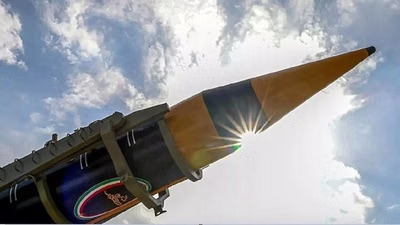
تصویری از ویدیوی منتشرشده سنتکام در ۱۴ اسفند ۱۴۰۴ که به گفته ارتش آمریکا، یک پرتابگر موشک ایرانی را نشان میدهد
Task Force Iron Gate, a new US team targeting weapons shipments and other illicit flows across Iran’s land borders and the Caspian Sea, may not fully close Iran’s northern supply routes but could make the arms and equipment Tehran needs harder to obtain.
Success will depend less on Washington’s ability to track shipments than on persuading governments, banks and suppliers to stop them.
According to CENTCOM’s November 7 announcement, Iron Gate consists of roughly 20 civilian and military personnel based in Tampa, coordinating with other US agencies.
It follows a naval blockade that CENTCOM estimates has prevented more than $25 billion in crude exports, giving Tehran greater incentive to develop alternative supply routes.
The task force adds coordination capacity, but its announcement offers no indication of new authority to board vessels in the Caspian or access neighboring countries’ ports.
A graphic released by CENTCOM on November 7, 2026, outlining Task Force Iron Gate’s focus on Iran’s land borders and the Caspian Sea alongside the existing US naval blockade.
Washington’s leverage lies upstream
A June CSIS assessment argues that Iran needs imported machine tools, electronics and engines to rebuild its military industries. It identifies the Caspian and Pakistan as possible alternatives to disrupted procurement through the United Arab Emirates.
Washington’s strongest leverage may lie with suppliers before those goods reach the region. A distributor with customers in Europe or access to American finance has more to lose than an Iranian shipping company already under sanctions.
Finding that distributor and giving its government evidence of a prohibited sale may achieve more than tracking the vessel carrying the goods.
In September 2024, the State Department designated Russian shipping companies and identified vessels it said transported Iranian military equipment across the Caspian to Russia.
Those measures targeted supplies leaving Iran rather than entering it, but provide an enforcement precedent. They can expose suppliers and discourage businesses from handling their cargo, while offering less leverage over operators whose owners and host governments accept the consequences.
Iron Gate’s better opportunity lies in equipment Iran struggles to replace. A factory awaiting an essential component may remain idle even while food imports grow.
The distinction matters: restricting military procurement does not require closing ordinary commerce, and rising trade volumes would not necessarily mean the task force had failed.
Russia’s role limits US options
Russia poses the hardest problem. Its military relationship with Iran gives Moscow reasons to keep transport connections open, limiting Washington’s prospects of securing cooperation along a major northern route.
In an October analysis for the Yorktown Institute, Nikita Smagin describes expanding Caspian commerce alongside shipping shortages, port limitations and rising freight costs.
The corridor offers Tehran relief but lacks the capacity to replace its southern gateways. That does not mean it cannot carry smaller volumes of militarily important equipment and components.
These constraints could make individual shipments more vulnerable to disruption. They also complicate any assessment of enforcement: congestion, shallow water and seasonal conditions can slow deliveries without American intervention.
Pressure could leave Tehran more reliant on Moscow if other suppliers withdraw while Russian routes stay open.
Iran would then have less room to bargain, while the military partnership Washington hopes to weaken could survive. Economic dependence and military supply would not necessarily move in the direction Washington intends.
Neighbors need different bargains
Kazakhstan illustrates the tension between financial pressure and regional transport ambitions. In May, Deputy Prime Minister Serik Jumangarin said payment risks had stalled contracts with Iran.
A month later, Kazakhstan signed an agreement for a logistics terminal at Iran’s Shahid Rajaee port.
Although the port is on Iran’s southern coast, the project demonstrates Astana’s wider interest in maintaining transport links through Iran. Financial pressure can discourage traders even while their government pursues closer connections.
Washington may therefore have more influence over specific prohibited transactions than over Kazakhstan’s broader commitment to those links.
Azerbaijan suspended cargo crossings on March 5, 2026, after accusing Iran of a drone attack on its territory, then reopened them on March 9.
That episode was a security dispute rather than a sanctions-enforcement test, so it does not establish how Baku would respond to US requests.
The brief closure nevertheless cautions against assuming Azerbaijan would sustain a broad interruption of trade. Requests to inspect specific suspect shipments may have better prospects than demands to shut a major route indefinitely.
Turkmenistan also sees value in keeping Iranian routes open. Its foreign ministry reported talks in September 2025 on increasing transit cargo and developing the China–Kazakhstan–Turkmenistan–Iran railway.
These projects are not evidence of wrongdoing, but they help explain why Ashgabat might resist sweeping restrictions.
Requests to stop weapons shipments backed by clear evidence may find a more receptive audience, although the task force announcement offers no indication that Turkmenistan has agreed to cooperate.
The test is military production
Iranian buyers can change intermediaries more easily than they can replace scarce equipment or technical expertise. Enforcement needs to follow those dependencies rather than simply add names to sanctions lists.
Useful measures of success would include documented procurement failures, interrupted payments, longer waits for critical components and confirmed interceptions of prohibited shipments.
The ultimate test is whether those obstacles constrain the restoration of Iranian military production.
Iron Gate’s best chance lies in restricting difficult-to-replace military inputs while securing cooperation neighboring governments can sustain.
Otherwise, Washington risks making trade more cumbersome—and Iran more dependent on Russia—while leaving its essential military supply relationships intact.
Road workers inspect a muddy road damaged by flooding in Iran.
Severe weather and flooding across Iran have killed four people, injured 11 and cut off access to 190 villages, with emergency teams responding to widespread damage, officials said on Sunday.
Severe weather and flooding across Iran have killed four people, injured 11 and cut off access to 190 villages, with emergency teams responding to widespread damage, officials said on Sunday, November 8.
Two of the fatalities were caused by lightning strikes in Khuzestan province, national emergency services spokesman Mojtaba Lashgari told ISNA.
Lashgari said the 11 injuries were recorded in Kohgiluyeh and Boyer-Ahmad, Khuzestan and Bushehr provinces since November 6.
The storms also caused fallen trees and electricity poles, road closures, traffic accidents, building damage and temporary disruptions to water, power and telephone services, he added.
Flooding isolates villages
Heavy rainfall cut off access to 190 villages in Lorestan province, while damage to gas distribution lines and electricity infrastructure disrupted supplies to several communities, Mehr news agency reported.
Borujerd Governor Ghodratollah Valadi said six villages in the county faced flooding risks, with an evacuation ordered in Tang-e Mohammad Hajji because of the threat of landslides.
In Aligudarz, flooding along the Zez River stranded nomadic communities and destroyed much of their livestock and property, Tasnim news agency reported.
Rescue workers also evacuated seven women and children trapped by flooding in Lordegan.
Floodwaters reached Chelchelak village in Khuzestan and inundated streets in Suq, Kohgiluyeh and Boyer-Ahmad province.
Heavy rain flooded streets in Bushehr and Bandar Genaveh on Sunday, while footage showed the Qom River overflowing.
Emergency response continues
The Kandovan road between Karaj and Chalus experienced six floods within 48 hours, with road crews clearing mud and debris to reopen affected sections.
In Tehran province, water levels rose in the Kan River, with floodwaters flowing through its riverbed. Tehran emergency services said no injuries had been reported from rainfall or flooding in the province's mountainous areas.
National Crisis Management Organization spokesman Omid Mohtarami said around 1,600 people had received direct emergency assistance.
Mohtarami said 18,000 operational teams were working in flood-affected areas, with another 8,000 support teams on standby.
Red weather warnings remained in effect in several provinces, with maritime red alerts issued for Gilan and Mazandaran for Monday, November 9.
Ships sail through the Strait of Hormuz near Bandar Abbas, southern Iran, October 6, 2026.
Iran's Revolutionary Guards warned ships against cooperating with US forces after reporting three tankers on fire in the Strait of Hormuz, while Houthis targeted Saudi Arabia and Israel warned of unfinished operations against Iran on Sunday.
The Revolutionary Guards said three oil tankers caught fire after taking what they described as an unauthorized route through the Strait of Hormuz.
The Guards linked the fires to vessels disabling their navigation and identification systems and cooperating with US forces, warning that ships defying transit rules and accompanying the US military would face similar consequences.
The UK Maritime Trade Operations center separately reported that a tanker was struck by an unknown projectile while sailing outbound through the strait on Saturday. All crew members were safe, and no environmental damage was reported.
UKMTO also received a report of another tanker catching fire near Oman's Musandam Peninsula, prompting the evacuation of its crew. Authorities were investigating both reports.
Houthi attacks on Saudi Arabia
Saudi-led coalition forces intercepted two ballistic missiles launched toward Riyadh by Yemen's Houthis, followed by two cruise missiles targeting Riyadh and southern Saudi Arabia, according to coalition statements.
The coalition also reported intercepting a Houthi drone aimed at the kingdom's southern region.
Saudi Arabia's Energy Ministry said falling debris damaged an Aramco administrative building in Riyadh without causing casualties. Reuters reported that windows were blown out across several floors of the building.
A separate tower in Riyadh's King Abdullah Financial District was also damaged by a projectile, Reuters reported, citing witnesses and people briefed on the matter.
The Houthis later announced that they had targeted King Khalid International Airport, Saudi Aramco oil storage tanks and a financial center in the Saudi capital.
Israel warns Iran over nuclear activities
Israel's Defense Minister Israel Katz said the country's mission against Iran's nuclear threat was not yet complete, maintaining that Tehran was renewing efforts to acquire nuclear weapons.
"Regarding Iran, the mission is not yet complete," Katz said at a memorial ceremony for soldiers killed in Operation Kadesh.
Katz also warned Hezbollah against joining a possible Iranian attack on Israel, saying the group would face a severe military response and lose additional territory.
Iranian military officials issued warnings of their own.
An adviser to the Revolutionary Guards' aerospace force said Iran had sufficient weapons reserves to defend itself for years and was continuing to reverse-engineer foreign military equipment.
Ali Balali warned that any move by Iran's adversaries would trigger a "devastating response," adding that the country's armed forces had "their fingers on the trigger."
Separately, Revolutionary Guards spokesman Hossein Mohebi dismissed a new US initiative to restrict overland routes used to transfer weapons and sanctioned goods.
Mohebi said Task Force Iron Gate, established by US Central Command, would fail to isolate Iran from its neighbors.
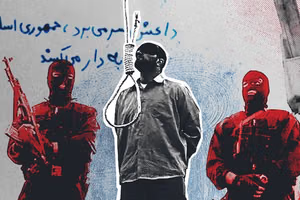
Iranians expressed anger and grief over the execution of three protesters and new death sentences against others, criticizing the United States and the international community for their response in messages sent to Iran International.
Iran's judiciary announced on November 8 that Hassan Divband, Hamid Kazemi and Reza Zanganeh, three people arrested during the January protests in Karaj, had been executed.
The executions came alongside reports of additional death sentences against protesters in the northeastern city of Mashhad.
Abolfazl Sedaghat, 20, Matin Farnian and Vahid Khedrikhah were sentenced to death on charges of moharebeh, or "waging war against God," in a joint case, according to the human rights organization HRANA.
Death sentences were also issued against Ali Zaghi and Ilya Akbari, bringing the number of protesters sentenced to death in the so-called Shandiz case to six, according to earlier reporting.
'We can no longer bear the news of executions'
"We woke up this morning to the news that three more innocent young men had been executed. I can no longer bear hearing about executions," a resident of Isfahan wrote to Iran International.
The executions prompted messages of grief and anger from people across Iran, many expressing concern about the future of younger generations.
"Every morning when we wake up, we are confronted with news of our beloved children being killed. You have taken life away from us," a Tehran resident wrote, addressing Iranian authorities.
Another from Dezful urged fellow Iranians to consider the future facing their children.
"Look at your beloved child. How can you bring yourself to leave the Islamic Republic as their inheritance? How can you bear to leave your child in line for execution and torture?" the citizen wrote.
Another, referring to discussion of possible US strikes on Iran's energy infrastructure, said the country's infrastructure was not their primary concern.
This citizen argued that the Islamic Republic's continued rule was destroying the country's infrastructure every day, from electricity and water supplies to the lives of its young people.
Questioning US response and call for continued solidarity
Several messages sent to Iran International criticized Washington's response to the executions, with some directly addressing US President Donald Trump.
"Do the human rights-defending Democrats in America not see all these crimes in Iran?" one asked, referring to the executions in Karaj.
Another described the executions as retaliation by the Islamic Republic against the Iranian people and questioned Trump's response.
"The oppressive system of the Islamic Republic cannot reach your soldiers, so it takes revenge on the Iranian people through executions. Isn't it time to fulfill your promise?" reads a message.
Other messages emphasized solidarity among Iranians and the importance of continuing efforts to seek justice for those executed.
A resident of Bandar Abbas expressed grief over the executions while thanking Iranians abroad for organizing demonstrations.
"One eye mourns the brave compatriots who lose their lives at the gallows every day, while the other sheds tears for the remarkable gatherings of compassionate Iranians who, despite all their difficulties, put their homeland first," the resident wrote.
A Tehran resident described the three executed protesters as "three stars whose names will live forever" and expressed determination to continue their cause.
"Victory is certain," the audience wrote.
Amnesty International warns over use of death penalty
Iranian authorities have intensified their crackdown in recent months through widespread summonses and arrests, lengthy prison sentences and a sharp increase in executions.
The growing use of capital punishment has also drawn criticism from international human rights organizations.
Iranian authorities are using the death penalty as a tool to suppress dissent, Diana Eltahawy, Amnesty International's deputy regional director, warned on October 13.
“The arbitrary executions of these five young men serves as another chilling reminder of how the Iranian authorities weaponize the death penalty to render the cost of dissent so high that it terrorizes the population into silence and deters further mass uprisings challenging their repressive decades-long rule,” she said.
The latest executions and death sentences have renewed expressions of grief and anger among Iranians, with messages to Iran International reflecting both frustration over the international response and determination to continue seeking justice for those killed.