• العربية
  • فارسی
BrandBrand
  • Iran Insight
  • Politics
  • Economy
  • Analysis
  • Special Report
  • Opinion
  • Podcast
  • Live TV
  • Iran Insight
  • Politics
  • Economy
  • Analysis
  • Special Report
  • Opinion
  • Podcast
  • Live TV
  • Theme
  • Language
    • العربية
    • فارسی
  • Iran Insight
  • Politics
  • Economy
  • Analysis
  • Special Report
  • Opinion
  • Podcast
  • Live TV
All rights reserved for Volant Media UK Limited
volant media logo

Iranian lawmaker demands reparations from US, threatens decisive response

Nov 6, 2026, 21:13 GMT+0

Ebrahim Azizi, chairman of the Iranian parliament's National Security and Foreign Policy Committee, said Friday that Tehran would not allow US President Donald Trump to leave the region without paying a price and reparations.

“We won’t let Trump walk away from the region without paying a price & reparations,” Azizi wrote in a post on X.

“Every mistake will be met with a decisive response until we liberate America’s largest military base, the Zionist regime, once and for all,” he added.

Most Viewed

Russia agreed to supply Iran with 90 advanced missile launchers - FT
1

Russia agreed to supply Iran with 90 advanced missile launchers - FT

2

Vance blames Iran war for election losses as Trump weighs next move against Tehran

3

Iran steps up diplomacy as Trump reels from midterm defeat

4

Iranian state TV broadcasts mock hanging of Trump live

5

Iran hardliners warn against compromise after US election shakeup

Banner

Spotlight

  • Opportunity or trap? Vance's Iran war remarks divide Tehran
    INSIGHT

    Opportunity or trap? Vance's Iran war remarks divide Tehran

  • Gas-rich Iran turns to Russia for an energy lifeline

    Gas-rich Iran turns to Russia for an energy lifeline

  • One man’s road from Westminster to the machine that carries Iran’s story abroad
    SPECIAL REPORT

    One man’s road from Westminster to the machine that carries Iran’s story abroad

  • Trump's election defeat fuels debate in Tehran over US deal
    INSIGHT

    Trump's election defeat fuels debate in Tehran over US deal

  • Why social control remains central to Tehran's survival
    ANALYSIS

    Why social control remains central to Tehran's survival

  • Inside the IRGC-linked corporate network controlling Iran’s internet
    SPECIAL REPORT

    Inside the IRGC-linked corporate network controlling Iran’s internet

Banner
Banner
Banner
Banner
Banner
Banner
•
•
•

More Stories

US urges Iranians to stay away from IRGC positions if tensions escalate

Nov 6, 2026, 20:26 GMT+0
•
Samira Gharaei
100%

A US military official urged Iranian civilians to remain indoors and stay away from Revolutionary Guards positions if military tensions escalate, telling Iran International that the IRGC was placing weapons and command centers in residential areas.

The official said the United States was concerned about the safety and security of the Iranian people.

“The IRGC has been placing military assets like weapons and command centers inside civilian neighborhoods and near homes,” the military official said.

The official accused Iran’s leadership and the Revolutionary Guards of using civilians to shield military assets while sheltering in protected locations.

“The Islamic Regime does not care about the people of Iran, as evidenced by Regime leaders and the IRGC using innocent civilians as human shields while they hide. They are hiding in fortified facilities and underground bunkers.”

The official also outlined precautions for civilians in the event of heightened tensions.

“If military tensions escalate, Iranian civilians should take appropriate precautions by remaining indoors and staying far away from the IRGC.”

“The safest place for Iranian civilians during heightened tensions is inside their home.”

The remarks follow an Iran International investigation published in March that found Iranian security and military forces had moved personnel, weapons and equipment into at least 70 civilian sites across 17 provinces during US-Israeli airstrikes.

Those sites included 34 schools, alongside hospitals, stadiums, universities, mosques, parks and government offices. Iran International could not independently verify every account but geolocated visual evidence from seven sites, all schools. Iranian officials have repeatedly denied using civilians as shields.

  • Iran’s military uses schools and civilian sites during US-Israeli war

    Iran’s military uses schools and civilian sites during US-Israeli war

The warning comes amid renewed diplomatic efforts to avert further fighting. President Donald Trump said Friday that talks with Iran were ongoing.

Qatari Prime Minister and Foreign Minister Sheikh Mohammed bin Abdulrahman Al Thani urged Washington and Tehran on Friday to accept a good deal rather than pursue a perfect one, saying the two sides had failed to reach a comprehensive agreement.

Bloomberg reported Friday, citing a diplomat familiar with the talks, that Iran was studying Qatari proposals involving nuclear issues previously off the table.

A senior Iranian official told Reuters a day earlier that Tehran had sent Washington a nuclear proposal through Qatar, but would discuss it only after the United States met its seven demands.

Khamenei sent security chief to Moscow to seek S-400 air defenses – report

Nov 6, 2026, 17:15 GMT+0
100%
File photo shows Russian S-400 missile defense system

Iran sent security chief Mohsen Rezaei to Moscow to request S-400 air defense systems in a personal letter from Supreme Leader Mojtaba Khamenei to President Vladimir Putin, The Telegraph reported Friday, citing a senior Iranian official.

A senior Iranian official told the newspaper Tehran was “optimistic” that Putin would deliver the systems, which Iran has sought for years.

Rezaei visited Moscow on Thursday, where he met the Russian president. The report did not establish that a deal had been finalized or give a delivery timetable.

The Telegraph also said confidential documents showed a secret parliamentary committee had recommended strengthening military ties with Russia and China before the war began in February. Its proposals called for building “strategic relations, especially military ones” with those powers and bolstering Iran’s “air defense, missiles and drones.”

The visit followed a phone call between Putin and Rezaei on Monday, after which no new military commitments were announced.

Alex Vatanka, a senior fellow at the Middle East Institute, told Iran International that Moscow would help Tehran so long as doing so did not risk direct confrontation with Washington.

Iran’s pursuit of the S-400 reflects the damage inflicted on its air defenses during the war, which exposed nuclear facilities and senior commanders to attack. But Moscow has stopped short of supplying the systems for years, wary of damaging relations with Israel and other regional states, analysts and regional officials told The Telegraph.

Russia’s own needs could also complicate any delivery. Analysts cited by the newspaper said Ukrainian drone and missile attacks had placed Russian air defenses under sustained pressure, limiting the systems Moscow could spare.

The talks add to evidence of expanding military cooperation. The Financial Times reported Thursday that Russia had agreed to supply Iran with 90 helicopter-mounted launchers for precision-guided missiles. A Russian production schedule identified the customer under a code used for Iran.

The partnership has developed in both directions: Iran supplied Russia with Shahed attack drones and helped establish Russian production. But analysts say Moscow continues to balance assistance to Tehran against its own war in Ukraine and relations with Washington and Middle Eastern powers, leaving the extent of its support uncertain.

Gas-rich Iran turns to Russia for an energy lifeline

Nov 6, 2026, 15:50 GMT+0
•
Umud Shokri
100%
File photo: A view shows Gazprom's Amur Gas Processing Plant near the town of Svobodny in the Amur Region, Russia September 13, 2023.

Iran, home to the world's second-largest natural gas reserves, is turning to Russia for supplies as war damage and years of underinvestment threaten to deepen an energy crisis ahead of winter.

After meeting President Vladimir Putin in Moscow on November 5, Iranian security chief Mohsen Rezaei said the two countries had discussed pipelines to ease Iran's gas shortages and supply neighbouring markets.

The proposal offers potential relief, but raises a larger question: whether Russian imports will help Iran repair its struggling energy system or merely postpone the reforms needed to make it work.

On November 1, National Iranian Gas Company chief Saeed Tavakoli said attacks on four processing facilities had removed 230 million cubic metres of daily capacity. Repairs had restored 100 million, leaving 130 million unavailable.

Tavakoli warned that Iran could face a peak winter shortfall of around 400 million cubic metres a day. The figure is an official estimate for periods of maximum demand, not a year-round deficit.

The consequences are already visible. Gas supplies to cement plants were cut from October 23, according to an industry representative, forcing factories to switch to fuel oil. Such rationing protects household heating but disrupts production, increases costs and worsens air pollution.

The US Energy Information Administration estimated that the country produced 9.4 trillion cubic feet of gas in 2023 while consuming 8.9 trillion, leaving a narrow margin that conceals much sharper winter shortages.

Heavily subsidised prices encourage consumption, while inadequate investment, limited storage and restricted access to technology constrain supply. The giant South Pars field also needs investment to counter declining reservoir pressure.

Sanctions have obstructed financing and equipment purchases, but Tehran's policies have compounded the problem. Expanding dependence on cheap gas without sufficient investment in efficiency and production has left the economy vulnerable whenever temperatures fall.

Russian imports could provide breathing space. They cannot correct those weaknesses by themselves.

Iran and Russia have discussed gas cooperation for more than two years, but announcements have repeatedly outpaced delivery. Gazprom and the National Iranian Gas Company signed a memorandum in June 2024.

In January 2025, Putin outlined initial supplies of 2 billion cubic metres annually, potentially rising to 55 billion. Iranian officials announced further progress in October 2026, but a firm delivery date and financing for a major pipeline remain unclear.

Two billion cubic metres annually averages just 5.5 million cubic metres a day, less than 2% of Iran's estimated peak winter shortfall. Even the ambitious target of 55 billion annually averages about 151 million cubic metres a day.

These comparisons illustrate scale rather than guaranteed winter deliveries, which would depend on contracts, pipeline capacity and seasonal demand. Initial imports could help particular regions or industries but would make only a modest difference nationally.

Existing infrastructure through Azerbaijan could carry limited initial supplies. Reaching the larger target would require substantial investment in pipelines and equipment, transit agreements and reliable delivery arrangements.

Commercial terms also remain uncertain. Pricing and payment arrangements were still unresolved earlier this year, and subsequent announcements have not disclosed the details. Selling imported gas into Iran's heavily subsidised domestic market could increase pressure on public finances.

US sanctions could complicate financing and payments, although certain natural gas transactions are exempt from specific restrictions. Other sanctions affecting banks, contractors and designated companies would still need to be navigated.

For Moscow, the attraction is clear. Having lost much of its European pipeline market, Russia needs alternative buyers. Iran offers substantial demand and potential access to neighbouring markets.

But the partnership could come with unequal leverage. Tehran urgently needs gas, infrastructure and financing, while Moscow has supplies to sell. Dependence on Russian equipment, funding and deliveries could leave Iran with fewer options when negotiating prices and future commitments.

The arrangement also fits Tehran's ambition to become a regional gas trading hub. Yet that ambition faces a basic credibility test: can Iran reliably supply neighbouring countries when it struggles to meet domestic demand during winter?

Russian gas could support regional trade, but Iran risks becoming primarily a route for Russian exports without gaining meaningful control over prices or supply.

Ultimately, imports could help keep factories operating and reduce emergency fuel switching. Lasting energy security, however, requires repairing damaged facilities, sustaining production at South Pars and improving efficiency, alongside gradual subsidy reform that protects poorer households.

For a country with the world's second-largest gas reserves, the need to import is itself a measure of striking energy system deterioration. Whether the arrangement helps reverse that decline or just deepens Tehran's dependence on Moscow matters far more than the volume of gas promised.

Iran-linked ships go dark over Persian Gulf internet cables after threats - FT

Nov 6, 2026, 13:08 GMT+0
100%
Vessels at the Strait of Hormuz, as seen from Musandam, Oman, October 12, 2026.

Ships linked to Iran looped, loitered and went dark over undersea internet cables in the Gulf of Oman in the weeks after Tehran threatened the region’s digital infrastructure, the Financial Times reported on Friday. One of them had been boarded by US Marines in May.

At least four vessels tracked by the maritime analytics firm Windward took unusual routes and lingered over cable corridors off Oman in October, the FT said. Three were tankers under US sanctions. The fourth was a small Iranian fishing boat with no known owner.

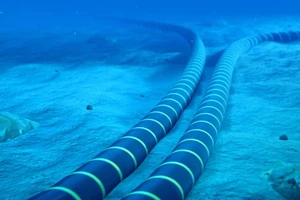
  • IRGC threatens undersea cables, but can it disrupt global internet?

    IRGC threatens undersea cables, but can it disrupt global internet?

The ships sailed normally “until they reached a specific cable corridor, and only then slowed, looped, turned back, loitered or went dark,” Windward told the newspaper. That behavior “fits the profile of mapping the cable routes, or placing charges or mines on them while dark,” it said.

86 hours in the dark

The most striking case is Celestial Sea, an Iran-flagged products tanker sanctioned by the United States last year and boarded by US Marines in the Gulf of Oman in May on suspicion of trying to run the American blockade.

On October 14 it drifted in a loop for more than four hours beside the 2Africa cable, which will connect Persian Gulf states to Europe and the east coast of Africa, according to Windward’s October 29 report, on which the FT’s story is based. The next day it switched off its transponder inside the 2Africa and Bay of Bengal Gateway corridors off Sohar. It stayed dark for 86 hours and reappeared nine nautical miles away, made a U-turn over the second cable and anchored. It was empty the whole time.

  • Iran finds a new weapon beneath Hormuz

    Iran finds a new weapon beneath Hormuz

  • IRGC-linked media hints at threat to Persian Gulf undersea internet cables

    IRGC-linked media hints at threat to Persian Gulf undersea internet cables

A second sanctioned tanker, a gas carrier loaded with about half a million barrels of Iranian LPG, left the same anchorage for Malaysia on October 23. Ten hours out, it slowed over 2Africa, turned 180 degrees back toward Oman and went dark. Five days later it had not reappeared. A loaded ship with a buyer waiting has no cargo reason to do that, Windward said.

The third, a crude tanker operated by Iran’s state tanker company, loitered at under one knot for about ten days in Iranian waters between Jask and Chabahar, within a few miles of four cable routes, switching off its tracking repeatedly, once for 33 hours.

The fishing boat

The fourth vessel is the odd one. A 34-meter Iranian fishing-support boat whose beneficial owner has been unknown since last year drifted at under half a knot along the Europe India Gateway and Transworld cables between October 21 and 26, in waters it had never entered in two years of tracking. Then it sailed north into Iranian waters and went dark.

Fishing in Iranian waters requires a state license, Windward noted, and the Revolutionary Guards’ navy has organized fishermen and their boats into a naval Basij that its commander has called a shadow navy. Iran has used civilian hulls as intelligence platforms before: the cargo ships Saviz and Behshad fed targeting data to the Houthis off Yemen, and on October 6 US forces destroyed an Iranian-linked dhow in the Gulf of Oman that CENTCOM said was watching American warships.

The threats that came first

The ships’ movements tracked a run of Iranian warnings. On October 12 Mohsen Rezaei, secretary of the Supreme National Security Council, said “data centers and artificial intelligence facilities will be destroyed” if the war resumes. On October 19 the Guards’ spokesman, Hossein Mohebbi, said seven cables ran under the Strait of Hormuz and that “new targets and new weapons shall be unveiled.” On October 21 the Guards’ political deputy, Yadollah Javani, said the cables would be hit in retaliation for attacks on Iranian infrastructure.

Two days later, two senior Iranian security officials told Iran International that Tehran had detailed plans to target the cables if the United States and Israel attacked again, and would try to prevent repairs to prolong any outage. That was the day the gas carrier turned around.

Who would feel it

Iraq, Kuwait, Bahrain and Qatar depend entirely on cables under the strait for their international connectivity, the FT reported, citing TeleGeography. The cables’ owners include Meta, Vodafone, Orange, AT&T, Verizon, BT and China Mobile.

Masha Kotkin of the Center for Strategic and International Studies told the FT that damage would slow financial transactions and disrupt cloud computing in Persian Gulf states that are betting on digital business to diversify from oil. Threats alone had already halted construction on several cable projects, she said.

Iran International reported last month that the strait carries less than one percent of the world’s international bandwidth and that the main Europe-Asia routes run through the Red Sea, so an attack would hurt Iran’s neighbors far more than the global internet.

The experts the FT consulted held back from conclusions. Sidharth Kaushal of the Royal United Services Institute said the maneuvers could be coincidence but that “Iran might be trying to demonstrate its capacity to damage undersea infrastructure if there is a war.” Jon Pentreath, a retired Royal Navy rear admiral, said almost any vessel could be fitted to lay mines. Celestial Sea’s owner did not respond to the FT.

Three of the four ships were still dark when Windward published. Where they reappear, it said, will show whether the cables were the destination or a stop on the way.

Free prisoners first: Jalali's wife challenges Tehran's call for expats to return

Nov 6, 2026, 04:14 GMT+0
100%
Vida Mehrannia and her husband Ahmadreza Jalali, who's been imprisoned in Iran since 2016

The wife of imprisoned Swedish-Iranian researcher Ahmadreza Jalali has challenged Tehran's calls for expatriates to return home, urging authorities to first release those jailed after visiting Iran.

"If you're going to invite people, the door must first be open," Vida Mehrannia told Iran International on Tuesday. "Open that door first. Release those who are inside."

Her husband, a specialist in disaster medicine who worked at universities in Sweden, Belgium and Italy, was arrested during a visit to Iran for an academic workshop in April 2016.

He was sentenced to death on espionage charges in October 2017. Jalali denied spying for Israel and said his confession had been obtained under torture.

Mehrannia said her husband had repeatedly faced the threat of imminent execution and endured solitary confinement and prolonged hunger strikes, leaving his physical and psychological health severely damaged.

The imprisonment has also devastated their family. Their 14-year-old son barely remembers living with his father, while their daughter has completed her education during his detention, Mehrannia said.

She said Jalali had been excluded from two prisoner exchanges, including the 2024 agreement that secured the release of two Swedish citizens in exchange for former Iranian prison official Hamid Nouri.

Jalali's case is among several involving academics, dual nationals and foreign residents arrested during visits to Iran, often on espionage or national security charges.

Princeton University doctoral researcher Xiyue Wang was arrested in 2016 while examining historical archives for his dissertation. Sentenced to 10 years for espionage, the American researcher was released in a prisoner exchange in December 2019.

British-Australian academic Kylie Moore-Gilbert was arrested after attending a conference in Iran in 2018. She spent more than two years in prison on espionage charges before being exchanged for three Iranians detained abroad in November 2020.

British-Iranian charity worker Nazanin Zaghari-Ratcliffe was detained in 2016 after visiting family with her young daughter. She was released in March 2022 after nearly six years.

Mehrannia also questioned why Iranian authorities had failed to respond to repeated requests for judicial review, saying her husband had been told his case was an international matter.

She said the authorities had the power to release Jalali, whose health has deteriorated after years of imprisonment, but had repeatedly failed to act.