• العربية
  • فارسی
BrandBrand
  • Iran Insight
  • Politics
  • Economy
  • Analysis
  • Special Report
  • Opinion
  • Podcast
  • Live TV
  • Iran Insight
  • Politics
  • Economy
  • Analysis
  • Special Report
  • Opinion
  • Podcast
  • Live TV
  • Theme
  • Language
    • العربية
    • فارسی
  • Iran Insight
  • Politics
  • Economy
  • Analysis
  • Special Report
  • Opinion
  • Podcast
  • Live TV
All rights reserved for Volant Media UK Limited
volant media logo

Countries aiding US attacks would be ‘legitimate military targets,’ Iranian MP says

Oct 25, 2026, 06:15 GMT+0

An Iranian lawmaker said on Sunday that any country that allows the United States to use its territory or airspace to attack Iran would become a “legitimate military target.”

“Today, the Islamic Republic has set aside restraint to show everyone that it will not compromise on its national interests,” Ruhollah Mousavi Bideli said.

He warned regional countries against helping the US and said regional security required the withdrawal of the United States and Israel from the Persian Gulf, followed by regional states taking responsibility for their own security.

Most Viewed

US strikes on Iran now serve the blockade
1
ANALYSIS

US strikes on Iran now serve the blockade

2

US says it can sustain Iran blockade for ‘foreseeable future’

3

Iran sends conflicting signals on US deal as Trump raises prospect of strikes

4
PODCAST

Baluch insurgency tests the limits of a war-weakened Islamic Republic

5

Pakistan talks peace with Iran, defends Saudis against Tehran’s proxies

Banner
Banner
Banner
Banner
Banner

Spotlight

  • Baluch insurgency tests the limits of a war-weakened Islamic Republic
    PODCAST

    Baluch insurgency tests the limits of a war-weakened Islamic Republic

  • US strikes on Iran now serve the blockade
    ANALYSIS

    US strikes on Iran now serve the blockade

  • Salvation or tragedy? Iranians debate prospect of another war

    Salvation or tragedy? Iranians debate prospect of another war

  • More patrols, slower internet suggest Tehran is bracing for trouble
    VOICES FROM IRAN

    More patrols, slower internet suggest Tehran is bracing for trouble

  • Iran’s evasion network survives, but the crude feeding it has run dry

    Iran’s evasion network survives, but the crude feeding it has run dry

  • Once US blockaded Iran, China’s ‘Malaysian’ oil imports dried up
    ANALYSIS

    Once US blockaded Iran, China’s ‘Malaysian’ oil imports dried up

  • Istanbul meeting: A new division of labor in the Iran war?
    ANALYSIS

    Istanbul meeting: A new division of labor in the Iran war?

  • China values Iran but won't pay any price to defend it
    ONE-ON-ONE

    China values Iran but won't pay any price to defend it

•
•
•

More Stories

Iran sends conflicting signals on US deal as Trump raises prospect of strikes

Oct 25, 2026, 01:35 GMT+0
100%
Two US Air Force A-10 aircraft patrol over the Middle East in a photo released by US Central Command.

Tehran has offered to reopen the Strait of Hormuz if Washington lifted its naval blockade, Iran’s envoy to Pakistan said Saturday, while an IRGC-affiliated outlet rejected such an exchange and President Donald Trump raised the possibility of strikes as soon as “tomorrow.”

Iran’s ambassador to Islamabad, Reza Amiri Moghadam, said Tehran had conveyed through Pakistani mediators that it was prepared to reopen the strait if Washington ended its blockade of Iranian ports, the Associated Press reported.

Speaking at a seminar in Islamabad, Moghadam said Iranian officials had communicated that position during visits to Tehran by Pakistan’s army chief, Field Marshal Asim Munir. He accused Trump of rejecting the proposal by insisting the blockade would continue.

Moghadam said Iran remained open to negotiations under a Pakistan-brokered interim agreement reached in June, according to AP’s readout of his remarks.

Pakistan and Qatar helped broker that framework, which envisaged restoring shipping through the strait, lifting the blockade and beginning negotiations on a broader deal covering Iran’s nuclear program.

Al Arabiya separately reported Saturday, citing unnamed sources, that Iran had informed Pakistan it was willing to resume negotiations with Washington and reopen the strait in exchange for the blockade being lifted.

But the IRGC-affiliated Tasnim news agency quoted an informed source rejecting Al Arabiya’s account as “lies and fantasy” and saying Tehran had made no new proposal to Pakistani mediators.

“Iran fundamentally does not accept any equation of the Strait of Hormuz in exchange for the blockade,” the source said, adding that Iran would find ways around the blockade and ultimately break it.

The source said Tehran stood by seven conditions already formally conveyed through mediators. An earlier “seven-day plan” setting out its demands for reopening the strait had been passed to Washington, the source said, adding that insecurity would persist until all Iranian demands were met, including an end to disruption of its ports and shipping.

Tasnim’s denial explicitly targeted Al Arabiya’s report, rather than the ambassador’s remarks reported by AP.

US may attack Iran tomorrow

Trump, meanwhile, kept open the possibility of both military action and an agreement, saying he wanted a permanent solution to prevent Iran from developing a nuclear weapon.

“Do you really think I’m going to tell you if I’m going to do it?” Trump told reporters Saturday. “There’s a possibility I will. There’s also a possibility we’ll have a nice big beautiful agreement.”

He said Iranian leaders wanted a deal but questioned whether they would abide by it.

“They want to make a deal. But the problem is, will they hold the deal?”

Trump argued that ending the military campaign after B-2 bomber strikes in 2025 would have allowed Iran to rebuild its nuclear capabilities and eventually develop a bomb.

“I’ve got to make it permanent. That’s the only reason I’m doing it as long as I’m doing,” he said.

The Hill reported Saturday, citing two sources familiar with the planning, that the US military had prepared options for renewed strikes on Iran after November’s midterm elections.

One source said US Central Command had follow-up strike plans ready pending White House authorization. Another said multiple options were being presented to War Secretary Pete Hegseth and that Trump would keep his options open until a final decision was required.

A Pentagon official told The Hill the department’s “job is to develop and present military options to the President.”

The Wall Street Journal reported earlier in the day that US naval forces are preparing for possible renewed strikes against Iran, with sailors loading munitions and readying aircraft aboard American warships.

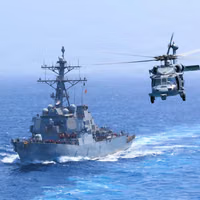
The preparations include the USS George Washington aircraft carrier strike group, as Washington considers further military action against the Islamic Republic.

Iraq faces renewed Iran war spillover despite pledge to stay out

Oct 25, 2026, 01:05 GMT+1
100%
Iraqi Shi'ite Muslim men from the Iranian-backed militia Kataib Hezbollah hold the party's flags as they walk along a street painted in the colours of the Israeli flag during a parade marking the annual Quds Day, or Jerusalem Day, on the last Friday of the Muslim holy month of Ramadan, in Baghdad.

Baghdad’s pledge to stay out of renewed fighting is being tested by reported Israeli jet flights toward Iran through Iraqi airspace, suspected strikes on militia stores reportedly holding Chinese-made air defenses, and drone attacks on Iranian Kurdish opposition bases.

Prime Minister Ali al-Zaidi says Iraq will not participate in any war, while Iran-backed factions describe supporting Tehran against the United States and Israel as a duty, raising questions over Baghdad’s ability to control how its territory and airspace are used.

“Iraq will not participate in any war,” Zaidi told state-run Al-Iraqiya television on Friday, saying Baghdad wanted to remain a meeting point for regional rivals and was working to ease the confrontation between Iran and the United States.

On Saturday, the Islamic Resistance in Iraq, an umbrella of Iran-aligned armed factions, declared that standing with Tehran was a moral duty and portrayed the conflict as a struggle between righteousness and falsehood, Rudaw reported.

The statement did not announce a resumption of attacks. It underscored the factions’ commitment to Iran at a time when Zaidi is promising to bring weapons and military decisions under state control.

Baghdad also faces economic and diplomatic costs from the conflict. Zaidi said disruption at the Strait of Hormuz had harmed Iraq and that his government had hoped its political, religious and popular ties with Iran would secure an exemption for Iraqi shipping.

He stressed the importance of relations with Saudi Arabia and other Persian Gulf states, saying some believed attacks against them had originated in Iraq.

Contested skies

Reports of Israeli fighter jet activity near the Iranian border have put Iraqi airspace at the center of the confrontation even as Baghdad seeks to avoid direct involvement.

Axios reported this week that dozens of Israeli fighter jets flew toward Iran’s border in a demonstration of military capability. The aircraft passed through Syrian and Iraqi airspace before turning back near Iran.

Hardline Iranian lawmaker Mahmoud Nabavian demanded that Iraq tale action against the flights, alleging they were preparations for an attack on Iran.

“The Iraqi government must explain why the Zionist regime’s fighter jets are training and preparing to attack Iran in Iraqi airspace,” Nabavian wrote on X.

“If no action is taken, the Iraqi people, Iraq’s resistance groups and the Iranian nation will fulfill their duty,” he added, without specifying what action he meant.

His warning invoked Iraqi armed groups as potential actors alongside Iran if Baghdad failed to respond.

The Islamic Resistance in Iraq has separately accused US forces of conducting 171 violations of Iraqi airspace between September 30 and October 23.

The umbrella group alleged on Saturday that the United States was using military bases in Jordan and Turkey to conduct flights over Nineveh, Duhok, Erbil, Salahuddin, Anbar and Kirkuk provinces.

It said it had detected 17 aircraft on Friday, including reconnaissance drones and specialized aircraft. The figures and allegations were the factions’ account.

The dispute over foreign military flights also complicates efforts to restrain militia operations. When Iran-backed Kataib Hezbollah announced a suspension of military operations on September 30, it excluded responses to what it called hostile aircraft and airspace violations until Iraqi government air defenses were fully established, Asharq Al-Awsat reported.

Suspected strikes on weapons stores

Iraqi officials suspect Israel attacked two sites storing Chinese-made man-portable air defense systems recently transferred from Iran to Iraqi factions, Awsat reported Saturday, citing unnamed sources.

The sources said a large shipment was destroyed shortly after arriving at the facilities.

On October 17, the Iran-backed Popular Mobilization Forces reported an explosion at an ammunition storage facility in eastern Baghdad that injured five people. Its initial account pointed to an internal malfunction.

The newspaper also quoted an Iraqi political adviser as saying intelligence officials were examining whether renewed US-Israeli fighting against Iran had already begun covertly on Iraqi soil, targeting weapons shipments to Tehran-aligned groups.

Israeli responsibility and the reported contents of the warehouses remain unconfirmed. The suspected strikes nevertheless raise the prospect that Iraqi factions could become targets in renewed fighting regardless of Baghdad’s stated position.

A state with factions

Zaidi presented his campaign to bring weapons under government control as a test of whether the Iraqi state could exercise sovereignty.

“Are we a state with factions, or factions with a state?” he said in the television interview.

He said his government had reached understandings with five factions, completing arrangements with three and working to finalize them with two others. Discussions were continuing with another two, he said.

Zaidi pledged that no weapons would remain outside state control by June 30, 2027.

That deadline represents an extension of an earlier September target, and some factions have disputed the government’s account of progress.

Rudaw reported on October 19 that Kataib Hezbollah had described negotiations over its weapons as remaining at “square one,” accusing Zaidi of failing to respond to a proposed agreement.

The group also demanded clarification of Baghdad’s positions on US sanctions against Iran and conflicts elsewhere in the region, tying the weapons dispute to issues beyond Iraq’s borders.

Another attack in Kurdistan

A separate drone attack on Saturday highlighted the exposure of Iraq’s Kurdistan Region, where Iranian Kurdish opposition groups have repeatedly come under fire.

An explosive-laden drone struck a camp northeast of Erbil, Reuters reported, citing security sources.

The Kurdistan Komala Party of Iran said one of its bases in the Alana Valley was hit, causing material damage but no casualties. The available account did not establish who launched the drone.

Iran has repeatedly launched missile and drone strikes against Iranian Kurdish opposition groups based in northern Iraq, accusing them of organizing attacks and fueling unrest inside Iran.

Baghdad agreed in 2023 to disarm the groups and relocate them away from the Iranian border.

The groups also figured in discussions about a possible ground offensive after the US-Israeli war began in February. Reuters reported in March that Iranian Kurdish factions had consulted Washington about attacking Iranian security forces in the country’s west, although it could not establish the extent of CIA involvement or whether US weapons had been supplied.

Trump initially welcomed the prospect of Kurdish fighters crossing into Iran, telling Reuters on March 5 that it would be “wonderful.” Two days later, he said he had told them to stay out.

“They’re willing to go in, but we really—I’ve told them I don’t want them to go in,” Trump told reporters. “The war is complicated enough without having, getting the Kurds involved.”

Iranians vent anger over rising costs of slow, restricted internet

Oct 24, 2026, 23:22 GMT+1
•
Baharan Azadi
100%

Iranians say they are paying more for slow, unreliable and heavily restricted internet after mobile operators raised data prices by up to 40%, with some reporting that their allowances run out unusually quickly.

Messages sent to Iran International described mounting frustration over the cost of staying connected, from families worried about paying for online classes to users struggling to send even a text message.

“All we have left of life in Iran is passing the time on our phones, and they are taking that away too,” one reader from Baharestan said.

Mobile operators Hamrah-e Aval and Irancell increased their data package prices by up to 40% early on Friday, October 23, according to state media.

One reader said a weekly four-gigabyte package had risen from 330,000 rials ($0.12) to 450,000 rials ($0.17). Another said a monthly six-gigabyte package that cost 530,000 rials ($0.20) three days earlier now cost 740,000 rials ($0.28).

The pressure comes as Iran’s official minimum wage stands at about 166.3 million rials per month, equivalent to roughly $62 at the unofficial-market exchange rate.

Others questioned why prices were rising again after earlier increases before and during the war.

“Didn’t they raise internet prices two months before the 40-day war? Didn’t they raise package prices again during the war, taking advantage of the blackout?” one reader asked, referring to the US-led war that began on February 28. “So what is this latest increase for?”

The higher charges have brought no improvement in service, according to accounts from users across the country.

A reader in the northern province of Mazandaran described Hamrah-e Aval’s connection as moving “at a snail’s pace,” saying Wi-Fi connections in many areas also cut out, even when accessing domestic messaging apps.

In Iranshahr, in southeastern Iran, another reader reported severely degraded ADSL service followed by a complete outage from 8 p.m. on Friday. Another said sending a text message on Telegram was difficult, let alone a photograph or video.

Iran International reported on Friday that users in Semnan, Shiraz, Tabriz, Kerman, Tehran and Tonekabon had complained of sharply slower connections, malfunctioning tools used to bypass internet filtering and difficulty accessing social media.

The Telecommunications Company of Iran has previously attributed some disruptions to “upgrading and optimizing technical infrastructure.”

The complaints come against a backdrop of extensive restrictions on internet access. Freedom House’s 2026 report gave Iran an internet freedom score of nine out of 100, down from 13.

The organization said Iran’s tiered internet system had made access to the global internet difficult and expensive, leaving much of the population restricted to a domestic network controlled by the authorities.

All global social media platforms, from X and Telegram to Facebook, Instagram, TikTok and YouTube, are banned in Iran.

Several readers also accused operators of “stealing data,” saying their allowances were depleted far faster than their usage would explain.

“I topped up my data package two days ago. Today, only 600 megabytes of my six gigabytes are left, even though we don’t have a decent connection,” one reader said.

Another said a six-gigabyte package bought for 570,000 rials ($0.21) had run out within two days despite limited use, and now cost 730,000 rials ($0.27) to replace.

Cost of education

For families, the increases have also raised concerns about the cost of education if gas shortages force schools to move classes online.

One reader said a one-gigabyte Hamrah-e Aval package cost 330,000 rials ($0.12), including tax. “With things like this, how are we supposed to buy data for online classes?”

Another said repeated price increases had left them unable to afford internet access at all.

“We live in a country with vast oil and gas resources,” another reader said, “but we earn in rials and spend in dollars.”

Iran-born former Mossad officer running for Knesset urges end of Islamic Republic

Oct 24, 2026, 17:58 GMT+1
100%
Nazanin Sharifian, also known as Devora Sharifian Bachar, an Iran-born Knesset candidate for Gadi Eisenkot’s Yashar party, during an interview with Iran International (October 2026)

Nazanin Sharifian, an Iran-born former Mossad officer running for Israel’s parliament with Gadi Eisenkot’s Yashar party, told Iran International that Israel should step up military and economic pressure on the Islamic Republic’s leaders and work to end their rule.

“We must do everything we can to bring down the leaders of the Islamic Republic, so this regime is gone and the people of Iran are free,” she told Iran International’s Babak Eshaghi.

Sharifian, a Persian speaker who was born in Iran in 1982 and lived there until she was seven, is a candidate for the Knesset in Tuesday’s election. If Yashar joins the next coalition, she could hold a role in government.

‘The last hope of Iran’

Sharifian called the Islamic Republic Israel’s greatest enemy and an enemy of Iranians as well. Iran’s wealth, she said, goes to Hezbollah and the Houthis instead of to the people it belongs to.

Asked what Yashar’s policy toward Tehran would be, she said it would continue the course set by Prime Minister Benjamin Netanyahu, Eisenkot’s main rival.

“We must intensify this pressure on the leaders of the Islamic Republic,” she said. “We do not want to put pressure on the people of Iran. The people of Iran are the last hope of Iran.”

She called for every available means to be used to end the Islamic Republic’s rule. “I have great faith in the people of Iran,” she said.

Her emphasis on pressure differs from her party leader’s. Eisenkot, a former military chief, said this month that the Islamic Republic’s fall is necessary but cannot be achieved by military action, and that it must come from within Iranian society.

From Tehran to the Mossad

Sharifian was born into a Jewish family. After the 1979 revolution, some relatives left for the United States and Israel, but her father, who ran businesses in Tehran and Isfahan, refused at first to leave. The family fled when she was seven.

In Israel she served in the army, then in the Shin Bet internal security service and the Mossad, Israel’s foreign intelligence agency. Her Persian, she said, was one reason she was moved to the Mossad. She has since taught Persian and Middle East strategy to hundreds of Israeli students.

“I am very proud that my being is Iranian,” she said. Representing Iranians in Israel would be a great honor, she said, adding: “I expect to speak Persian in the Israeli parliament in the future.”

She hopes to bring more people of Iranian origin into Israel’s state institutions, she said, and that one day Iran will be returned to its people.

Israel’s leaders have long wanted Iran’s rulers gone. They differ only on how

Oct 24, 2026, 12:49 GMT+1
•
Arash Sohrabi
100%
Workers prepare ballot boxes for distribution, at the Israeli Central Elections Commission warehouse, ahead of Israel's national election, in Shoham, Israel, October 14, 2026.

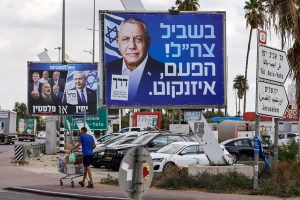
In 1987, with Khomeini still calling for Israel’s destruction, Israel’s defense minister called Iran its best friend. Today every candidate for prime minister wants the Islamic Republic gone. Israel’s leaders have changed their minds about Iran’s rulers, but seldom disagreed.

That is the thread through 47 years of Israeli policy toward the Islamic Republic, and it runs straight into next Tuesday’s election. Whoever wins, the goal will be the same. What changes is how hard, how openly and with whom Israel pursues it.

The Shah’s friend

Before 1979, Iran was Israel’s most important partner in the region. Under David Ben-Gurion’s “periphery doctrine,” Israel courted non-Arab neighbors to outflank hostile Arab states, and the Shah’s Iran was the prize.

Tehran recognized Israel de facto in 1950, sold it oil through a jointly owned pipeline, and let its intelligence services work with Israel’s Mossad. Israeli engineers, farmers and arms dealers worked across Iran. The relationship was discreet, profitable and close.

The revolution ended it overnight. Islamic Republic's founder Rouhollah Khomeini cut ties, and Israel’s mission in Tehran was handed to the Palestine Liberation Organization.

The enemy of my enemy

Israel’s first leaders after 1979 did not try to bring the new order down. They sold it weapons.

When Iraq invaded Iran in 1980, Menachem Begin’s government shipped arms to Tehran, and Israeli sales ran to an estimated $500 million between 1981 and 1983, according to Tel Aviv University’s Jaffe Institute. Saddam Hussein was the threat, and Iran was the counterweight. In 1985 and 1986, under Shimon Peres, Israel was the go-between in the Iran-Contra affair, passing American missiles to Tehran.

Yitzhak Rabin, then defense minister, explained the logic in October 1987. “Iran is Israel’s best friend and we do not intend to change our position in relation to Tehran, because Khomeini’s regime will not last forever,” he said. The expectation that the Islamic Republic would fall was already there. Israel simply did not think at the time that it was its job to hasten it.

The threat is named

Rabin was also the one who turned. Back as prime minister in 1992, he received the first intelligence reports on an Iranian nuclear program and concluded, aides recalled, that only a nuclear Iran could pose an existential threat Israel could not answer. Part of his case for peace with the Palestinians and Jordan was to clear the near front before facing the far one.

Ariel Sharon took the same view further. In November 2002, as the United States prepared to invade Iraq, he told The Times of London that Iran should be put under pressure “the day after” Baghdad fell, calling it a center of world terror.

As prime minister he carried aerial photographs of Iranian sites to George W. Bush and said Israel “cannot accept” a nuclear Iran. Ehud Olmert, his successor, kept the military option on the table while, according to later reporting, the first cyberattacks on Iran’s centrifuges were set in motion with Washington.

None of them spoke of regime change. Their target was the bomb.

100%
A drone view of an election billboard by Benjamin Netanyahu's Likud Party depicting Iran's Supreme Leader Mojtaba Khamenei, New York City Mayor Zohran Mamdani, Turkish President Tayyip Erdogan and Hezbollah chief Naim Qassem and a text in Hebrew that reads "They Want Netanyahu to Lose, Don't let them Win", in Tel Aviv, Israel August 17, 2026

The man who talked to Iranians

Benjamin Netanyahu made Iran his signature cause. Across 15 years in office before 2021, he drew a cartoon bomb at the United Nations, addressed the US Congress against the 2015 nuclear deal, and displayed an archive of Iranian nuclear documents his agents had smuggled out of Tehran.

He also began speaking past the government to the people. He recorded messages to Iranians, offering water technology during the drought and insisting that Israel’s quarrel was “not with the Iranian people.”

The message was new: the problem is not Iran, it is the people who rule it.

The head of the octopus

Naftali Bennett, prime minister in 2021 and 2022, turned that view into a doctrine. Israel, he argued, had spent decades fighting the arms of the octopus, Hezbollah and Hamas, while leaving the head untouched.

He said he launched about 30 operations against the Islamic Republic with the Mossad and other agencies, not all of them military, and predicted it would collapse like the Soviet Union.

Yair Lapid, who succeeded him for six months, spent his term lobbying against a revived nuclear deal.

100%
Former prime ministers Naftali Bennett and Yair Lapid attend an event for their B'Yachad party, ahead of Israel’s national election, in Haifa, Israel, October 21, 2026.

Saying it out loud

Since returning to power at the end of 2022, Netanyahu has moved from hoping to aiming. In June 2025, as Israeli jets struck Iran in the 12-day war, he told Iranians that “as we achieve our objective, we are also clearing the path for you to achieve your freedom.”

The war that began on February 28 this year, fought with the United States, killed former Supreme Leader Ali Khamenei. Last week Netanyahu went further than any Israeli leader before him: “This regime must fall and I will topple it.”

What the candidates say

Netanyahu, leading Likud, has made bringing down the Islamic Republic his campaign’s primary objective and says he has told the security services to work toward it. He has also said he opposes a preemptive strike before the vote.

  • Iran in Israeli election: Netanyahu all-in on regime change, rivals want more

    Iran in Israeli election: Netanyahu all-in on regime change, rivals want more

Gadi Eisenkot, the former military chief whose Yashar party is Likud’s main rival, says the Islamic Republic’s fall is necessary but cannot be achieved by force. “This must come from within the Iranian people,” he said, and he would strike again only if Tehran raced for a bomb.

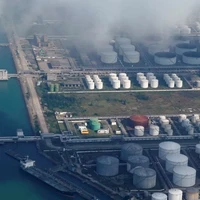
Bennett and Lapid, running together on the Together list, want to hit harder, not softer. Bennett says attacks by Tehran’s allies should be answered on Iranian soil. Lapid has called for striking Iran’s energy infrastructure, including the Kharg Island oil terminal.

Avigdor Lieberman of Yisrael Beiteinu has long called for overthrowing the Islamic Republic and says past efforts fell short. Itamar Ben-Gvir of the far-right Jewish Power backs military operations until Israel’s goals are met. Mansour Abbas, whose Ra’am party draws Arab Israeli voters, has set out no position on Iran.

From Rabin’s prediction that Khomeini’s rule would not last to Netanyahu’s promise to end it himself, the conclusion has barely moved. What Israelis will choose on Tuesday is not whether to want the Islamic Republic gone, but how loudly to say it and how much to risk to get there.

100%
Two men speak on Jaffa Street, one of the main shopping streets, ahead of the Israeli parliamentary election in Jerusalem, October 22, 2026.