Iran-born former Mossad officer running for Knesset urges end of Islamic Republic
Nazanin Sharifian, also known as Devora Sharifian Bachar, an Iran-born Knesset candidate for Gadi Eisenkot’s Yashar party, during an interview with Iran International (October 2026)
Nazanin Sharifian, an Iran-born former Mossad officer running for Israel’s parliament with Gadi Eisenkot’s Yashar party, told Iran International that Israel should step up military and economic pressure on the Islamic Republic’s leaders and work to end their rule.
“We must do everything we can to bring down the leaders of the Islamic Republic, so this regime is gone and the people of Iran are free,” she told Iran International’s Babak Eshaghi.
Sharifian, a Persian speaker who was born in Iran in 1982 and lived there until she was seven, is a candidate for the Knesset in Tuesday’s election. If Yashar joins the next coalition, she could hold a role in government.
‘The last hope of Iran’
Sharifian called the Islamic Republic Israel’s greatest enemy and an enemy of Iranians as well. Iran’s wealth, she said, goes to Hezbollah and the Houthis instead of to the people it belongs to.
Asked what Yashar’s policy toward Tehran would be, she said it would continue the course set by Prime Minister Benjamin Netanyahu, Eisenkot’s main rival.
“We must intensify this pressure on the leaders of the Islamic Republic,” she said. “We do not want to put pressure on the people of Iran. The people of Iran are the last hope of Iran.”
She called for every available means to be used to end the Islamic Republic’s rule. “I have great faith in the people of Iran,” she said.
Her emphasis on pressure differs from her party leader’s. Eisenkot, a former military chief, said this month that the Islamic Republic’s fall is necessary but cannot be achieved by military action, and that it must come from within Iranian society.
From Tehran to the Mossad
Sharifian was born into a Jewish family. After the 1979 revolution, some relatives left for the United States and Israel, but her father, who ran businesses in Tehran and Isfahan, refused at first to leave. The family fled when she was seven.
In Israel she served in the army, then in the Shin Bet internal security service and the Mossad, Israel’s foreign intelligence agency. Her Persian, she said, was one reason she was moved to the Mossad. She has since taught Persian and Middle East strategy to hundreds of Israeli students.
“I am very proud that my being is Iranian,” she said. Representing Iranians in Israel would be a great honor, she said, adding: “I expect to speak Persian in the Israeli parliament in the future.”
She hopes to bring more people of Iranian origin into Israel’s state institutions, she said, and that one day Iran will be returned to its people.
Workers prepare ballot boxes for distribution, at the Israeli Central Elections Commission warehouse, ahead of Israel's national election, in Shoham, Israel, October 14, 2026.
In 1987, with Khomeini still calling for Israel’s destruction, Israel’s defense minister called Iran its best friend. Today every candidate for prime minister wants the Islamic Republic gone. Israel’s leaders have changed their minds about Iran’s rulers, but seldom disagreed.
That is the thread through 47 years of Israeli policy toward the Islamic Republic, and it runs straight into next Tuesday’s election. Whoever wins, the goal will be the same. What changes is how hard, how openly and with whom Israel pursues it.
The Shah’s friend
Before 1979, Iran was Israel’s most important partner in the region. Under David Ben-Gurion’s “periphery doctrine,” Israel courted non-Arab neighbors to outflank hostile Arab states, and the Shah’s Iran was the prize.
Tehran recognized Israel de facto in 1950, sold it oil through a jointly owned pipeline, and let its intelligence services work with Israel’s Mossad. Israeli engineers, farmers and arms dealers worked across Iran. The relationship was discreet, profitable and close.
The revolution ended it overnight. Islamic Republic's founder Rouhollah Khomeini cut ties, and Israel’s mission in Tehran was handed to the Palestine Liberation Organization.
The enemy of my enemy
Israel’s first leaders after 1979 did not try to bring the new order down. They sold it weapons.
When Iraq invaded Iran in 1980, Menachem Begin’s government shipped arms to Tehran, and Israeli sales ran to an estimated $500 million between 1981 and 1983, according to Tel Aviv University’s Jaffe Institute. Saddam Hussein was the threat, and Iran was the counterweight. In 1985 and 1986, under Shimon Peres, Israel was the go-between in the Iran-Contra affair, passing American missiles to Tehran.
Yitzhak Rabin, then defense minister, explained the logic in October 1987. “Iran is Israel’s best friend and we do not intend to change our position in relation to Tehran, because Khomeini’s regime will not last forever,” he said. The expectation that the Islamic Republic would fall was already there. Israel simply did not think at the time that it was its job to hasten it.
The threat is named
Rabin was also the one who turned. Back as prime minister in 1992, he received the first intelligence reports on an Iranian nuclear program and concluded, aides recalled, that only a nuclear Iran could pose an existential threat Israel could not answer. Part of his case for peace with the Palestinians and Jordan was to clear the near front before facing the far one.
Ariel Sharon took the same view further. In November 2002, as the United States prepared to invade Iraq, he told The Times of London that Iran should be put under pressure “the day after” Baghdad fell, calling it a center of world terror.
As prime minister he carried aerial photographs of Iranian sites to George W. Bush and said Israel “cannot accept” a nuclear Iran. Ehud Olmert, his successor, kept the military option on the table while, according to later reporting, the first cyberattacks on Iran’s centrifuges were set in motion with Washington.
None of them spoke of regime change. Their target was the bomb.
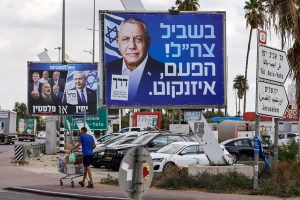
A drone view of an election billboard by Benjamin Netanyahu's Likud Party depicting Iran's Supreme Leader Mojtaba Khamenei, New York City Mayor Zohran Mamdani, Turkish President Tayyip Erdogan and Hezbollah chief Naim Qassem and a text in Hebrew that reads "They Want Netanyahu to Lose, Don't let them Win", in Tel Aviv, Israel August 17, 2026
The man who talked to Iranians
Benjamin Netanyahu made Iran his signature cause. Across 15 years in office before 2021, he drew a cartoon bomb at the United Nations, addressed the US Congress against the 2015 nuclear deal, and displayed an archive of Iranian nuclear documents his agents had smuggled out of Tehran.
He also began speaking past the government to the people. He recorded messages to Iranians, offering water technology during the drought and insisting that Israel’s quarrel was “not with the Iranian people.”
The message was new: the problem is not Iran, it is the people who rule it.
The head of the octopus
Naftali Bennett, prime minister in 2021 and 2022, turned that view into a doctrine. Israel, he argued, had spent decades fighting the arms of the octopus, Hezbollah and Hamas, while leaving the head untouched.
He said he launched about 30 operations against the Islamic Republic with the Mossad and other agencies, not all of them military, and predicted it would collapse like the Soviet Union.
Yair Lapid, who succeeded him for six months, spent his term lobbying against a revived nuclear deal.
Former prime ministers Naftali Bennett and Yair Lapid attend an event for their B'Yachad party, ahead of Israel’s national election, in Haifa, Israel, October 21, 2026.
Saying it out loud
Since returning to power at the end of 2022, Netanyahu has moved from hoping to aiming. In June 2025, as Israeli jets struck Iran in the 12-day war, he told Iranians that “as we achieve our objective, we are also clearing the path for you to achieve your freedom.”
The war that began on February 28 this year, fought with the United States, killed former Supreme Leader Ali Khamenei. Last week Netanyahu went further than any Israeli leader before him: “This regime must fall and I will topple it.”
What the candidates say
Netanyahu, leading Likud, has made bringing down the Islamic Republic his campaign’s primary objective and says he has told the security services to work toward it. He has also said he opposes a preemptive strike before the vote.
Gadi Eisenkot, the former military chief whose Yashar party is Likud’s main rival, says the Islamic Republic’s fall is necessary but cannot be achieved by force. “This must come from within the Iranian people,” he said, and he would strike again only if Tehran raced for a bomb.
Bennett and Lapid, running together on the Together list, want to hit harder, not softer. Bennett says attacks by Tehran’s allies should be answered on Iranian soil. Lapid has called for striking Iran’s energy infrastructure, including the Kharg Island oil terminal.
Avigdor Lieberman of Yisrael Beiteinu has long called for overthrowing the Islamic Republic and says past efforts fell short. Itamar Ben-Gvir of the far-right Jewish Power backs military operations until Israel’s goals are met. Mansour Abbas, whose Ra’am party draws Arab Israeli voters, has set out no position on Iran.
From Rabin’s prediction that Khomeini’s rule would not last to Netanyahu’s promise to end it himself, the conclusion has barely moved. What Israelis will choose on Tuesday is not whether to want the Islamic Republic gone, but how loudly to say it and how much to risk to get there.
Two men speak on Jaffa Street, one of the main shopping streets, ahead of the Israeli parliamentary election in Jerusalem, October 22, 2026.
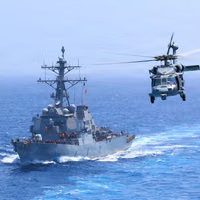
The USS Donald Cook (DDG 75) transits the Arabian Sea as an MH-60S Sea Hawk flies nearby. (CENTCOM/X)
A possible resumption of US strikes on Iran would serve an increasingly economic war, weakening Tehran’s ability to challenge a blockade that Washington appears prepared to maintain for the foreseeable future.
A strike on Iran could "absolutely" come this weekend, the US ambassador to Turkey, Tom Barrack, said Friday, and the administration hasn’t said what it would be for.
The New York Times reports that US and Israeli planners have drawn up a short, intensive campaign for after the November 3 midterms, aimed at Iran’s missile and drone arsenal, nuclear sites and energy infrastructure.
Critics read the reports as proof that there is no strategy anymore. That reads the war through the lens of February, when the economic campaign existed to support the war. Whether the administration designed it this way or simply ended up here, the strikes now serve the economic campaign, which is proving more harmful to the regime than the strikes ever were.
Washington has committed to the blockade and treats the strikes as optional. Speaking to reporters Friday, President Trump said the choice was whether to finish it off or let it wither, and that with oil moving through Hormuz the US was getting everything it wanted. Mike Waltz, the US ambassador to the United Nations, told the Financial Times the same day that the president and the Navy can maintain the blockade for the foreseeable future while the administration keeps tightening economic pressure.
The US is now running a siege. It has sharply restricted Iran’s access to oil buyers, international finance and regional trade. The job of the military is to keep the cordon from being broken. The shift in strategy came in July, when the US restored the blockade after the June memorandum collapsed and the strikes that followed were about the strait.
Central Command said its July strikes were meant to degrade Iran’s ability to attack commercial shipping. The next round of strikes would be the first planned campaign since the blockade and the sanctions began doing real damage to the regime.
Iran’s imports since the war began show its priority — bringing in the supplies it needs to be able to fight its way out of the blockade. It is bringing in truck parts, missile fuel ingredients and missile and drone components to rebuild the launchers and stockpiles. The Wall Street Journal counted about 1,300 shipments of dual-use components from Chinese suppliers to Iran’s defense ministry in the first half of the year.
On October 1 the Treasury sanctioned Iran’s truck and auto makers, which it called an essential part of Iran’s defense industrial base, and the suppliers in Turkey, the Emirates and East Asia feeding them parts. Iran is assembling missiles from stockpiled components in small numbers, the Journal reported in September, and the blockade has made the solid-fuel components it can’t make harder to import.
Iran loaded no crude oil onto tankers in September, according to Bloomberg. CENTCOM says the blockade has stopped $25 billion in oil exports. The United Arab Emirates halted all trade and financial dealings with Iran in August. The regime has no way to persuade its own base or the Persian Gulf states that it has an answer.
That leaves Tehran a short list of cards to play against the blockade and the sanctions.
The first is attacking commercial shipping in the strait. Maritime security sources recorded at least 12 attacks on tankers around the Strait of Hormuz in the week to October 5, the highest weekly total of the war.
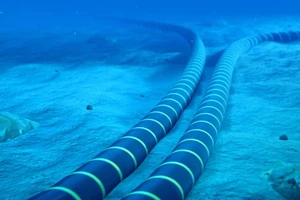
The second is pressuring its neighbors. Iran threatens Persian Gulf energy infrastructure, US bases and undersea cables, and it has the Houthis at Bab el-Mandeb, all meant to push the Persian Gulf states to lobby Washington to end the blockade.
The third is to strain US munition supplies. Mohsen Rezaei, Iran’s security chief, said this week that a long war favors Iran because the test is which side can sustain a cycle of production, deployment and response.
The fourth is to keep offering a deal that it likely won’t make. Tehran’s standing offer is to reopen the strait in seven days in exchange for ending the blockade, easing oil sanctions and releasing frozen assets.
The fifth is the nuclear program, which the regime can negotiate to death over enrichment and dangle in front of Washington for the same price.
A strike goes down that list. The missile and drone arsenal the Times describes, and the launchers, mine-layers, naval sites, radars and air defenses CENTCOM has hit since July, are the hardware behind the regime’s threat to the strait and its neighbors.
Fewer launchers means fewer ships hit and a weaker threat to the Persian Gulf. Hitting stockpiles and production sites limits its ability to strain and outlast US munition supplies, and a strike tests Rezaei’s claim directly. Destroying enough of those capabilities would weaken Iran’s offer to stop attacking shipping in exchange for lifting the blockade.
Washington would have less reason to pay for a threat Iran could no longer credibly sustain. Hitting Pickaxe Mountain doesn’t end the nuclear program, but it leaves Tehran less to bargain with when it asks for sanctions relief.
Holding a blockade is expensive. Destroyers are doing work that cheap systems should do, and the Navy is stretched thin. Fewer Iranian launchers firing at the escort mission means the Navy can hold the line longer without forcing a decision in Washington.
The regime has shown it will take the strikes. Ali Khamenei and Ali Larijani are dead, Mojtaba Khamenei succeeded his father, and Tehran still won’t concede on any deal the US could accept. What it can’t take is the economic war.
The blockade turned the clock against Tehran. The regime’s strategy since February has been to wait — for the administration to lose patience, for the midterms, for the next policy swing.
The US can hold a blockade for the foreseeable future at a cost it can carry. A prolonged loss of oil revenue will make Tehran’s strategy of waiting out Washington increasingly difficult to sustain. The strikes exist to keep that clock running.
US President Donald Trump mimics a golf swing after speaking during a rally at Florida Gulf Coast University's Alico Arena ahead of the midterm elections, in Fort Myers, Florida, US, October 23, 2026. REUTERS/Umit Bektas
Washington and Tehran traded increasingly hostile threats on Friday, with President Donald Trump raising the possibility of further military action and Iranian officials warning of attacks on regional infrastructure, while diplomatic efforts in Istanbul produced no breakthrough.
Trump said the United States “may do another little Epic Fury,” referring to the US military operation against Iran, but gave no details on the timing or scope of any renewed action.
His remarks came after US Ambassador to Turkey Tom Barrack said an American strike could come as early as this weekend, while stressing that Trump remained open to a deal. Trump later distanced himself from Barrack’s suggestion, saying he knew nothing about plans for a weekend strike.
The possibility of renewed strikes has also been under discussion in Washington and Israel. The Atlantic reported that Trump was considering several days of strikes after the November 3 midterm elections, potentially targeting Iranian missile and drone capabilities, energy infrastructure and nuclear facilities. ABC News separately reported on Thursday that US and Israeli military planners had drawn up plans for renewed attacks.
Tehran threatens wider response
Tehran, meanwhile, has been preparing its response to another potential round of attacks, with its threats increasingly directed at infrastructure beyond Iran’s borders.
Two senior Iranian security officials told Reuters that Tehran had developed plans to strike undersea communications cables in the Persian Gulf if the United States and Israel resumed military operations. One official said Iran could also seek to prevent repairs to prolong the disruption.
The Wall Street Journal separately reported that Iran had threatened to attack airports, pipelines and other civilian and economic infrastructure in neighboring Persian Gulf countries if US-Israeli strikes resumed.
The Revolutionary Guards added to the warnings. Senior commander Yadollah Javani said Iran would become a killing field for American troops attempting a ground invasion, while Guards spokesman Hossein Mohebbi circulated a graphic showing a burning oil tanker and oil prices climbing to $117 a barrel.
The Guards’ navy also said two supertankers had struck mines in the Strait of Hormuz, where disruption to shipping has become a central part of the confrontation.
Istanbul talks yield no breakthrough
Against this backdrop, Turkey hosted foreign ministers from Egypt, Pakistan, Saudi Arabia, Britain, France and Germany in Istanbul on Friday for talks focused on regional conflicts, including the Iran war, shipping security and the fighting in Yemen.
The four regional countries, known collectively as the R4, also met separately and issued a declaration supporting the Islamabad memorandum, calling for a negotiated settlement and opposing attacks on civilians and civilian infrastructure, including commercial vessels.
They called for the swift restoration of safe and unrestricted passage through the Strait of Hormuz, warning that disruptions threaten global supplies of energy, fertilizer and food. The ministers also agreed to maintain close consultations on regional security.
The Istanbul meetings brought regional and European governments together in support of diplomacy but produced no announced progress toward a US-Iran agreement.
With Washington considering further military action and Tehran threatening to widen its response to renewed strikes, the gap between the two sides remained considerable despite continuing mediation efforts.
Escalating war rhetoric from Iran, the United States and Israel, coupled with military movements across the region, has heightened fears of another conflict, as Iranians debate online whether war could bring political change or deepen the country's crises.
Iranian social media users are closely following statements by US President Donald Trump and Israeli Prime Minister Benjamin Netanyahu, as well as diplomatic and military movements across the region.
Many view the developments as possible signs of an impending US-Israeli attack.
A central debate is whether another war could bring down the Islamic Republic or simply inflict further damage on Iran.
Those supporting military action describe war as a necessary evil to end the political system, arguing that previous attempts to bring about change have failed.
Opponents warn that another conflict could destroy energy infrastructure and refineries, deepen economic hardship and leave Iranian society in an even worse position.
“We are inside Iran and face all kinds of financial, security and social problems, but we are willing to pay the price to end this nightmare,” one user wrote.
Another user wrote: “This uncertainty is really a thousand times worse than war. We cannot even plan a trip, let alone make decisions about work, education or running a business.”
Others strongly rejected that view.
“War brings destruction, chaos, disease and so many other problems,” one user wrote. “The outcome will not necessarily be what you imagine. It could be much worse than things are now.”
Another highlighted the vulnerability of people without secure salaries, who could lose their livelihoods if fighting disrupted economic activity.
One user summed up the conflicting attitudes they had encountered.
“I have seen many people in Iran waiting for an attack so that things can finally be settled… and others who wanted an agreement to be reached,” the user wrote. “Feelings differ, but everyone is tired of this situation.”
Some are urging others to stock up on water, food and medicine and keep cash on hand. Others warn people living near military or government facilities to consider leaving.
Users have also expressed concern for elderly people, those with illnesses and people living alone.
Hardliners push for confrontation
Ultra-hardline voices have also expressed enthusiasm for military confrontation, but for very different reasons.
They argue that negotiations with Washington have merely given Iran's adversaries time to regroup and prepare for a stronger attack.
Some have sharply criticized officials who pursued diplomacy and called for Iran to launch a pre-emptive strike if war appears imminent.
“Why shouldn't Iran start the war this time instead of always waiting to be caught off guard?” one user wrote.
Another argued that Iran did not need nuclear weapons to inflict serious damage on its adversaries.
“We don't even need an atomic bomb to retaliate,” the user wrote, arguing instead for strikes on nuclear power plants in Israel and the United Arab Emirates.
The calls for confrontation reflect a very different political outlook from anti-government users hoping outside military action could bring down the Islamic Republic.
But both illustrate how repeated rounds of fighting and failed diplomacy have led some on opposing sides of Iran's political divide to see another war as preferable to the current uncertainty.
Parents prepare for the worst
Parents' concerns about children's safety have intensified following the deaths of more than 100 schoolchildren in a US attack on Minab at the beginning of the recent war.
Some are urging families to keep children home from school if the likelihood of an attack increases. Others are discussing plans to collect children from schools and move them to safer locations as quickly as possible if fighting resumes.
An Instagram post featuring a firefighter has attracted particular attention. The firefighter said that while inspecting safety arrangements at a girls' high school, a school official told them instructions had been issued to prepare identification tags for students.
On Friday, an Education Ministry spokesperson denied that such measures were being implemented and accused “enemies or ignorant individuals” of spreading fear.
One user said they had checked with relatives in Tehran and concluded that the reports were accurate, claiming families they contacted had requested identification tags and were awaiting their delivery.
Fear of another internet blackout
The prospect of another shutdown of international internet access is adding to the anxiety.
Users fear authorities could cut international connectivity immediately if hostilities resume. The prospect is particularly troubling after previous shutdowns made it difficult to contact relatives and access reliable information.
One user recalled that during the war in June last year, the internet was cut several days after fighting began. When war broke out again at the end of February, the shutdown came within hours.
“Now, instead of checking the news in the morning, I open Google's domain to see whether it loads,” the user wrote, “so I can find out whether the war has started.”
US President Donald Trump boards Air Force One for a trip to Sioux City, Iowa, at Joint Base Andrews, Maryland, US, October 22, 2026.
The United States is tightening economic pressure on Iran to bolster efforts to reach a diplomatic solution and can sustain its naval blockade for the foreseeable future, the US Ambassador to the UN said, as President Donald Trump weighs renewed strikes after midterm elections.
Mike Waltz told the Financial Times that Washington still wanted Tehran to return to negotiations and reach what he called a “meaningful agreement” on its nuclear program, but acknowledged the standoff could continue without a deal or a return to prewar shipping levels through the Strait of Hormuz.
“The president and the US Navy can maintain this blockade for the foreseeable future,” Waltz said, adding that the administration was continuing to tighten economic pressure.
He said the US would not consider its objectives achieved until Iran’s highly enriched nuclear material had been dealt with and an agreement reached over domestic uranium enrichment.
Trump considers renewed strikes after midterms
The comments come as Trump is considering several days of renewed strikes against Iran after the midterms, The Atlantic reported, citing officials and people familiar with the discussions.
Potential targets include Iran’s missile and drone arsenal, energy infrastructure and nuclear facilities, according to the report. One outside adviser told the magazine that US economic pressure was working and that additional strikes could push Iran closer to collapse.
An official and another person familiar with the talks said Trump had initially hoped Tehran would return to negotiations before the election, but that had not happened.
US officials stressed that no decision had been made on whether to resume strikes after November 3. The Atlantic said some officials also saw uncertainty over Washington’s next move as a way of keeping Tehran under pressure.
Israeli Prime Minister Benjamin Netanyahu had pushed for another round of strikes before Israel’s election, according to the report, but Trump has so far declined to authorize a new attack before the US vote.
Washington and Tehran trade competing Hormuz messages
The military pressure is unfolding alongside sharply different accounts from Washington and Tehran over control of the Strait of Hormuz.
Trump said on Thursday that more oil had moved through the strait over the previous week than at any point before the war, attributing the increase to the US blockade.
“More oil came out of the Hormuz Strait over the last week than at any time previous, including before the war,” Trump told a campaign rally in Iowa. “That’s because of the blockade.”
He said the blockade had stopped Iran from exporting its own oil and again argued that US military action had destroyed Tehran’s nuclear enrichment capacity.
IRGC says US pushed away from the strait
Iran, however, presented a very different picture on Friday.
IRGC Navy commander Ali Ozmaei said US forces had been pushed hundreds of kilometers away from the Strait of Hormuz and no longer had a place there.
“Today, the Americans are not present in the Persian Gulf and have moved 600 to 700 kilometers away from the Strait of Hormuz,” Ozmaei said. “America no longer has a place in the Strait of Hormuz.”
The competing statements underscore how control of shipping and access through Hormuz have become central to both sides’ strategy, as Washington seeks to pressure Tehran economically while keeping open the possibility of renewed military action.