• العربية
  • فارسی
BrandBrand
  • Iran Insight
  • Politics
  • Economy
  • Analysis
  • Special Report
  • Opinion
  • Podcast
  • Live TV
  • Iran Insight
  • Politics
  • Economy
  • Analysis
  • Special Report
  • Opinion
  • Podcast
  • Live TV
  • Theme
  • Language
    • العربية
    • فارسی
  • Iran Insight
  • Politics
  • Economy
  • Analysis
  • Special Report
  • Opinion
  • Podcast
  • Live TV
All rights reserved for Volant Media UK Limited
volant media logo
VOICES FROM IRAN

Iranians vent anger over rising costs of slow, restricted internet

Baharan Azadi
Baharan Azadi

Iran International

Oct 24, 2026, 23:22 GMT+1

Iranians say they are paying more for slow, unreliable and heavily restricted internet after mobile operators raised data prices by up to 40%, with some reporting that their allowances run out unusually quickly.

Messages sent to Iran International described mounting frustration over the cost of staying connected, from families worried about paying for online classes to users struggling to send even a text message.

“All we have left of life in Iran is passing the time on our phones, and they are taking that away too,” one reader from Baharestan said.

Mobile operators Hamrah-e Aval and Irancell increased their data package prices by up to 40% early on Friday, October 23, according to state media.

One reader said a weekly four-gigabyte package had risen from 330,000 rials ($0.12) to 450,000 rials ($0.17). Another said a monthly six-gigabyte package that cost 530,000 rials ($0.20) three days earlier now cost 740,000 rials ($0.28).

The pressure comes as Iran’s official minimum wage stands at about 166.3 million rials per month, equivalent to roughly $62 at the unofficial-market exchange rate.

Others questioned why prices were rising again after earlier increases before and during the war.

“Didn’t they raise internet prices two months before the 40-day war? Didn’t they raise package prices again during the war, taking advantage of the blackout?” one reader asked, referring to the US-led war that began on February 28. “So what is this latest increase for?”

The higher charges have brought no improvement in service, according to accounts from users across the country.

A reader in the northern province of Mazandaran described Hamrah-e Aval’s connection as moving “at a snail’s pace,” saying Wi-Fi connections in many areas also cut out, even when accessing domestic messaging apps.

In Iranshahr, in southeastern Iran, another reader reported severely degraded ADSL service followed by a complete outage from 8 p.m. on Friday. Another said sending a text message on Telegram was difficult, let alone a photograph or video.

Iran International reported on Friday that users in Semnan, Shiraz, Tabriz, Kerman, Tehran and Tonekabon had complained of sharply slower connections, malfunctioning tools used to bypass internet filtering and difficulty accessing social media.

The Telecommunications Company of Iran has previously attributed some disruptions to “upgrading and optimizing technical infrastructure.”

The complaints come against a backdrop of extensive restrictions on internet access. Freedom House’s 2026 report gave Iran an internet freedom score of nine out of 100, down from 13.

The organization said Iran’s tiered internet system had made access to the global internet difficult and expensive, leaving much of the population restricted to a domestic network controlled by the authorities.

All global social media platforms, from X and Telegram to Facebook, Instagram, TikTok and YouTube, are banned in Iran.

Several readers also accused operators of “stealing data,” saying their allowances were depleted far faster than their usage would explain.

“I topped up my data package two days ago. Today, only 600 megabytes of my six gigabytes are left, even though we don’t have a decent connection,” one reader said.

Another said a six-gigabyte package bought for 570,000 rials ($0.21) had run out within two days despite limited use, and now cost 730,000 rials ($0.27) to replace.

Cost of education

For families, the increases have also raised concerns about the cost of education if gas shortages force schools to move classes online.

One reader said a one-gigabyte Hamrah-e Aval package cost 330,000 rials ($0.12), including tax. “With things like this, how are we supposed to buy data for online classes?”

Another said repeated price increases had left them unable to afford internet access at all.

“We live in a country with vast oil and gas resources,” another reader said, “but we earn in rials and spend in dollars.”

Most Viewed

US strikes on Iran now serve the blockade
1
ANALYSIS

US strikes on Iran now serve the blockade

2

Iran sends conflicting signals on US deal as Trump raises prospect of strikes

3
PODCAST

Baluch insurgency tests the limits of a war-weakened Islamic Republic

4

Pakistan talks peace with Iran, defends Saudis against Tehran’s proxies

5

US and Iran trade new threats as diplomacy yields no breakthrough

Banner
Banner
Banner
Banner
Banner

Spotlight

  • From six-day victory to wars of attrition: How has Israel ended its wars?
    ANALYSIS

    From six-day victory to wars of attrition: How has Israel ended its wars?

  • Baluch insurgency tests the limits of a war-weakened Islamic Republic
    PODCAST

    Baluch insurgency tests the limits of a war-weakened Islamic Republic

  • US strikes on Iran now serve the blockade
    ANALYSIS

    US strikes on Iran now serve the blockade

  • Salvation or tragedy? Iranians debate prospect of another war

    Salvation or tragedy? Iranians debate prospect of another war

  • More patrols, slower internet suggest Tehran is bracing for trouble
    VOICES FROM IRAN

    More patrols, slower internet suggest Tehran is bracing for trouble

  • Iran’s evasion network survives, but the crude feeding it has run dry

    Iran’s evasion network survives, but the crude feeding it has run dry

  • Once US blockaded Iran, China’s ‘Malaysian’ oil imports dried up
    ANALYSIS

    Once US blockaded Iran, China’s ‘Malaysian’ oil imports dried up

  • Istanbul meeting: A new division of labor in the Iran war?
    ANALYSIS

    Istanbul meeting: A new division of labor in the Iran war?

•
•
•

More Stories

More patrols, slower internet suggest Tehran is bracing for trouble

Oct 23, 2026, 18:21 GMT+1
•
Saba Heidarkhani
100%
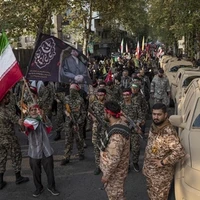
Armed men take part in a Janfada rally in Rasht, northern Iran, October 2026

Armed security forces and checkpoints have become more visible across Iran, according to witness reports sent to Iran International, while internet access has deteriorated amid fears of fresh unrest and another round of war.

Accounts from Tehran, Mashhad, Isfahan, Dezful, Hamedan and other cities over the past week describe armed Basij members and riot police at major intersections and public squares, new checkpoints and additional surveillance cameras.

Users in several provinces also say internet speeds have fallen sharply, circumvention tools have stopped working and access to social media has become increasingly difficult.

The individual reports cannot all be independently verified, but describe similar changes across widely separated parts of the country.

More armed forces on the streets

In Dezful in southwestern Iran, one resident said the city had become “heavily securitized,” particularly around the city center and Shariati Street.

The resident attributed the increased presence to government concern about possible protests around the anniversary of the November 2019 uprising, when demonstrations triggered by a sudden increase in fuel prices were met with a deadly crackdown.

In Tehran, a resident reported a Basij checkpoint on Khavaran Street from Thursday evening, while other accounts described increased security patrols elsewhere in the capital and neighboring Karaj.

Residents of Mashhad reported armed Basij members around Mellat Park.

In Isfahan, armed deployments were reported around major squares, while residents of Hamedan and Borujerd described increased security activity.

Iran International reported similar deployments in September around the fourth anniversary of the death in custody of Mahsa Jina Amini.

More cameras and surveillance

Residents have also reported an expansion of surveillance infrastructure.

A resident of Astara, a small city on the Caspian coast near the Azerbaijani border, said security cameras were being installed in squares and neighborhoods across the city.

“They are installing cameras neighborhood by neighborhood in a city this small,” the resident said. “Look how afraid they are of the people.”

Another resident reported more surveillance cameras around Tehran's Sadeghieh district.

Tehran municipality announced last year that it planned to install 15,000 surveillance cameras across the capital, while security agencies have used camera footage to identify protesters and enforce government restrictions.

Internet slowdown

Residents in Semnan, Shiraz, Tabriz, Kerman, Tehran and elsewhere told Iran International that connections had slowed markedly, VPNs had stopped functioning and social media platforms had become increasingly difficult to reach.

A Shiraz resident said internet access had been extremely slow for about six days, while in Kerman one user said even paid VPN services were failing.

A resident of Tonekabon on the Caspian coast said Irancell mobile internet was being cut at night. Other users reported disruption to both fixed and mobile connections.

The cause of the disruptions is unclear, and the accounts do not establish that the security deployments and deteriorating internet access are part of a coordinated operation.

But they come against the backdrop of Iran's extensive use of internet shutdowns during periods of political unrest and conflict.

Tech outlet Zooman reported this week that authorities had issued instructions for international internet access to be cut immediately in the event of another war.

When Israel and the US attacked Iran in February, authorities imposed a nationwide internet blackout that lasted about 88 days, the longest recorded in any country, according to NetBlocks.

The latest disruptions also coincide with sharp increases in the cost of getting online.

Iran's two largest mobile operators, Hamrah-e Aval and Irancell, raised prices for calls, text messages and internet packages by as much as 40% on Friday, citing higher equipment, maintenance and infrastructure costs.

“By making the internet more expensive, they have closed our last route to the free world,” one resident told Iran International. “For me, when the internet was my only comfort and source of income, even being present in this space is no longer possible.”

Iran’s evasion network survives, but the crude feeding it has run dry

Oct 23, 2026, 16:18 GMT+1
•
Umud Shokri
100%
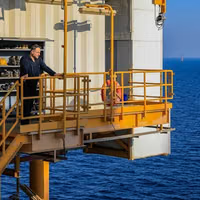
File photo: A worker stands on the Soroush offshore oil platform in Iran’s Persian Gulf

Iran still has the knowhow, middlemen and shadow-fleet infrastructure it spent years developing to sell sanctioned oil to China. But it has now run out of oil outside Iran to put through that system.

The US naval blockade has exposed a limitation in Tehran’s sanctions-evasion machinery: ship-to-ship transfers, false paperwork and steep discounts can disguise and sell crude once it is at sea, but they cannot get fresh cargoes out of Iranian ports.

For months, Iran was able to keep selling oil to China because millions of barrels had already left the country on tankers and were sitting in Asian waters. That reserve is now effectively exhausted.

Kpler analysts cited by The Wall Street Journal on Wednesday estimated Iran had about 135 million barrels in overseas storage when the war began in February. By October 5, that had fallen below one million barrels.

Vortexa gave a different figure, estimating Iranian stocks off Singapore at roughly six million barrels on October 9. The difference reflects varying tracking methods and locations, but both show that the offshore stocks that sustained Iranian exports have been largely depleted.

The Malaysia route dries up

Malaysia sits at the heart of how Iranian oil has reached China, serving mainly as a transfer point rather than the true source of much of the crude.

The Wall Street Journal reported in May on ship-to-ship transfers of Iranian crude off the Malaysian coast.

A sharp drop in China’s purchases recorded as Malaysian crude could therefore provide another indication that the flow of Iranian oil through the system has dried up.

But the figures are not a one-for-one measure of Iranian exports. Chinese customs data record the declared origin of cargoes, while ship tracking can miss transfers or vessels operating without transponders.

The timing nevertheless coincides with the depletion of the offshore stocks that had fed the trade. If no new Iranian crude is available for transfer near Malaysia, fewer cargoes would be expected to appear in Chinese data under a Malaysian origin.

China turns to other suppliers

China remains Iran’s most important potential buyer, but its independent refineries are already lining up alternatives.

Reuters reported on October 6 that Chinese “teapot” refineries had purchased at least 12 million barrels of Iraqi and Qatari crude for delivery in October and November. Traders suggested the total could reach 15 million to 20 million barrels.

Iranian oil had been attractive largely because of its steep discount. Iraqi and Qatari cargoes may cost more, but they arrive through normal channels and carry less risk of sanctions trouble or sudden interruptions.

Iran could offer deeper discounts or rely more heavily on intermediaries to retain Chinese customers. Neither solves the central obstacle: the oil still has to be loaded and shipped.

Reuters reported in August that offers of Iranian oil to Chinese buyers had already fallen as stored cargoes were sold.

Few alternatives to tankers

Jask, on the Gulf of Oman, is often cited as Iran’s alternative export outlet. The Goreh–Jask pipeline and terminal were built so oil could reach the sea without passing through the Strait of Hormuz.

So far, however, the facility has not shown it can replace Iran’s main export system.

The International Energy Agency’s February 2026 factsheet described Jask as effectively out of regular service. S&P Global later reported tanker activity there between March and July, indicating occasional use.

That suggests the route can handle some cargoes, not that it can support exports on the scale Iran needs. A port outside Hormuz is also not necessarily beyond the reach of a blockade aimed at Iranian ports.

Rail and trucking through neighboring countries offer still less capacity. They face high costs, limited infrastructure, border procedures and sanctions risks.

The pressure shifts onshore

If crude cannot be exported, Iran’s problem moves from the sea back to its oil fields.

Tehran can send more crude to domestic refineries, use available storage or cut production. Kpler estimated earlier in the blockade that Iran had already begun reducing output as inventories rose and usable storage space tightened.

Usable storage is not the same as total tank capacity: some tanks hold condensate, and not all can simply be switched to crude.

Further production cuts would mean less revenue and could make restarting output more difficult. But continuing to pump oil with nowhere to send it risks filling remaining storage and eventually forcing deeper cuts.

The financial impact will also emerge gradually because payments for cargoes already delivered can arrive weeks later.

The United States says the blockade has denied Iran at least $25 billion in oil revenue, a CENTCOM estimate cited by the Journal rather than an independently verified measure of Tehran’s net losses.

Iran has not forgotten how to evade sanctions or lost the network it built to sell oil despite them. But before Tehran can disguise a cargo, transfer it between ships or sell it at a discount, it first has to get the oil out of Iran.

Once US blockaded Iran, China’s ‘Malaysian’ oil imports dried up

Oct 23, 2026, 07:58 GMT+1
•
Dalga Khatinoglu
100%
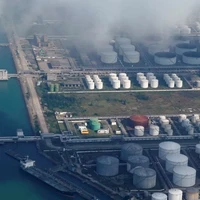
File photo: Oil and gas tanks are seen at an oil warehouse at a port in Zhuhai, China

China's imports of oil recorded as Malaysian have plunged alongside the collapse of Iranian exports under the US naval blockade, suggesting how heavily Iran relied on relabeling its crude for its biggest customer.

In September, China imported just 276,000 barrels per day of oil recorded as Malaysian, down from an average of nearly 1.3 million barrels per day in 2025.

In some previous months, the figure had reached 2 million barrels per day. That is roughly four times Malaysia's total oil production.

Much of the discrepancy may reflect oil coming from Iran but recorded by China's customs as originating in Malaysia, alongside sanctioned oil from other producers and genuine Malaysian exports.

Chinese customs authorities have consistently reported zero monthly imports of Iranian oil since 2020. Yet tanker-tracking companies estimate that Iran delivered an average of around 1.5 million barrels per day to China last year.

Sanctions and blockade

Kpler previously told Iran International that most Iranian oil exports to China are recorded as Malaysian, while some cargoes are declared as originating from Iraq, Oman and even the United Arab Emirates. TankerTrackers has also documented the practice.

The decline in China's recorded Malaysian imports has accelerated as US sanctions have tightened and the naval blockade has choked off Iranian exports.

Kpler data obtained by Iran International show that Iran delivered more than 1.55 million barrels per day of oil to China between January and May this year. From June through September, the average fell to less than half that level.

By mid-October, the volume of Iranian oil afloat outside the US blockade line had fallen to zero.

If current trends persist, China's imports of oil recorded as Malaysian could fall to their lowest level in years, potentially approaching the 2017 level of just 130,000 barrels per day as early as this month or next.

Alternative suppliers

While Iranian oil exports have collapsed, tanker-tracking data show that overall oil exports from the Middle East have recovered to prewar levels and even surpassed them.

The Wall Street Journal, citing Kpler data, reported that the region's exports of oil and petroleum products have reached 24 million barrels per day, above the level recorded before the war.

Before the war, more than 80% of the oil passing through the Strait of Hormuz was destined for Asian markets, with China the largest buyer.

Chinese customs data show that in September, China imported an average of 2.9 million barrels per day from Oman, the United Arab Emirates, Qatar, Saudi Arabia and Iraq, up from less than 2 million barrels per day in May.

The figure nevertheless remained below February's prewar level, when China's combined imports from those five countries exceeded 3.8 million barrels per day.

The numbers also reflect a broader shift in Chinese oil buying after the outbreak of war. As global prices surged, China at one point cut overall crude imports by around 30% and drew instead on its strategic petroleum reserves.

In that sense, China acted as a significant shock absorber, helping limit an even sharper increase in global oil prices.

Before the war, China imported around 11.5 million barrels per day of crude. Following the US-Israeli war on Iran and disruption of traffic through the Strait of Hormuz, imports fell to around 8 million barrels per day before recovering more recently to above 9 million.

The shift suggests that China is increasingly replacing lost Iranian barrels with oil from other Middle Eastern producers. The disappearance of China's “Malaysian” imports is yet another measure of how sharply the blockade has curtailed Iran's access to its most important oil market.

Iran’s trade squeeze spreads from sea to land

Oct 22, 2026, 22:11 GMT+1
•
Maryam Sinaiee
100%
A security wall runs along the Iran-Turkey border in eastern Turkey

Border closures and transit disruptions involving Pakistan, Iraq and Turkey are raising fears that Iran’s remaining trade routes could be further restricted, deepening the impact of US maritime and air restrictions.

Although Washington has not declared a land blockade of Iran, the closure of crossings with Pakistan and Iraq and continued disruption to freight traffic at the Turkish border have raised alarm in Tehran.

Mohsen Rezaei, secretary of Iran’s Supreme National Security Council, acknowledged in an interview with Drop Site published Thursday that Iran would suffer from a prolonged blockade.

“Anyone who says otherwise is not being realistic. Families will pay the price, investment will suffer, and maintaining some sectors of the economy will become more difficult,” he said.

But Rezaei argued that economic pain did not amount to strategic defeat and that Washington was wrong to believe worsening conditions would force Tehran to accept US demands.

Agence France-Presse reported Wednesday that the United States was pressing Iran’s neighbors to close border crossings, following a maritime blockade in southern Iran and air restrictions that have grounded most Iranian flights.

President Masoud Pezeshkian has said the maritime blockade has halted trade through southern sea routes, which previously accounted for 75% to 80% of Iran’s trade.

Pakistan: transit disputes

Iran has responded cautiously to Pakistan, which has been mediating between Tehran and Washington.

Foreign Ministry spokesman Esmaeil Baghaei attributed the suspension of operations at border crossings to “technical problems” on the Pakistani side and said the two countries were discussing reopening them.

After the US maritime blockade took effect, Iranian traders increasingly used Pakistani ports as alternative routes.

But tighter requirements for electronic bills of lading and difficulties transferring money have complicated trade, according to Peyman Sanandaji, a senior official at the Tehran Chamber of Commerce.

Pakistan closed the Rimdan–Gabd and Taftan crossings on Tuesday during a visit to Tehran by Pakistani Army Chief Asim Munir, citing security concerns and efforts to prevent smuggling.

Iranian officials said Munir ordered the crossings reopened during his visit, but the latest reports indicated Pakistan was allowing only Iranian gas tankers and perishable fruit and vegetable shipments to pass.

Fada-Hossein Maleki, head of the Iran-Pakistan parliamentary friendship group, warned Thursday that Iran could close its border if Islamabad continued preventing trucks from crossing.

Such a move could also hurt Pakistan, which uses Iranian territory to move some exports toward Turkey, Central Asia and the Caucasus and receives millions of liters of Iranian gasoline and diesel through official trade and smuggling.

Iraq: conflicting signals

Iraq has not announced a general closure of its border with Iran. But Al Jazeera reported that the Chazabeh–Al-Shaib crossing was closed Wednesday on the direct orders of Prime Minister Ali al-Zaidi and that further crossings were expected to shut.

Abdul Amir Taiban, an adviser to Iraq’s prime minister, said Thursday that Chazabeh had been closed to prevent the entry of drugs and counterfeit dollars and dinars.

He accused Iran of undermining Iraq’s economy, smuggling drugs and violating Iraqi sovereignty.

Iran and Iraq have 13 official border crossings, several of them major routes for exports and commercial traffic, particularly with central and southern Iraq.

Iraq temporarily closed its crossings with Iran a month earlier after a drone attack on Saudi Arabia’s east-west pipeline from Iraqi territory was attributed to Iran-aligned groups. The crossings reopened several days later.

Iran has reacted more openly to Iraq’s latest move than to Pakistan’s restrictions.

Deputy Interior Minister Ahmad Zeynivand said Thursday Tehran had sent Baghdad an official note seeking clarification, while claiming trade in essential goods through maritime routes and northern borders continued without disruption.

Turkey: long delays

Turkey is Iran’s third-largest trading partner, with formal and informal bilateral trade estimated at between $23 billion and $30 billion.

The Bazargan crossing in West Azerbaijan province is Iran’s most important land gateway for trade with Turkey and access to European markets.

Iranian media have reported delays of as long as 20 days at Bazargan in recent months. Although Turkey has capacity to receive 1,000 Iranian trucks daily, it has reportedly allowed only 200 to 300 through, while around 600 Turkish trucks enter Iran each day.

The bottleneck threatens a crucial alternative to Iran’s restricted maritime routes even without a formal closure of the Turkish border.

Alternatives remain limited

Iran shares land borders with seven countries, but the remaining routes offer only limited alternatives to its major trade corridors.

Crossings with Turkmenistan, Azerbaijan and Armenia remain open, providing routes toward Central Asia, Russia and the Caucasus. Afghanistan also remains open, but inadequate infrastructure and chronic congestion limit its usefulness as an alternative transit corridor.

Iran had increasingly looked to road and rail links through Central Asia after restrictions on maritime and air transport. Further border closures would therefore leave Tehran with progressively fewer ways of moving goods.

The disruptions have prompted some hard-line government supporters to call for retaliation against neighboring countries, including restrictions on Iranian electricity exports and internet transit to Iraq.

But several land routes remain open, and there is no declared land blockade. Limited capacity and existing bottlenecks mean those routes cannot readily replace maritime trade, leaving further closures capable of intensifying pressure on an economy already struggling with the effects of the US blockade.

‘Living in despair’: uncertainty, economic turmoil erode hope in Iran

Oct 22, 2026, 15:26 GMT+1
•
Maryam Sinaiee
100%
People look out over Tehran from the Mellat Cinema Complex, with Milad Tower rising in the distance, October 19, 2026

Repeated economic and political crises are eroding Iranians' belief that their lives can improve, with official figures showing declining social capital, widespread perceptions of injustice and deepening distrust of the government.

Sara, a 40-year-old graphic designer, says she was satisfied with her personal life and optimistic about the future until a year or two ago. But losing her job after the 12-day war in June 2025, followed by January crackdown and another round of war have left her deeply pessimistic.

“Thinking about the future and planning for it causes severe anxiety not only for me but also for many people I know,” she said. “There is no hope because everything is extremely unstable, and any good news can be denied moments later.”

The sense of despair is also reflected in public commentary. Sociologist Amin Parvin wrote on X that repeatedly seeing expectations go unmet had replaced “the pleasure of being hopeful” with “living in despair.”

Economic uncertainty has become a persistent feature of everyday life. People with savings or assets worry about losing their value, while others struggle with the rising cost of food, rent and services.

Foreign currency exchange rates, gold and car prices—cars being widely regarded as investment assets in Iran—frequently rank among the most-read topics on Iranian news websites, sometimes attracting more attention than reports about war and negotiations.

Food prices, which fluctuate alongside exchange rates, are another major focus.

Inequality grows

At a recent seminar on social hope in Iran, Mehdi Malmir, a sociology professor at Shahid Beheshti University, presented figures indicating a substantial decline in public satisfaction over the past two decades.

According to Malmir, social satisfaction stood at about 76% in 2000, while 15% expressed absolute dissatisfaction. By 2023, satisfaction had fallen to 49.8%, while dissatisfaction had risen to nearly 40%.

Indicators relating to welfare, the economy and what he described as the moral condition of society had also declined, he said.

Malmir warned that growing poverty and inequality could further undermine hope. People need to see their circumstances improving and believe upward mobility remains possible, he said, adding that available statistics offered little evidence this was happening.

At the same meeting, sociologist Ensieh Jalalvand pointed to repeated protests, declining electoral participation and the spread of emigration across increasingly broad sections of society.

People need to see that their concerns are heard and can lead to tangible change, she said. “The issue is establishing a genuine mechanism through which people can be heard and acknowledged.”

The reformist newspaper Shargh similarly argued that hope depends on people seeing the future as at least partly predictable, believing rules apply equally and trusting that their efforts today can improve their lives tomorrow.

Official figures

The 2025 National Social Capital Report, prepared by the Interior Ministry's Social Affairs Organization and published in June, found that Iran's social capital index fell from 43.5% in 2015 to 36.6% in 2025.

The report found that 75% of respondents were dissatisfied with what they perceived as a lack of justice in society. Three-quarters felt they lived amid discrimination, inequality and the preferential distribution of opportunities through patronage.

The survey covered the period from early 2025 until the outbreak of the 12-day war in June of that year.

Sixty percent of respondents said they had no hope that conditions would improve, while the same proportion said they could no longer tolerate additional economic pressure, according to the findings cited by the Rouydad24 news website.

Rouydad24 said the consequences included the mass emigration of skilled workers, capital flight and a shift from productive activity toward short-term speculation.

The report also pointed to widespread dissatisfaction with the country's political direction. Seventy percent of respondents said changes to the country's overarching policies were necessary to improve their satisfaction.

Mohammad Bat’haei, a deputy interior minister and head of the Social Affairs Organization, described the findings as a serious warning.

The decline in social capital at the national level, reflecting citizens' trust in the country's governing system and institutions, was more pronounced than declines at intermediate and local levels, Bat’haei said.

For Sara, such questions are less abstract. Having once expected her life to improve, she now finds planning for the future itself a source of anxiety.