• العربية
  • فارسی
BrandBrand
  • Iran Insight
  • Politics
  • Economy
  • Analysis
  • Special Report
  • Opinion
  • Podcast
  • Live TV
  • Iran Insight
  • Politics
  • Economy
  • Analysis
  • Special Report
  • Opinion
  • Podcast
  • Live TV
  • Theme
  • Language
    • العربية
    • فارسی
  • Iran Insight
  • Politics
  • Economy
  • Analysis
  • Special Report
  • Opinion
  • Podcast
  • Live TV
All rights reserved for Volant Media UK Limited
volant media logo

Trump says US ‘may do it a little bit further’ against Iran

Oct 22, 2026, 22:05 GMT+1

US President Donald Trump suggested Thursday that the United States could take further military action against Iran, saying Washington had “knocked the hell out of them” and may go further.

“This should have been done a long time ago by other presidents, the Iran war,” Trump told reporters at the White House. “We’ve knocked the hell out of them, and we may do it a little bit further.”

Asked about public reaction to the war, Trump said some Americans may not support it but described the conflict as “a price to pay” to prevent Iran from obtaining a nuclear weapon.

“Well, in one way they love it because I’m doing what should have been done by other presidents. And in another way maybe they don’t,” Trump said.

“But we can’t let Iran have a nuclear weapon,” he added.

Most Viewed

US blockade leaves Iran with millions of tons of surplus LPG
1

US blockade leaves Iran with millions of tons of surplus LPG

2
ANALYSIS

IRGC threatens undersea cables, but can it disrupt global internet?

3

German regulator orders liquidation of Bank Saderat Iran’s Hamburg branch

4

Iraq plays down Iran border disruption as more closures reported

5

Canada orders Iranian man deported over role in sanctions evasion

Spotlight

  • China values Iran but won't pay any price to defend it
    ONE-ON-ONE

    China values Iran but won't pay any price to defend it

  • ‘Living in despair’: uncertainty, economic turmoil erode hope in Iran

    ‘Living in despair’: uncertainty, economic turmoil erode hope in Iran

  • US blockade leaves Iran with millions of tons of surplus LPG

    US blockade leaves Iran with millions of tons of surplus LPG

  • Land subsidence threatens villages and farms in southeast Iran

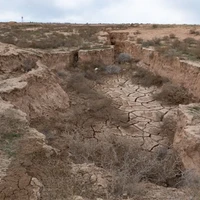
    Land subsidence threatens villages and farms in southeast Iran

  • Iran in Israeli election: Netanyahu all-in on regime change, rivals want more
    INSIGHT

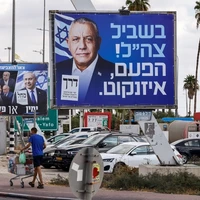
    Iran in Israeli election: Netanyahu all-in on regime change, rivals want more

Banner
Banner
Banner
Banner
Banner
•
•
•

More Stories

China values Iran but won't pay any price to defend it

Oct 22, 2026, 19:55 GMT+1
•
Kambiz Tavana
100%
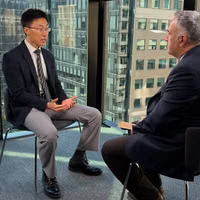
Tong Zhao, a senior fellow at the Carnegie Endowment for International Peace, speaks in an interview with Iran International's Kambiz Tavana (right) in Washington DC on Oct. 22, 2026.

China regards its relationship with Iran as largely transactional and is not firmly committed to defending the current Iranian government, according to Tong Zhao, a senior fellow at the Carnegie Endowment for International Peace.

Speaking to Iran International, Zhao said Beijing shares Iran’s “common displeasure” with the United States and Western systems and values Iran’s geographic position for the Belt and Road Initiative.

Yet he described the partnership as driven by energy security, economic interests and longer-term geopolitical calculations rather than ideological solidarity.

“There is some long-term interest in there for sure,” Zhao said. “But it is a transactional relationship.”

China has become Iran's main economic lifeline under US sanctions, buying nearly all of its exported oil, while Tehran has increasingly looked to Beijing alongside Moscow for diplomatic support in the face of Western pressure.

Energy interests come first

Energy security has provided one of the clearest illustrations of the limits of that partnership.

In a recent meeting between Presidents Xi Jinping and Donald Trump, both sides publicly underscored that the Strait of Hormuz should remain open without any toll system.

“China is protecting its own economic and energy interest first and foremost,” Zhao said. “We do see China’s position evolving when its own domestic calculations about energy and overall supply chain security change over time.”

The 25-year comprehensive strategic partnership signed by China and Iran in 2021 has also under-delivered. Reports at the time suggested Chinese investment of roughly $400 billion, or about $20 billion annually.

Actual flows have been “at least one order of magnitude smaller,” Zhao said, as Chinese banks and companies have sought to avoid US secondary sanctions.

Nuclear weapons, regime change

Zhao said Beijing has come to value nuclear non-proliferation more as its global influence has grown, in part because of its experience with North Korea.

“China doesn’t want Iran to have nuclear weapons, but China eventually is sympathetic to Iran’s cause,” he said. “It thinks that Iran’s need for deterrence, including nuclear deterrence, is ultimately driven by American hostile policy.”

Beijing does not see its role as changing Iran’s calculations and has been reluctant to threaten economic or military cutoffs, Zhao said. Instead, it has emphasized that the US and Israel should alter their policies to reduce Tehran’s incentives for nuclear deterrence.

Opposition to externally imposed regime change is a higher priority for Beijing than the nuclear file itself, he said.

“China’s primary security concern is its own regime security, so it doesn’t want to see the norm of allowing foreign countries interfering in other countries’ internal affairs and toppling governments that they don’t like.”

Beijing’s initial criticism of the US-Israeli war against Iran focused heavily on the killing of the supreme leader, which China viewed as a violation of international norms.

But Zhao suggested Beijing's opposition had limits and would depend in part on whether efforts to remove Iran's government violated what China regarded as established international norms.

Influence at the lowest cost

Beijing has cultivated ties with Saudi Arabia, including joint military exercises and involvement in its missile and nuclear programs, partly as a hedge against uncertainty elsewhere in the region.

China and Russia have meanwhile provided Tehran with diplomatic cover at the UN Security Council, disputing the reimposition of UN sanctions on Iran and most recently opposing efforts to restore international monitoring of their implementation.

Yet China has shown little appetite for becoming a security guarantor for Iran or other regional partners, Zhao said, including through proposals that Iran transfer enriched uranium to Chinese custody.

“China is keenly aware of the potential risks and burdens to play a greater security role,” he said. “Its approach is to develop relations, increasing Chinese influence at the lowest cost.”

That calculation could change as the conflict develops. Zhao said China and Russia could influence its trajectory by supplying air-defense systems or missile-related materials that would help Iran deter or survive future strikes.

But he declined to predict how the confrontation over Iran's nuclear program and the Strait of Hormuz would ultimately end.

“I generally don’t have good answers about how this war will end in the long run,” Zhao said.

Iran plot suspect says he was told to break journalist’s arms and legs

Oct 22, 2026, 17:45 GMT+1
100%
Court sketch from Woolwich Crown Court. Credit: SWNS/Julia Quenzler

A man accused of plotting attacks on Iran International journalists told a London court on Thursday that his Iranian handlers had instructed him to break one journalist’s arms and legs and assault another to stop him from criticizing the Islamic Republic.

Mostafa Sepahvand told Woolwich Crown Court that he had been asked to attack Iran International journalists Kambiz Hosseini and Mojtaba Pourmohsen, as well as two other people, Alon Farago and Jonathan Turner.

Asked by prosecutor Emlyn Jones what those behind the alleged operation wanted him to do, Sepahvand replied: “To hit them.”

“They asked me to hit Jonathan and scare him off; they asked me to break Kambiz's arms and legs; they asked me to hit Pourmohsen to stop him writing about the regime,” he said.

Sepahvand, 41, is on trial alongside Farhad Javadi Manesh, 46, and Shapoor Qalehali Khani Noori, 57. All three deny charges under Britain's National Security Act.

Prosecutors say the men gathered information for Iranian intelligence in preparation for serious violence against people critical of Tehran.

Sepahvand acknowledges conducting surveillance but says he only appeared to cooperate because of threats against him and his family and never intended to hurt anyone. Instead, he says, he deliberately tried to frustrate the operation.

“I played them,” he has repeatedly told the court.

Prosecutors challenge his account

Cross-examining Sepahvand on Thursday, Jones directly challenged that defense, suggesting his claims that he had been deceiving the Revolutionary Guards were explanations invented after his arrest.

“What I am suggesting is that every time you said ‘I was playing the IRGC,’ you were lying,” Jones said.

“No, that was not the case,” Sepahvand replied.

The prosecution questioned Sepahvand about visits he made to addresses he had been given and photographs and videos taken during the alleged surveillance.

Sepahvand acknowledged going to an address associated with Pourmohsen and taking a photograph, but denied that he was preparing an attack.

“I go there, I get a picture, I go back home,” he said. “They ask me to hit them, I play them.”

Jones argued that Sepahvand's repeated visits, searches and complaints about inadequate information showed that he was carrying out groundwork for the alleged attacks rather than trying to sabotage them.

Sepahvand insisted that he deliberately told his contacts that addresses were wrong, exaggerated the difficulty and expense of finding the targets and repeatedly delayed carrying out their instructions.

He said that had he encountered the journalists, he would have warned them. “If I saw them I'd tell them that IRGC was after them and you have to escape,” he told the court.

£150,000 demand questioned

Jones also challenged Sepahvand over his repeated demands for money, including messages in which he said he would complete the job for £150,000.

Sepahvand said the demands were another delaying tactic because money was a “weak spot” for the people directing him.

“If I wanted to accept the money, I would have accepted £30,000,” he told the court, referring to a smaller payment discussed earlier in the alleged operation.

Jones questioned why Sepahvand would have been in a position to demand payment if, as he maintains, he had agreed to cooperate only because Iranian operatives were threatening him and his family.

Sepahvand said he had told them he would need a team and money to carry out the attacks but maintained that he never intended to do so.

“They wanted to force me and I didn't do it,” he said.

Sepahvand became increasingly agitated during the cross-examination, repeatedly raising the case of Navid Imami, a man he says was connected to the Iranian embassy in London and had supplied information about the targets.

The judge called a break after Sepahvand repeatedly interrupted Jones and later warned him that if he continued shouting or repeating his defense rather than answering questions, the jury could conclude that he did not have answers to the prosecution's case.

Sepahvand testified Wednesday that he had met Imami at the Iranian embassy in February 2025 while the alleged operation was under way.

He maintains that pressure on members of his family in Iran forced him to maintain contact with the people directing the operation and that his apparent cooperation was intended to protect others without carrying out the attacks.

The prosecution's cross-examination of Sepahvand is due to continue when the trial resumes Monday.
‘Living in despair’: uncertainty, economic turmoil erode hope in Iran

Oct 22, 2026, 15:26 GMT+1
•
Maryam Sinaiee
100%
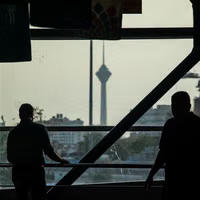
People look out over Tehran from the Mellat Cinema Complex, with Milad Tower rising in the distance, October 19, 2026

Repeated economic and political crises are eroding Iranians' belief that their lives can improve, with official figures showing declining social capital, widespread perceptions of injustice and deepening distrust of the government.

Sara, a 40-year-old graphic designer, says she was satisfied with her personal life and optimistic about the future until a year or two ago. But losing her job after the 12-day war in June 2025, followed by January crackdown and another round of war have left her deeply pessimistic.

“Thinking about the future and planning for it causes severe anxiety not only for me but also for many people I know,” she said. “There is no hope because everything is extremely unstable, and any good news can be denied moments later.”

The sense of despair is also reflected in public commentary. Sociologist Amin Parvin wrote on X that repeatedly seeing expectations go unmet had replaced “the pleasure of being hopeful” with “living in despair.”

Economic uncertainty has become a persistent feature of everyday life. People with savings or assets worry about losing their value, while others struggle with the rising cost of food, rent and services.

Foreign currency exchange rates, gold and car prices—cars being widely regarded as investment assets in Iran—frequently rank among the most-read topics on Iranian news websites, sometimes attracting more attention than reports about war and negotiations.

Food prices, which fluctuate alongside exchange rates, are another major focus.

Inequality grows

At a recent seminar on social hope in Iran, Mehdi Malmir, a sociology professor at Shahid Beheshti University, presented figures indicating a substantial decline in public satisfaction over the past two decades.

According to Malmir, social satisfaction stood at about 76% in 2000, while 15% expressed absolute dissatisfaction. By 2023, satisfaction had fallen to 49.8%, while dissatisfaction had risen to nearly 40%.

Indicators relating to welfare, the economy and what he described as the moral condition of society had also declined, he said.

Malmir warned that growing poverty and inequality could further undermine hope. People need to see their circumstances improving and believe upward mobility remains possible, he said, adding that available statistics offered little evidence this was happening.

At the same meeting, sociologist Ensieh Jalalvand pointed to repeated protests, declining electoral participation and the spread of emigration across increasingly broad sections of society.

People need to see that their concerns are heard and can lead to tangible change, she said. “The issue is establishing a genuine mechanism through which people can be heard and acknowledged.”

The reformist newspaper Shargh similarly argued that hope depends on people seeing the future as at least partly predictable, believing rules apply equally and trusting that their efforts today can improve their lives tomorrow.

Official figures

The 2025 National Social Capital Report, prepared by the Interior Ministry's Social Affairs Organization and published in June, found that Iran's social capital index fell from 43.5% in 2015 to 36.6% in 2025.

The report found that 75% of respondents were dissatisfied with what they perceived as a lack of justice in society. Three-quarters felt they lived amid discrimination, inequality and the preferential distribution of opportunities through patronage.

The survey covered the period from early 2025 until the outbreak of the 12-day war in June of that year.

Sixty percent of respondents said they had no hope that conditions would improve, while the same proportion said they could no longer tolerate additional economic pressure, according to the findings cited by the Rouydad24 news website.

Rouydad24 said the consequences included the mass emigration of skilled workers, capital flight and a shift from productive activity toward short-term speculation.

The report also pointed to widespread dissatisfaction with the country's political direction. Seventy percent of respondents said changes to the country's overarching policies were necessary to improve their satisfaction.

Mohammad Bat’haei, a deputy interior minister and head of the Social Affairs Organization, described the findings as a serious warning.

The decline in social capital at the national level, reflecting citizens' trust in the country's governing system and institutions, was more pronounced than declines at intermediate and local levels, Bat’haei said.

For Sara, such questions are less abstract. Having once expected her life to improve, she now finds planning for the future itself a source of anxiety.

US blockade leaves Iran with millions of tons of surplus LPG

Oct 22, 2026, 10:02 GMT+1
•
Dalga Khatinoglu
100%
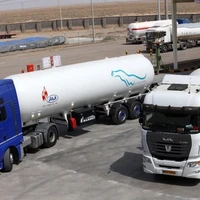
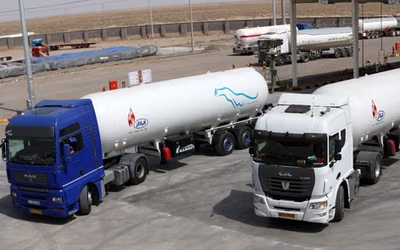
File photo: LPG tanker trucks at a Fergas International facility in Iran.

Iran's LPG exports have collapsed since the US naval blockade began in mid-July, leaving Tehran to find domestic uses for millions of tons of propane and butane that would normally be sold abroad.

Iran has shipped only 4.1 million barrels of LPG, equivalent to around 350,000 tons, since the blockade began, Reuters reported, citing informed sources and shipping data.

Data from Kpler and Vortexa obtained by Iran International show the figure was around 30 million barrels, or 2.6 million tons, over the same period last year.

Vortexa and Kpler estimate Iran's LPG exports in 2025 at between 10.5 million and 11 million tons, worth more than $5 billion.

Iranian Chamber of Commerce data show exports of 9 million tons of propane and butane worth $4.35 billion during the Iranian financial year that ended on March 20, 2026.

The figures cover different periods and may also reflect differences in methodology, but both point to the scale of Iran's LPG exports before the war.

War impact

A document from Iran's National Iranian Oil Products Distribution Company obtained by Iran International last year shows that the country's oil refineries produced around 2.4 million tons of LPG, half of which was consumed domestically and the remainder exported.

The South Pars gas processing facilities, serving Iran's largest gas field, produced around 7 million tons, with the rest coming from other gas facilities and petrochemical plants, mainly in Assaluyeh and Mahshahr.

In total, Iran produced around 13 million tons of LPG last year, about 80% of which was exported. Under normal conditions, domestic demand is below 2 million tons annually.

Iran has cut crude oil production since the halt in oil exports. According to OPEC estimates, daily output fell from around 3.26 million barrels in 2025 to 1.96 million barrels in September, a decline of about 40%.

The war has also affected Iran's other major sources of LPG. Israel targeted gas processing units at South Pars as well as petrochemical plants in Assaluyeh and Mahshahr.

Iranian officials say the initial loss of 230 million cubic meters of South Pars gas production has since narrowed to around 100–130 million cubic meters as damaged units returned to operation.

The head of Iran's National Petrochemical Company says around 60% of damaged petrochemical units have also been rebuilt and returned to operation.

Based on these figures, Iran's LPG production may have fallen by around 20–25% since the war, bringing annual output to roughly 10 million tons, comparable to 2020 levels.

But production has fallen far less sharply than exports, potentially leaving Iran with millions of tons of surplus LPG.

Lessons from 2020

Iran faced a similar, though less severe, problem at the height of US sanctions in 2020.

Kpler and Vortexa data show LPG exports that year were less than half last year's level, while Iranian official statistics indicate domestic consumption rose about 2.5-fold to around 5 million tons, roughly half of production.

Even then, Iran continued exporting LPG, shipping 4.4 million tons in 2020 and 5.8 million tons in 2021.

With seaborne exports now sharply curtailed, Tehran could again divert more propane and butane to domestic use, including limited injection into the national gas network or use as fuel by industries and power plants equipped to burn LPG.

That could help ease Iran's recurring winter gas shortages and reduce the need to burn fuel oil, or mazut, at power plants and industrial facilities, a major source of air pollution.

There are limits to how much LPG Iran can absorb at home. Substitution depends on technical constraints, available infrastructure and domestic demand.

Even if some of the surplus can be redirected domestically, a prolonged blockade could deprive Iran of an LPG export trade worth around $5 billion annually before the war, compounding the much larger loss of oil export revenue.

German regulator orders liquidation of Bank Saderat Iran’s Hamburg branch

Oct 22, 2026, 07:07 GMT+1
100%
A woman waits behind the entrance door of the German branch of the Bank Saderat Iran in the northern German town of Hamburg / File Photo

Germany’s financial regulator BaFin said on Thursday that Bank Saderat Iran’s Hamburg branch had lost its banking license and must be wound up. The branch, which operated in Hamburg and Frankfurt, is no longer allowed to conduct banking business.

BaFin revoked the license on November 5, 2025, citing persistent legal violations that the bank had failed to remedy. A 2023 special audit found serious shortcomings in its business organization, and the bank had been inactive for more than six months.

BaFin also cited sanctions against the institution, saying German banking law therefore presumes its managers to be unreliable, regardless of whether they personally engaged in misconduct.

BaFin orders branch wound up

BaFin ordered the wind-down on June 11, 2026. The liquidation order became final on July 15, according to the regulator. The bank later withdrew legal action against the measure on September 23, and a Hamburg court appointed Berlin-based FUW Treuhand Project Management GmbH as liquidator on September 30.

The withdrawal of the banking license had already become final on December 8, 2025.

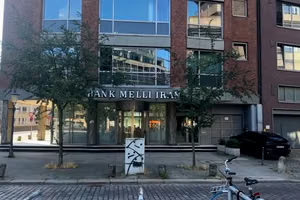
  • Iran's Bank Melli remains open in Germany despite sanctions

    Iran's Bank Melli remains open in Germany despite sanctions

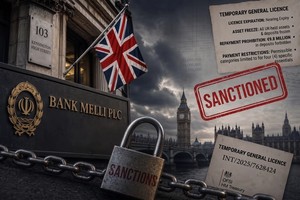
  • If Britain backs US plan, Iran's London bank shuts down on October 22

    If Britain backs US plan, Iran's London bank shuts down on October 22

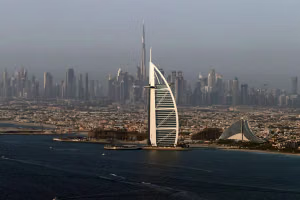
  • Iranian banks and businesses remain open in Dubai despite Trump’s D-Day - WSJ

    Iranian banks and businesses remain open in Dubai despite Trump’s D-Day - WSJ

The bank mainly handled and financed Iran-related exports, including payment services, letters of credit, lending, guarantees and investments. It had 13 employees and assets of €62.4 million at the end of 2025. Customer deposits total about €200,000.

Deposits remain subject to sanctions restrictions

BaFin said there is currently no deposit compensation event, meaning Germany’s deposit guarantee system has not been triggered. Access to funds is restricted under EU sanctions, however, and the liquidator can make payments only with authorization from the Bundesbank’s Financial Sanctions Service Center.

BaFin said the existing deposits would instead be dealt with as part of the liquidation of the branch.

Iranian banks remain under scrutiny in Germany

The decision comes as Iranian banks operating in Germany face heightened scrutiny under renewed EU sanctions and increased US pressure on Tehran’s overseas financial network.

Bank Melli Iran’s Hamburg branch remains open despite being covered by EU sanctions, Germany’s Foreign Ministry told Iran International in August.

The ministry said at the time that the sanctions applied to Bank Melli and its German branch, but did not say whether Berlin was considering closing the operation.

The issue gained attention after US Treasury Secretary Scott Bessent launched “Operation Economic Outcast” and called for every Bank Melli branch abroad to be shut. Germany said it remained in contact with Washington and other partners over further measures against Iran but gave no indication that a decision had been made on Bank Melli’s Hamburg branch.

Bank Melli and Bank Saderat are separate institutions, and BaFin’s action against Bank Saderat was based on German banking-law requirements as well as the sanctions applying to the bank.