Although Washington has not declared a land blockade of Iran, the closure of crossings with Pakistan and Iraq and continued disruption to freight traffic at the Turkish border have raised alarm in Tehran.
Mohsen Rezaei, secretary of Iran’s Supreme National Security Council, acknowledged in an interview with Drop Site published Thursday that Iran would suffer from a prolonged blockade.
“Anyone who says otherwise is not being realistic. Families will pay the price, investment will suffer, and maintaining some sectors of the economy will become more difficult,” he said.
But Rezaei argued that economic pain did not amount to strategic defeat and that Washington was wrong to believe worsening conditions would force Tehran to accept US demands.
Agence France-Presse reported Wednesday that the United States was pressing Iran’s neighbors to close border crossings, following a maritime blockade in southern Iran and air restrictions that have grounded most Iranian flights.
President Masoud Pezeshkian has said the maritime blockade has halted trade through southern sea routes, which previously accounted for 75% to 80% of Iran’s trade.
Pakistan: transit disputes
Iran has responded cautiously to Pakistan, which has been mediating between Tehran and Washington.
Foreign Ministry spokesman Esmaeil Baghaei attributed the suspension of operations at border crossings to “technical problems” on the Pakistani side and said the two countries were discussing reopening them.
After the US maritime blockade took effect, Iranian traders increasingly used Pakistani ports as alternative routes.
But tighter requirements for electronic bills of lading and difficulties transferring money have complicated trade, according to Peyman Sanandaji, a senior official at the Tehran Chamber of Commerce.
Pakistan closed the Rimdan–Gabd and Taftan crossings on Tuesday during a visit to Tehran by Pakistani Army Chief Asim Munir, citing security concerns and efforts to prevent smuggling.
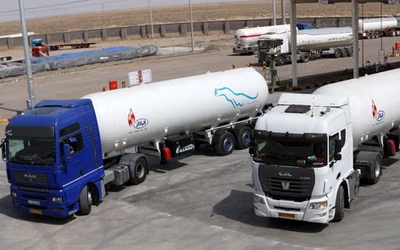
Iranian officials said Munir ordered the crossings reopened during his visit, but the latest reports indicated Pakistan was allowing only Iranian gas tankers and perishable fruit and vegetable shipments to pass.
Fada-Hossein Maleki, head of the Iran-Pakistan parliamentary friendship group, warned Thursday that Iran could close its border if Islamabad continued preventing trucks from crossing.
Such a move could also hurt Pakistan, which uses Iranian territory to move some exports toward Turkey, Central Asia and the Caucasus and receives millions of liters of Iranian gasoline and diesel through official trade and smuggling.
Iraq: conflicting signals
Iraq has not announced a general closure of its border with Iran. But Al Jazeera reported that the Chazabeh–Al-Shaib crossing was closed Wednesday on the direct orders of Prime Minister Ali al-Zaidi and that further crossings were expected to shut.
Abdul Amir Taiban, an adviser to Iraq’s prime minister, said Thursday that Chazabeh had been closed to prevent the entry of drugs and counterfeit dollars and dinars.
He accused Iran of undermining Iraq’s economy, smuggling drugs and violating Iraqi sovereignty.
Iran and Iraq have 13 official border crossings, several of them major routes for exports and commercial traffic, particularly with central and southern Iraq.
Iraq temporarily closed its crossings with Iran a month earlier after a drone attack on Saudi Arabia’s east-west pipeline from Iraqi territory was attributed to Iran-aligned groups. The crossings reopened several days later.
Iran has reacted more openly to Iraq’s latest move than to Pakistan’s restrictions.
Deputy Interior Minister Ahmad Zeynivand said Thursday Tehran had sent Baghdad an official note seeking clarification, while claiming trade in essential goods through maritime routes and northern borders continued without disruption.
Turkey: long delays
Turkey is Iran’s third-largest trading partner, with formal and informal bilateral trade estimated at between $23 billion and $30 billion.
The Bazargan crossing in West Azerbaijan province is Iran’s most important land gateway for trade with Turkey and access to European markets.
Iranian media have reported delays of as long as 20 days at Bazargan in recent months. Although Turkey has capacity to receive 1,000 Iranian trucks daily, it has reportedly allowed only 200 to 300 through, while around 600 Turkish trucks enter Iran each day.
The bottleneck threatens a crucial alternative to Iran’s restricted maritime routes even without a formal closure of the Turkish border.
Alternatives remain limited
Iran shares land borders with seven countries, but the remaining routes offer only limited alternatives to its major trade corridors.
Crossings with Turkmenistan, Azerbaijan and Armenia remain open, providing routes toward Central Asia, Russia and the Caucasus. Afghanistan also remains open, but inadequate infrastructure and chronic congestion limit its usefulness as an alternative transit corridor.
Iran had increasingly looked to road and rail links through Central Asia after restrictions on maritime and air transport. Further border closures would therefore leave Tehran with progressively fewer ways of moving goods.
The disruptions have prompted some hard-line government supporters to call for retaliation against neighboring countries, including restrictions on Iranian electricity exports and internet transit to Iraq.
But several land routes remain open, and there is no declared land blockade. Limited capacity and existing bottlenecks mean those routes cannot readily replace maritime trade, leaving further closures capable of intensifying pressure on an economy already struggling with the effects of the US blockade.